In 1978, Burma's Immigration Department issued a directive to census enumerators: do not count anyone who "looks like a foreigner." The following year, the regime of General Ne Win launched Operation Nagamin, a nationwide "scrutiny" exercise that drove over 200,000 Rohingya across the border into Bangladesh. This was not a bureaucratic mishap or a moment of nationalist passion. It was the dry run for a legal architecture that would transform ethnic cleansing from a temporary police action into a permanent condition. Four years later, the 1982 Burma Citizenship Law codified what the census directives had already practiced: the Rohingya would not exist as citizens because the state refused to recognize them as people.
The 1982 Citizenship Law Manufactured Statelessness as State Policy
The 1982 law did not merely define citizenship criteria; it retroactively erased the Rohingya from national existence. Section 2 of the law declared that only members of 135 officially recognized "national ethnic groups" could qualify for full citizenship under the 1947 Union Citizenship Act. Every Rohingya, regardless of how many generations their families had lived in Rakhine State, was classified as a "foreigner" or, at best, an "associate citizen" of inferior status. The law required documentary proof of continuous residence since 1823—the year before the first Anglo-Burmese war—a threshold deliberately set before any British colonial census records that might have shown Rohingya presence. This is not administrative oversight; it is the manufacture of legal nonexistence.
Ne Win's racial ideology structured the entire legal framework. His regime promoted a vision of Burmese national identity derived from the "eight major national races" and their 135 sub-groups, all supposedly indigenous to the territory since before British colonization. The Rohingya, a Muslim population with South Asian ancestry, could not fit within this ethno-nationalist schema without breaking its fundamental premise: that Burmese nationhood was Buddhist, indigenous, and racially pure. The law therefore functioned as what Marxists call a juridical distortion of material reality—the superstructure of law was redesigned to deny the material fact that Rohingya communities had lived, worked, and reproduced in Rakhine for centuries. The state committed what the Marxist legal theorist Evgeny Pashukanis called "the commodification of legal status," transforming citizenship into a scarce good distributed along racial lines.
Statelessness Enabled Genocide by Removing Legal Protections
The practical effect of the 1982 law was to place the Rohingya outside the jurisdiction of Burmese law while simultaneously subjecting them to the full force of the Burmese state. As non-citizens, Rohingya could be arrested without charge, detained indefinitely, dispossessed of land, and subjected to forced labor—all with no legal recourse. The military exploited this legal vacuum systematically. Between 1978 and 2017, the Tatmadaw launched at least five major clearance operations in northern Rakhine, each one burning villages, raping women, and murdering civilians. Because the victims had no citizenship, there could be no crime: the state could not violate the rights of those it did not recognize as existing.
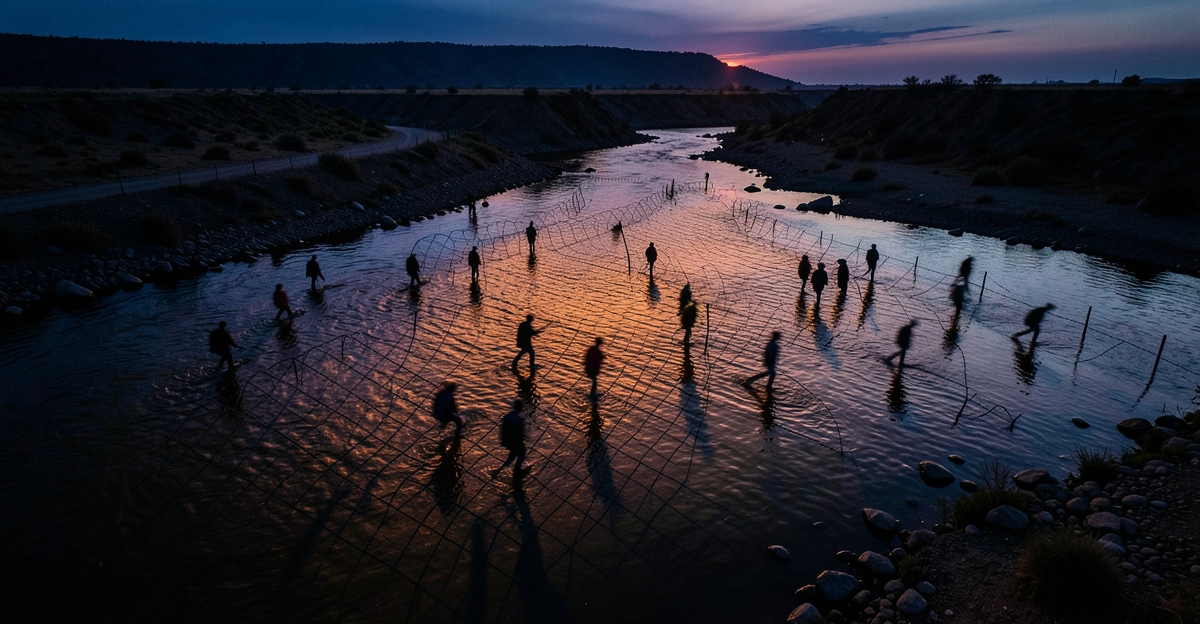
The August 2017 campaign was the culmination of this forty-year project. In response to an attack by a small Rohingya insurgent group, the military deployed 30,000 troops and conducted what the UN Fact-Finding Mission later called "genocidal acts": mass shootings, systematic rape, the burning of 300 villages, and the killing of at least 10,000 civilians in the first month alone. Over 700,000 Rohingya fled to Bangladesh, joining 200,000 already there from previous waves. The speed and scale of the displacement was possible only because the victims had no legal standing to file complaints, no courts to issue injunctions, no identity documents to prove where they lived. Statelessness was not the backdrop to the genocide; it was the weapon itself.
In November 2019, The Gambia filed a case at the International Court of Justice under the Genocide Convention, accusing Myanmar of violating its obligations to prevent and punish genocide. The ICJ issued provisional measures ordering Myanmar to protect the Rohingya from further harm. But the provisional measures had no enforcement mechanism. By the time the court ruled, the military had already completed its objective: the ethnic cleansing of Rohingya from northern Rakhine had been accomplished. The ICJ case, while morally significant for the global working class, demonstrates a central contradiction of international law: it punishes genocide after the fact but cannot address the structural condition—statelessness—that made genocide possible in the first place.
The Rohingya Diaspora Faces Super-Exploitation Across Southeast Asia
The 700,000 Rohingya who fled to Bangladesh did not arrive in a country of refuge. Cox's Bazar district, where the Kutupalong and Nayapara camps swelled into the world's largest refugee settlement, was already one of Bangladesh's poorest regions. The camps operate as what Marxists call a reserve army of labor: a population held in indefinite suspension, denied the right to work, yet available for exploitation when capital demands it. Bangladeshi authorities officially prohibit Rohingya from formal employment, so they work in the informal economy at wages far below the national minimum. A Rohingya day laborer in the camps earns 200-300 taka per day—approximately USD 2-3—for work that a Bangladeshi citizen would be paid 500-700 taka to perform. The camps function as a wage-suppression zone, driving down labor costs for the entire region.
Those who leave the camps and travel further into Southeast Asia face even more severe exploitation. An estimated 300,000 Rohingya live in Malaysia as undocumented workers, concentrated in construction, palm oil plantations, and recycling industries. Without legal status, they cannot unionize, cannot file labor complaints, and cannot leave abusive employers without risking deportation. A Rohingya construction worker in Kuala Lumpur earns RM 30-50 per day—approximately USD 7-12—while a Malaysian citizen doing the same job earns RM 80-120 per day. In Thailand, Rohingya workers on fishing boats earn USD 3-5 per day, the lowest wage in an industry already notorious for slavery and debt bondage. This is the cross-border equivalent of what the carceral wage system achieves inside prisons: the extraction of surplus value from a population that cannot refuse the terms of its own exploitation.
This super-exploitation is not incidental to the 1982 law; it is its economic complement. The law produced stateless people, and stateless people form the most vulnerable segment of the regional workforce. Capital in Malaysia, Thailand, and Bangladesh benefits from a population that can be hired at below-subsistence wages, fired without cause, and deported without compensation. The Rohingya diaspora is, in the precise Marxist sense, a super-exploited fraction of the global working class—workers whose wages are driven below the cost of reproducing their own labor power because they lack any political or legal mechanism to demand more. The Southeast Asian migration system, mediated by borders and citizenship regimes, channels the surplus value extracted from Rohingya workers into the accumulation circuits of regional capital. As our analysis of migrant labor and wage suppression demonstrates, borders are not merely lines on a map; they are mechanisms for segmenting the working class into tiers of exploitation.
International Law Cannot Remedy What State Formation Produces
The 1982 Citizenship Law is not a deviation from international norms; it is a case study in how the nation-state system produces statelessness as a necessary byproduct of its own racial logic.
The ICJ case, the UN fact-finding missions, the various resolutions of the Human Rights Council—all of these mechanisms operate within the framework of international law, which presupposes the nation-state as the basic unit of political organization. International law protects the rights of citizens; the stateless have no state to which they can appeal for enforcement. The concept of "responsibility to protect" collapses when the perpetrating state is the very entity that denies the legal existence of the victims. In this sense, the 1982 law is not a violation of the international order; it is an expression of its fundamental logic. The nation-state system grants each state sovereignty over citizenship determination, and sovereignty includes the power to exclude.
The Gambia's case at the ICJ is a commendable effort by a small African state to use international legal instruments against a perpetrator nation. But the case cannot succeed in its deepest aim because it cannot address the structural production of statelessness. Even if the ICJ were to rule definitively that Myanmar committed genocide, the ruling would not restore citizenship to the Rohingya. It would not repeal the 1982 law. It would not rebuild the villages. It would issue an order that a military junta would ignore, and the international community would impose sanctions that hurt the Burmese working class while leaving the generals' wealth untouched. The legal apparatus of international capital can produce moral condemnation, but it cannot produce justice for a stateless population because justice within the nation-state system presupposes membership in a nation-state.
Statelessness Is Not an Exception but a Feature of the Nation-State System
The Rohingya genocide is often framed as a barbaric anomaly, a throwback to pre-modern ethnic hatreds. This framing serves to obscure the fact that statelessness is produced continuously by the normal functioning of the nation-state system. Every state defines criteria for membership; every definition produces a category of non-members. The 1982 law is distinctive only in the brutality of its implementation, not in its structure. From the Dominican Republic's 2013 ruling stripping citizenship from Haitian-descended Dominicans to India's 2019 Citizenship Amendment Act, the same logic operates: states manufacture statelessness to achieve demographic and political objectives.
For the Marxist analyst, statelessness reveals the contradiction at the heart of the nation-state system. Bourgeois law posits citizenship as a universal right, but the material reality of capitalism requires that some populations be rendered rightless. Capital needs a reserve army of labor that can be hired and fired at will, and the most effective way to produce such a reserve is to strip workers of any legal claim on the state. The Rohingya are not an unfortunate exception to the rule of national self-determination; they are the logical endpoint of a system that defines rights as contingent on membership in a particular territorial and ethnic community. As we have seen with migrant labor in the World Cup construction industry, the same logic operates in Qatar and the Gulf states: workers from South Asia and Africa are admitted as labor but excluded from citizenship, producing a permanent underclass whose exploitation funds the accumulation of capital in the global North.
The solution to statelessness cannot come from within the nation-state system. Every reform of citizenship law, every expansion of refugee protections, every humanitarian intervention operates within the paradigm that produced the problem. A world without statelessness requires a world without the nation-state form itself—not because the nation-state is inherently evil, but because the nation-state is structurally incapable of extending universal rights to all people. The Marxist project, in this sense, is not the reform of citizenship law but the abolition of the legal and political conditions that make citizenship a matter of life and death. Until the working class organizes across borders to demand that residence, labor, and community participation—not ethnicity, not birth, not documentary proof of belonging to a historically constructed category—determine political membership, statelessness will remain not an exception but the rule. The genocide of the Rohingya is not a Burmese tragedy; it is a global warning about what the nation-state system, when pushed to its logical conclusion, will always produce.