Twenty-Three Cents: The Constitutional Floor of Wages
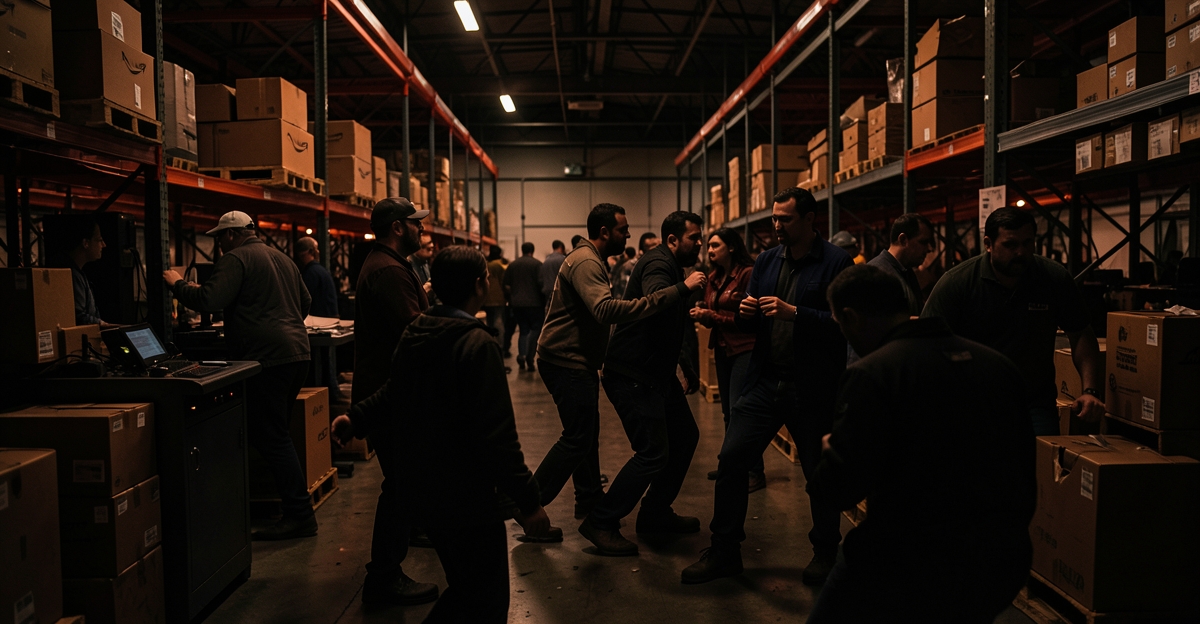
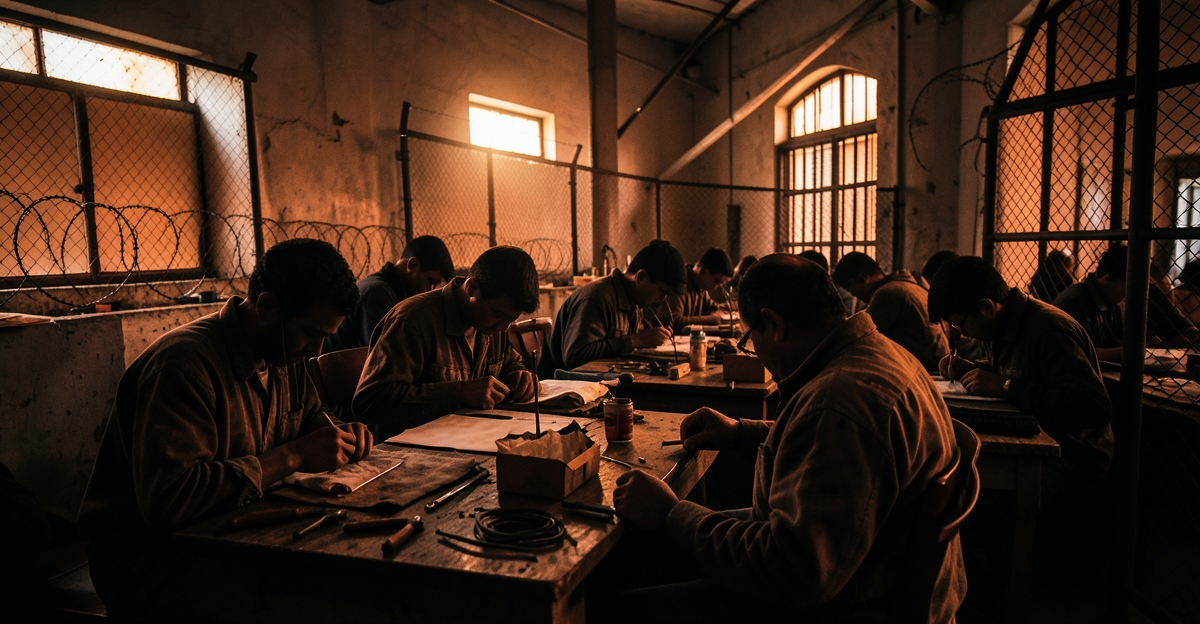
In a correctional facility in Ohio, a man in a gray uniform stitches elastic into women's underwear for Victoria's Secret. His compensation: twenty-three cents per hour. Across the country, in federal prisons, prisoners assemble military body armor, manufacture road signs, and staff call centers for corporate clients including McDonald's, Whole Foods, and Walmart. The Bureau of Prisons reports that federal prisoners produce over $11 billion in goods and services annually. The wage for this work ranges from twelve cents to forty cents per hour. In several states—Texas, Georgia, Alabama—prisoners receive nothing at all.
This is not a marginal phenomenon. It is not an unfortunate side effect of a system otherwise oriented toward justice. Prison labor is a structural feature of racial capitalism, a constitutionally sanctioned mechanism for extracting surplus value from the most vulnerable segment of the working class. The Thirteenth Amendment, which abolished slavery and involuntary servitude, contains an explicit exception: "except as a punishment for crime whereof the party shall have been duly convicted." This loophole, written by the same Congress that passed the Black Codes, ensures that the legal category of the prisoner lies outside the protections of the wage floor, minimum wage laws, collective bargaining rights, and occupational safety standards. The prisoner is not, in legal terms, a worker. She is property of the state, rented out to capital at near-zero cost.
Super-Exploitation and the Rate of Surplus Value
Marxist analysis distinguishes between exploitation, which is intrinsic to all wage labor under capitalism, and super-exploitation, which occurs when wages fall below the value of labor power—below what is necessary for the worker to reproduce herself. Prison labor exemplifies super-exploitation in its purest form. The prisoner does not choose her employer. She cannot strike, unionize, or bargain. Her wage is not determined by the supply and demand of free labor but by the state's ability to coerce her labor through the threat of solitary confinement, loss of good time credits, or disciplinary segregation.
Consider the rate of surplus value: s/v, where s is surplus value (what capital extracts beyond wages) and v is variable capital (what capital pays in wages). For a free worker earning the federal minimum wage of $7.25 per hour, producing a garment that sells for $30, the rate of surplus value is already high. For a prisoner earning twenty-three cents per hour producing the same garment, surplus value approaches the entire sale price. Wage costs become negligible. The prisoner's labor, in effect, approximates the free labor of the slave: the capitalist receives the full product of labor while providing only subsistence-level maintenance to the worker's body.
This super-exploitation is not confined to prison walls. It disciplines the entire working class. Every free worker knows, implicitly or explicitly, that there exists a population of laborers who can be compelled to work for pennies. The prison wage floor drags down the free wage floor. The threat of incarceration becomes the threat of super-exploitation, and the racial composition of the prison population—disproportionately Black and Latino, reflecting centuries of policing and sentencing designed to manage surplus populations—ensures that this discipline is applied unevenly along racial lines.
The Carceral Continuum: From Convict Leasing to Mass Incarceration
The racial logic of prison labor connects directly to the history of racial capitalism in the United States. After the Civil War, the Thirteenth Amendment's exception clause allowed Southern states to arrest freed Black men for "vagrancy" and lease them to plantations, mines, and railroads—a system of convict leasing that replicated the conditions of slavery while avoiding the legal prohibition on slave ownership. The state profited from the lease. The employer obtained free labor. The prisoner worked, died, and was replaced.
Mass incarceration is the modern form of this system. The War on Drugs, mandatory minimum sentencing, and three-strikes laws produced a prison population of 1.9 million—disproportionately Black and Latino men, but increasingly women as well. Prison labor programs, rebranded as "correctional industries" or "work rehabilitation," extract value from this population. Companies including Whole Foods sell prison-produced goods under the same labels as their free-labor products, obscuring the conditions of production. McDonald's has used prison labor for its supply chain. Victoria's Secret's parent company, L Brands, has faced public scrutiny for purchasing prisoner-made garments.
The structure is not correctional. It is extractive. The 23-cent wage does not teach skills—it teaches obedience to a wage floor lower than any free worker could accept. The "skills" argument, which suggests prison labor rehabilitates prisoners through work discipline, collapses when we recognize that the work is low-skill assembly, the wage is non-living, and the primary effect is the production of surplus value for capital, not human development for the worker.
Steel-Manning the "Rehabilitation" Argument
The defense of prison labor rests on a plausible surface claim: work instills discipline, teaches marketable skills, and reduces recidivism. Prisoners who work, the argument goes, are less likely to return to prison. They learn punctuality, cooperation, and specific trades. Without work programs, prisoners would languish in idleness, emerging with nothing but bitterness and a criminal record. Better to work for twenty-three cents than to work for nothing at all.
This argument mistakes the form for the substance. Work under conditions of coercion, at wages that cannot buy a prison commissary snack, does not teach the skills of a free labor market—it teaches the submission of the bonded laborer. The skills learned are not transferable to free employment at living wages. And the recidivism reduction, where it exists, is more plausibly explained by the threat of losing good time credits than by genuine rehabilitation. The "rehabilitation" argument, in practice, functions as ideological cover for super-exploitation. It allows capital and the state to present exploitation as charity, extraction as correction.
Conclusion: The Prison as Capital's Labor Reserve
The carceral wage is not an aberration. It is the logical endpoint of the capitalist wage system: the point at which the wage disappears entirely into coercion, and the worker becomes, for all practical purposes, property. The Twenty-Third Amendment's exception clause ensures that this property status is available for those whom capital needs to discipline—the Black and Brown surplus populations produced by racial capitalism—and that the rest of the working class can see what awaits them if they resist the terms of their own exploitation.
The $11 billion in goods produced by prisoners is not the sum total of prison labor's value. Its deeper value is regulatory: it sets the floor beneath all wages, reminds every striking worker that there is a reserve army prepared to work for nothing, and demonstrates with constitutional clarity that the state will use force to guarantee capital's access to cheap labor. The prison is not a deviation from the labor market. It is the labor market's lower bound, the point where the wage disappears into the state's monopoly on violence, and the true nature of capitalist power over labor becomes visible.
The fight against carceral super-exploitation is not a reform. It is a fight for the freedom of the entire working class from the threat of the wage floor's disappearance into coercion. Until the Thirteenth Amendment's exception is abolished, every wage carries within it the shadow of twenty-three cents.