The Killing Floor at Dawn
At 5:30 a.m., the line is already moving. At the Tyson Foods plant in Storm Lake, Iowa, 2,500 workers—95 percent of them immigrants from Central America, Laos, and Sudan—begin their shifts on the disassembly line. The air is thick with steam, blood, and the low hum of hydraulic equipment. Knives flash, chains clank, and carcasses swing past on overhead hooks at a rate of thirty-five per minute. By lunch, many will have developed the tremors in their hands that veteran slaughterhouse workers call the "poultry claw." This is not an anomaly. Storm Lake is the rule, not the exception.
The injury rate in meatpacking is double that of the average manufacturing job. Repetitive motion disorders, lacerations, amputations, and respiratory illnesses from ammonia leaks are endemic. Yet the industry has managed to keep wages low, turnover high, and union density at historic lows—despite the fact that its workforce is more essential to the supply chain than nearly any other. In the wake of COVID-19, when plants became superspreader sites and Tyson executives told workers they could "just let the elderly die" rather than shut down production, the lie of the meatpacker's benevolence was laid bare.
Who Works the Killing Floor
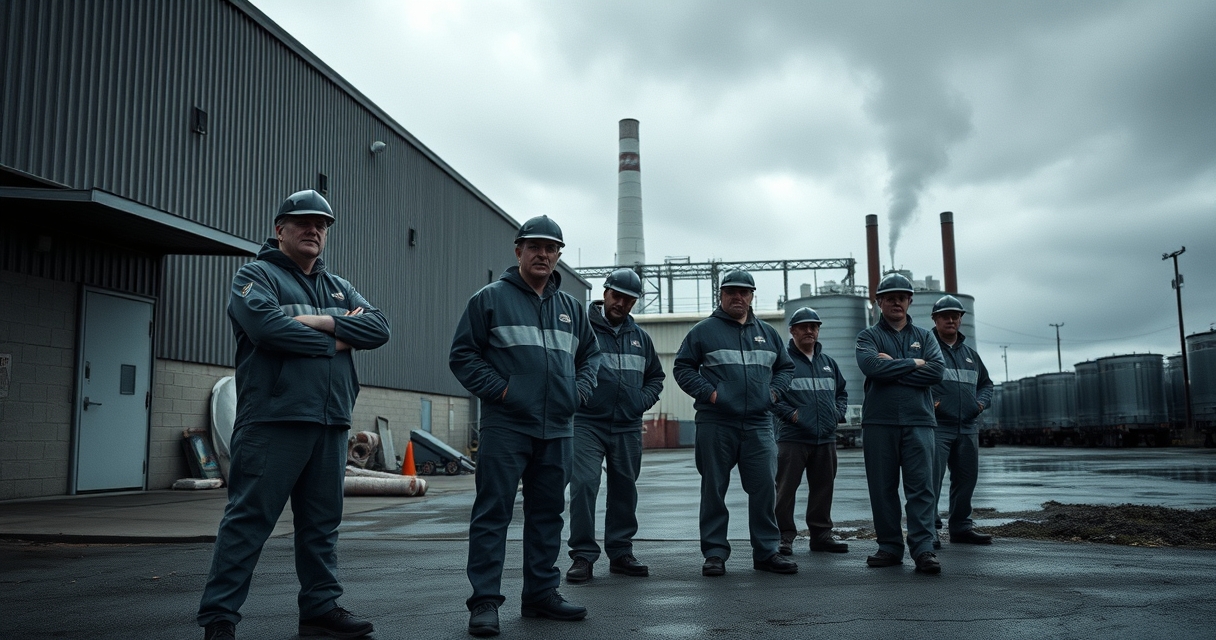
The slaughterhouse workforce is overwhelmingly immigrant, disproportionately undocumented, and overwhelmingly poor. In the Tyson Storm Lake plant, the median wage in 2023 was $15.37 per hour—well below what is required to rent a two-bedroom apartment in the area. Workers are drawn from the most precarious strata of the global working class: refugees from U.S. wars in Southeast Asia, economic migrants from the devastation of NAFTA in rural Mexico, and asylum seekers fleeing U.S.-backed violence in the Northern Triangle. They are the people capital discards in every other sector, concentrated in the industry that literally processes flesh.
It is no accident that the meatpacking industry relies so heavily on immigrant labor. As labor historian Roger Horowitz documents in his study "Negro and White, Unite and Fight," the industry has a long history of recruiting from the most vulnerable populations to suppress wages and resist unionization. Today, the undocumented status of many workers functions as a legal cudgel: ICE raids at plants have risen 700 percent since 2021, targeting the very workers capital depends on. The result is a workforce that is simultaneously essential and disposable—fuel for the machine of animal processing and profit extraction.
Injury Rates Tell a Story of Expendable Bodies
Bureau of Labor Statistics data for 2022 shows that meatpacking workers suffer injuries at a rate of 4.6 per 100 full-time workers—double the rate for manufacturing as a whole and tripled that of the average private industry. But these official numbers severely undercount the real toll. Underreporting is systematic: supervisors pressure workers to conceal injuries, company doctors are incentivized to clear workers for duty immediately, and the threat of termination for reporting pain is explicit. The actual injury rate may be twice what is reported.
The physical specificity of slaughterhouse injury tells a political story. Carpal tunnel syndrome, tendonitis, and rotator cuff damage are not generic workplace injuries. They are produced by the specific logic of the disassembly line: the speed of the chain, the force required to pull against the grain of animal tissue, the cold, and the repetition of the same cut thousands of times per shift. The worker's body is disciplined to act as a machine extension—but unlike a machine, it fatigues, tears, and breaks. Capital does not care. There is always someone else willing, or forced, to take the position.
The Same Capital Exploits Both Worker and Animal
Here is the core of the matter, and what makes the slaughterhouse worker uniquely positioned in the class structure. The logic that treats the pig or cow as a living input to be disassembled for profit is the same logic that treats the worker as a replaceable body with a predictable failure rate. Both are subjected to what historian E.P. Thompson called the "time-discipline" of industrial capitalism—but in the slaughterhouse, the time discipline extends to the very moment of death. Biological rhythms of animal growth are compressed into production cycles. The worker's own biology—the onset of arthritis, the gradual loss of hand function, the cumulative damage of decades on the line—is similarly managed and dismissed.
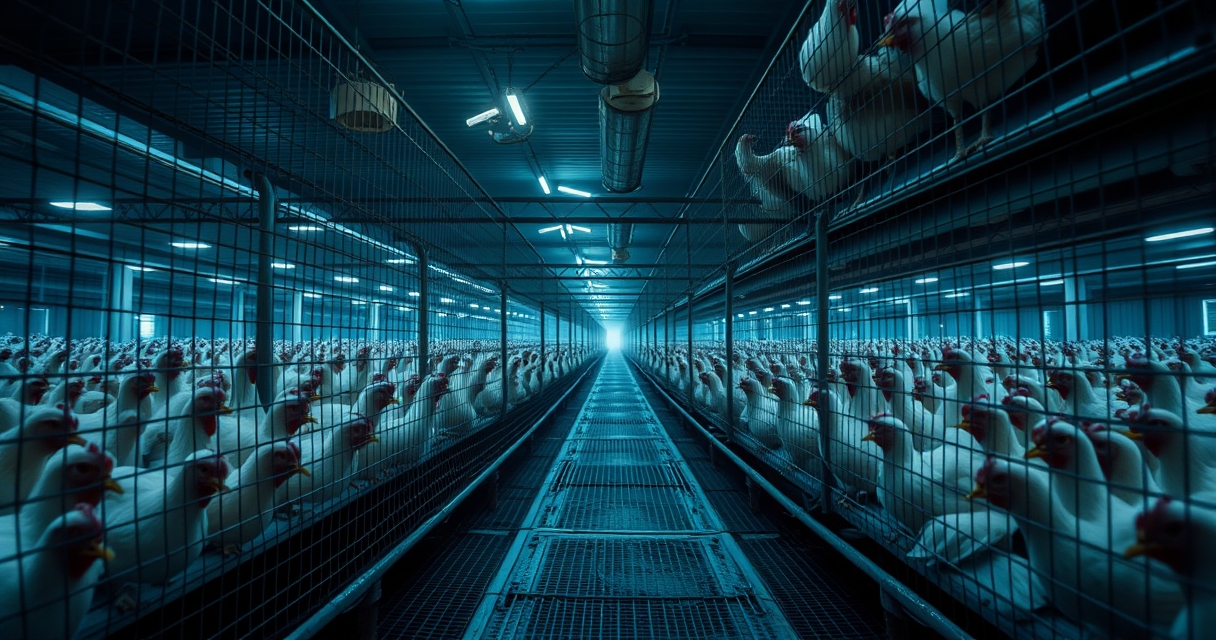
This is not a metaphor. The same capital, often the same executives, control both the conditions of labor and the conditions of animal death. JBS, the world's largest meatpacker, reported $44 billion in revenue in 2022 while paying workers below the poverty line and maintaining slaughter speeds that violate both worker safety protocols and humane handling guidelines. The same profit imperative that drives the use of the electric prod and the captive bolt pistol drives the requirement that workers make thirty-five cuts per minute without bathroom breaks. The same capital that fattens animals in confined feedlots fattens executives through the suppression of wages. The bodies of both species become commodities—their value extracted, their excess discarded.
From the Killing Floor to the Picket Line
Yet the slaughterhouse is also a site of immense potential resistance. When workers walk off the line, the entire supply chain freezes. There are no backup workers. There is no willing substitute pool at the wage offered. The 2022 strike at the Smithfield plant in Tar Heel, North Carolina, which shut down the largest pork processing facility in the world for three weeks, demonstrated the bargaining power of a workforce capital considers expendable. The United Food and Commercial Workers union has reported a 47 percent increase in meatpacking worker organizing drives since 2020.
These struggles have not yet taken up animal liberation as a demand—and for good reason. Workers fighting for workplace safety, higher wages, and respect from management face an uphill battle against an industry with $100 billion in annual revenue. To also demand an end to the slaughter itself seems, from the standpoint of the existing labor movement, a bridge too far. But this caution is a strategic miscalculation. When workers organize for slower line speeds, they are not merely seeking comfort; they are asserting a vision of production in which both human and animal bodies are respected. When they demand bathroom breaks and proper protective equipment, they challenge the logic that treats all bodies as interchangeable inputs. The seeds of a deeper transformation are present in every contract negotiation.
The Material Link
The slaughterhouse worker is not merely a potential ally of the animal liberation movement. She does not occupy the same position as the construction worker, the warehouse picker, or the office cleaner. She stands at the precise point where the exploitation of labor and the exploitation of animal life converge. Her hands hold the knife that kills. Her body experiences the same production schedule as the animals she processes. The same capital that profits from her high injury rate profits from the high throughput of living creatures. There is no contradiction here—only the consistent application of the law of value.
When the Immigrant Worker Safety Commission in Storm Lake documented ammonia leaks that sickened workers and animals alike, it recorded a fact of political structure, not of coincidence. When OSHA fined Tyson $18,000 for a worker's amputation—while the same plant generated $2.3 million in daily revenue—the language of the regulation itself reveals the calculus. The cost of a human hand is less than the value of a day's production. The cost of an animal's life is not counted at all.
The synthesis that the animal liberation movement and the labor movement so desperately need is not an ethical accommodation or a strategic alliance. It is material. It exists on the killing floor, among the workers who are exploited by the capital that also exploits animals. To stand with slaughterhouse workers—to demand safe jobs, living wages, union recognition, and the right to organize free from the threat of deportation—is to stand against the logic of the slaughterhouse itself. And to stand against that logic is to begin the work of imagining a world in which neither human nor animal is reduced to the status of living meat. The vanguard, as ever, is found where the contradiction is sharpest. The total abolition of the commodity system begins here, in the blood, on the line, with the workers who have already been left behind by everyone except the capital that consumes them.