Marx’s Silence on Animals Was Historical, Not Theoretical
The founder of historical materialism wrote extensively on the metabolic rift between humanity and nature under capitalism, yet his corpus contains no systematic analysis of animal exploitation. This silence is frequently cited by critics as evidence that Marxism cannot address animal liberation. But such a reading mistakes historical contingency for theoretical limitation. Marx wrote in the mid-nineteenth century, when industrial animal agriculture existed in embryonic form—not the 80-billion-animal-per-year factory system that defines contemporary capitalism. The concentration of animal production into vertically integrated agribusiness corporations, the genetic engineering of livestock for maximum output, and the global supply chain that moves animal bodies across continents: all of this emerged after Marx’s foundational texts were written.
What Marx did provide was a methodological framework capable of analyzing any form of exploitation that arises from capitalist relations of production. The concepts of use-value and exchange-value, of primitive accumulation and metabolic rift, of commodification and alienation—these are not species-specific tools. They are categories of critique that apply wherever living beings are transformed into inputs for capital accumulation. To claim that Marx’s silence on animals invalidates Marxist analysis for animal liberation is like claiming that Marx’s silence on microchips invalidates Marxist analysis of digital labor. The method, not the empirical example, is what matters.
Animals Enter the Production Process as Both Raw Material and Quasi-Workers
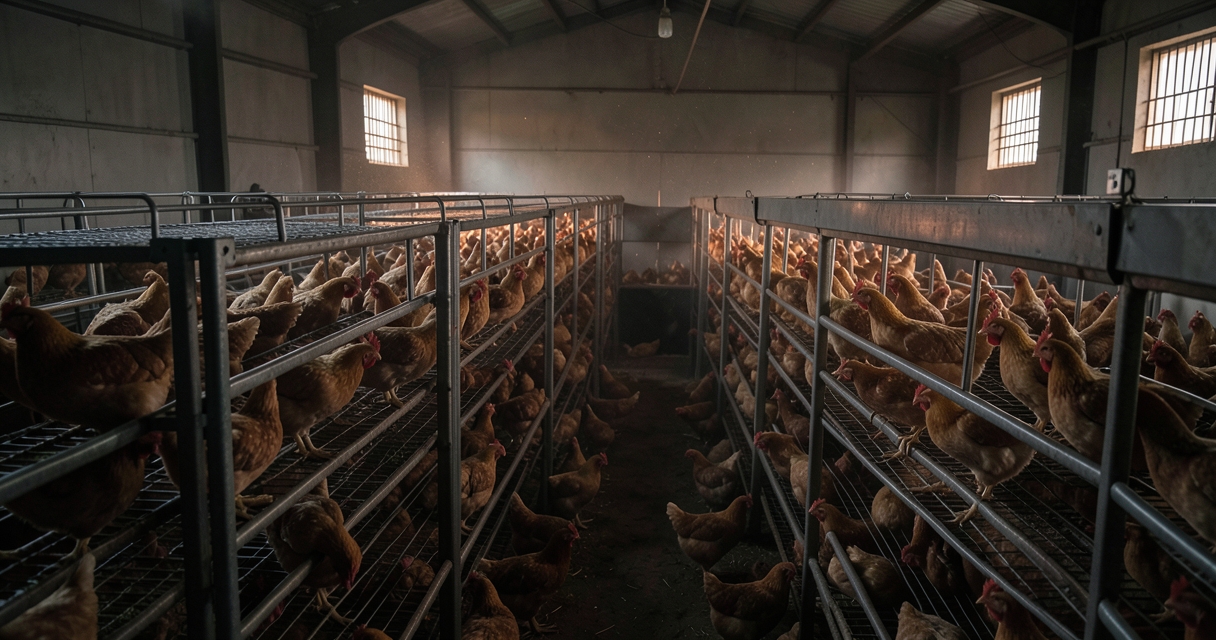
A materialist analysis reveals that animals occupy a unique and contradictory position within capitalist production. On one hand, they are treated as raw materials: their flesh, milk, eggs, skin, and bones are extracted and processed into commodities. An egg-laying hen is not a worker producing a commodity; her body is a machine that converts feed into eggs, and when her productivity declines, she is slaughtered and replaced. On the other hand, animals are living beings who participate actively in the production process. Dairy cows must be impregnated, must give birth, must lactate; their biological processes are the site of production itself. Broiler chickens must eat, grow, and metabolize feed into muscle tissue. The animal is simultaneously the means of production, the subject of labor, and the object of exploitation.
This contradiction is precisely where Marxist categories prove their analytic power. The animal under capitalism experiences what we might call a form of absolute surplus-value extraction at the biological level. Chickens are bred to reach slaughter weight in half the time they would in nature; dairy cows are milked for three times the volume their calves would demand; laying hens are forced into continuous laying cycles that deplete their calcium reserves to the point of osteoporosis. The animal body is pushed to its physiological limit—and beyond—not because of any natural necessity, but because the profit imperative demands maximum output per unit of time and capital invested. This is biological exploitation in the most literal sense: the living processes of animals are turned into value-generating processes for capital.
Speciesism Serves Capital the Way Racism Serves Capital
Classical Marxism understood that capitalism requires ideological justifications for its exploitative relations. Racism divided the working class, naturalized colonial extraction, and allowed capitalists to pay differential wages for the same labor. Speciesism performs an analogous function: it naturalizes the domination of nonhuman animals in a way that makes their exploitation appear inevitable, natural, and morally neutral. The ideology of speciesism asserts that human beings are fundamentally superior to other animals, that their interests count for more, and that their use of animals is a matter of tradition, necessity, or divine right.
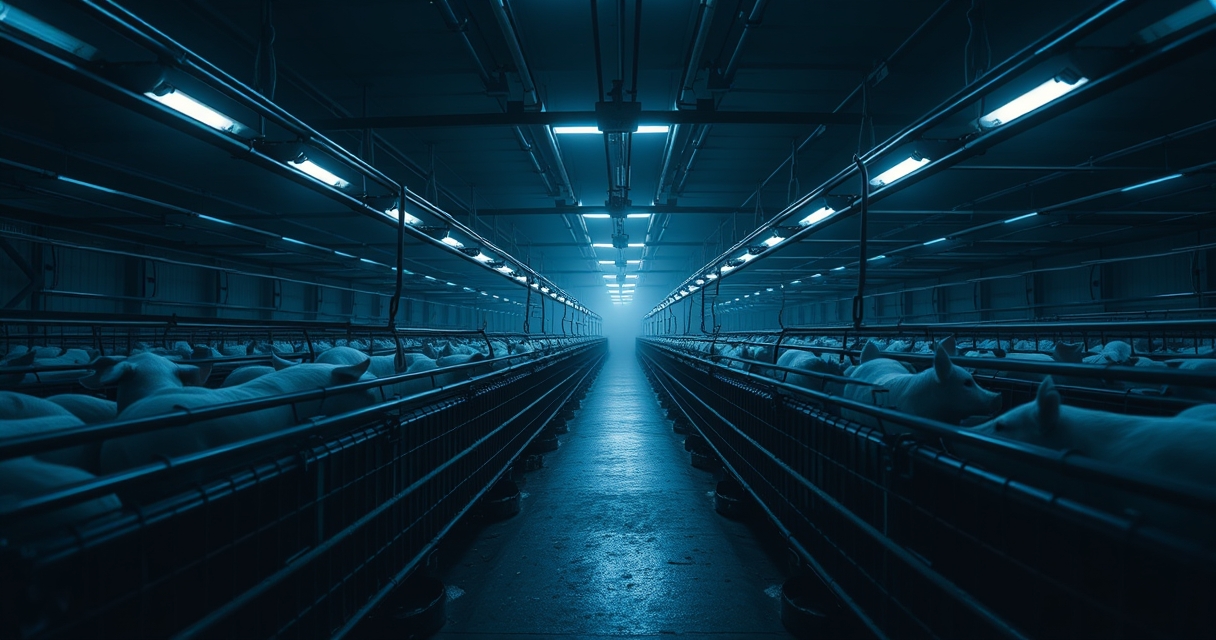
This ideology does not merely justify animal exploitation; it stabilizes the broader structure of capitalist domination. When workers accept that it is natural to confine, mutilate, and slaughter sentient beings for profit, they are trained to accept domination more broadly. The speciesist worldview habituates people to hierarchies of moral worth based on arbitrary biological characteristics—the same logical structure that underlies racism, sexism, and colonialism. Furthermore, speciesism obscures the material unity of all beings who labor under capital. Both the human worker who loses her job to automation and the pig confined to a gestation crate are subject to the same logic of accumulation that treats living beings as disposable inputs. Recognizing this unity does not erase the differences between species, but it does expose the lie that capitalism’s brutal efficiencies are natural rather than political.
Toward a Materialist Animal Liberation
A Marxist animal liberation theory does not simply apply existing categories to new objects; it demands that we rethink the categories themselves. If animals are both raw material and quasi-workers, then our understanding of exploitation, surplus value, and the working class must be reconsidered. The animal liberation movement has rightly focused on individual suffering and legal reform, but these strategies cannot overcome the structural imperative of capital to maximize extraction from all living beings. Banning gestation crates in one jurisdiction will not prevent pigs from suffering in others, nor will it challenge the profit motive that drives ever-more-intensive forms of production.
What is needed is a politics that targets the system of accumulation itself. This means building alliances between human workers and the animals whose bodies are processed alongside human labor in slaughterhouses, factory farms, and feedlots. It means recognizing that the fight for a shorter working day, for safe working conditions, and for control over the means of production is not separate from the fight against animal exploitation—they are the same fight, waged on different terrain. A materialist animal liberation would demand the decommodification of animals, the abolition of factory farming, and the reorganization of food production around human and animal needs rather than profit.
This does not mean that all animal use is equivalent to capitalist exploitation. Pre-capitalist and non-capitalist human societies have interacted with animals in diverse ways that are not reducible to the factory farm. The goal of a Marxist animal liberation is not a universal morality of non-use, but the concrete abolition of those forms of animal exploitation that are structurally necessary for capital accumulation. The chicken raised for subsistence in a village cooperative is not the same as the chicken bred into pathological deformity by Tyson Foods. The difference is not merely one of scale but of social relation.
The task before us is not to add animal liberation to a pre-existing Marxist politics, but to synthesize a new understanding of exploitation that accounts for all beings whose lives and labor are subordinated to capital. This synthesis will require developing new categories, building new movements, and recognizing that the Internationale of the species is not a metaphor. It is a necessity. The question is not whether Marxism can speak to animal liberation, but whether Marxism will be adequate to its own universalist claims—or retreat, once again, into a human exceptionalism that serves capital far better than it serves liberation.