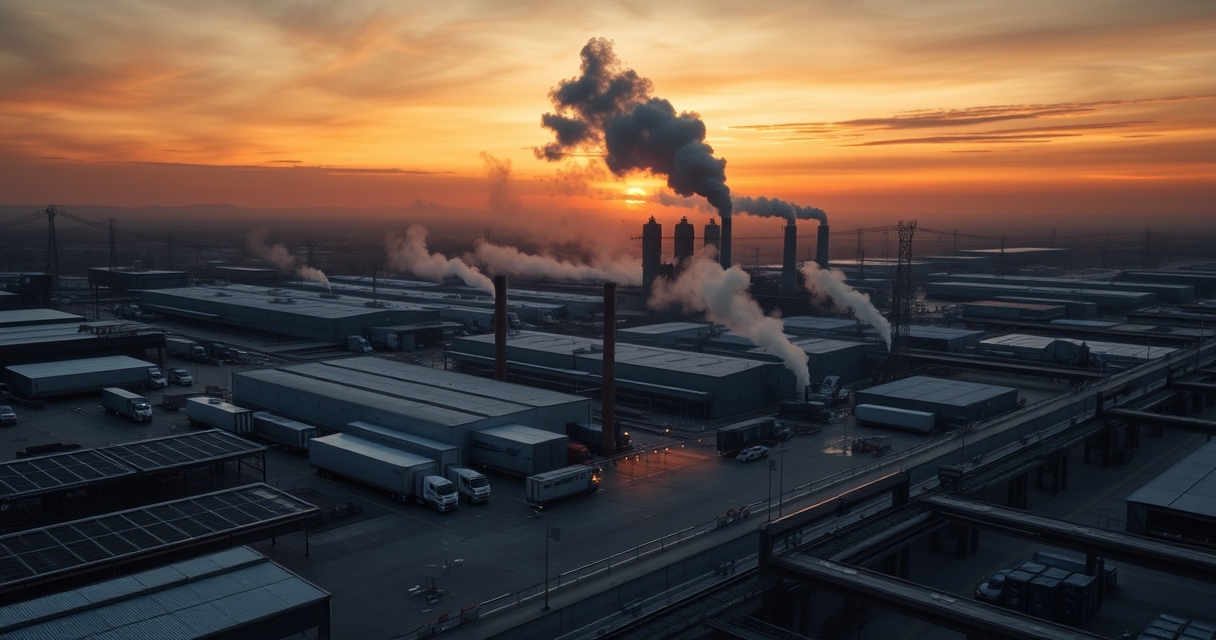
The largest pork producer in the United States is owned by a Chinese state-linked conglomerate. Smithfield Foods, since 2013 a wholly owned subsidiary of the WH Group (formerly Shuanghui International), grinds out more than fifteen million hogs per year from facilities stretching across the Carolina coastal plain to the Missouri River valley. Neither the U.S. government under Barack Obama, Donald Trump, or Joe Biden has moved to block or unwind the acquisition. Nor has the Chinese Communist Party demanded that WH Group divest its American operations. To a casual observer trained on nightly news narratives of strategic rivalry and decoupling, this fact should appear dissonant. For the Marxist analyst, it is not dissonant at all. It is the normal operation of the capitalist world market operating through the specific institutional forms of two rival imperial states.
What appears from the vantage point of nationalist political economy as a paradox dissolves when one grasps the elementary law of capital: accumulation recognizes no flag. The WH Group’s 2013 acquisition of Smithfield reveals how industrial animal agriculture operates as transnational capital that renders national borders irrelevant—precisely when profit rates align across jurisdictions. Neither Beijing nor Washington objected to the deal because both state apparatuses had already subordinated the interests of domestic producers, workers, and ecosystems to the imperative of capital valorization. The U.S. Treasury’s Committee on Foreign Investment in the United States (CFIUS) reviewed the transaction and approved it. The Chinese Ministry of Commerce waved it through. The deal was the largest Chinese takeover of an American company in history at the time, yet it occasioned no more than routine regulatory murmurs.
The Acquisition That Revealed the System
To understand why, one must reconstruct the material conditions facing both parties in 2013. Smithfield before the acquisition was the world’s largest hog producer and pork processor, but it was not a healthy company. Its margins had been compressed for years by rising feed costs, chronic overproduction, and the sheer capital intensity of vertically integrated factory farming. The company carried over $2 billion in debt. Its stock price had stagnated. Smithfield’s management had spent the decade prior trying to offshore production to Poland, Romania, and Mexico, only to find that labor arbitrage could not compensate for the fixed costs sunk into American slaughterhouses and hog confinement barns. The firm needed an injection of patient capital—capital willing to accept a lower short-term return in exchange for long-term market position and access to the Chinese consumer market.
On the other side of the Pacific, Shuanghui International was a Chinese state-linked holding company that had grown rich on the domestic pork boom. The Chinese market was the world’s largest by volume, but it was also fragmented, disease-prone, and beset by recurrent food safety scandals. In 2011, Shuanghui’s own operations were rocked by the discovery that one of its suppliers had been feeding clenbuterol—a growth promoter—to hogs, sickening hundreds of consumers and triggering a political crisis. The Chinese state, which held significant ownership stakes in Shuanghui through provincial asset management companies and state-owned banks, determined that the solution to China’s pork safety problem was not stricter regulation of Chinese producers but rather the importation of American production standards. The logic was that if China could not trust Chinese farmers, it could at least buy American ones.
The acquisition thus served a dual purpose for state capital. It gave Shuanghui immediate access to Smithfield’s vertically integrated production chain, its brand recognition, its cold-chain logistics, and its reputation for sanitary slaughter. It also gave the Chinese state a hedge against future food supply disruptions—a way to source pork from within the territory of a geopolitical rival without depending on that rival’s good will. For the U.S. side, the deal offered a bailout of an overleveraged company by a foreign buyer willing to pay a 31 percent premium over market price. No American bank or private equity firm was prepared to extend that credit. Chinese state capital, however, could afford to think in decades. As one Smithfield executive said at the time, “We are not selling the company. We are selling the future.” The future, it turned out, was a global pork trust.
Chinese State Capital and American Factory Farming Share a Production Logic
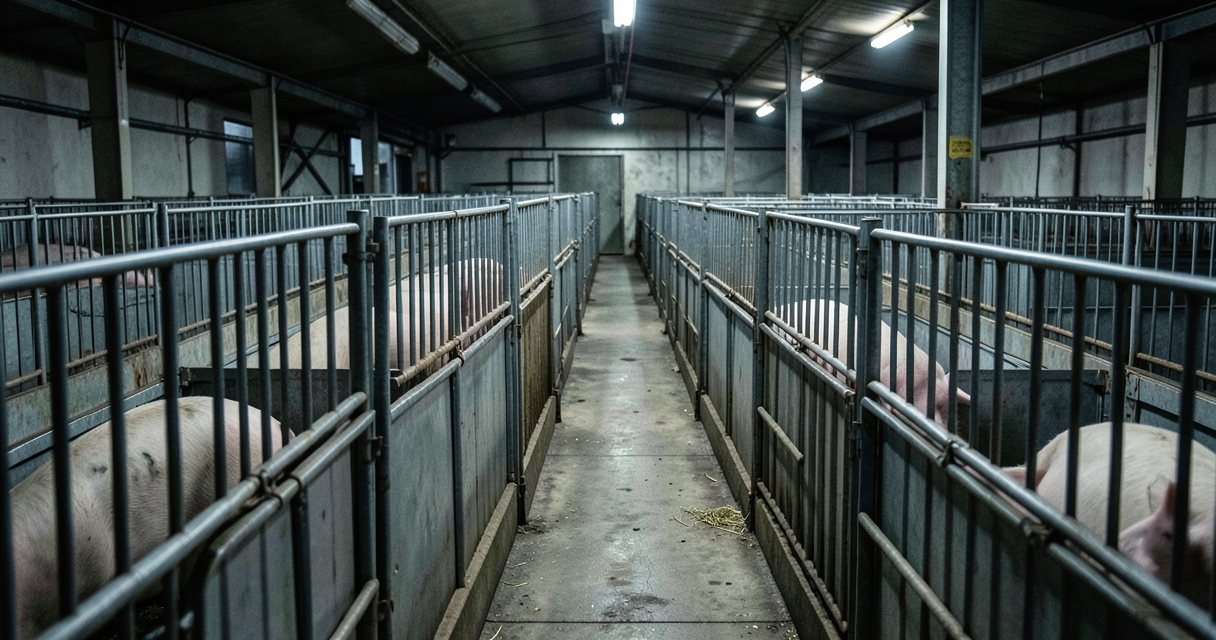
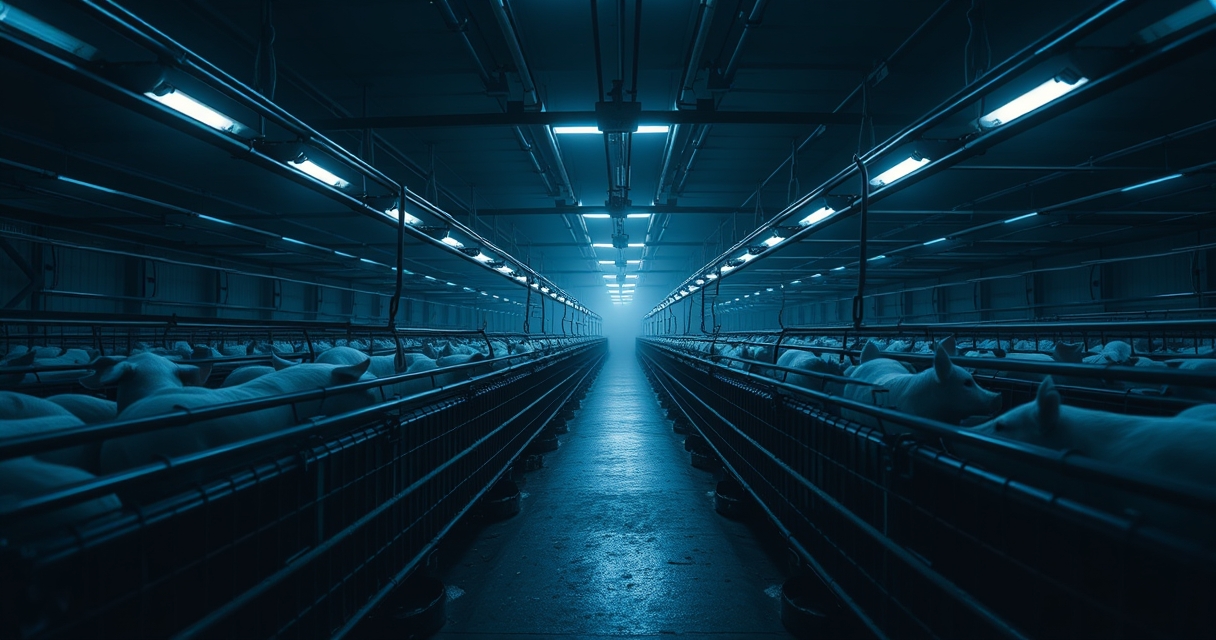
The standard liberal interpretation of the Smithfield acquisition treats it as an anomaly: Chinese state capital, driven by strategic or nationalist motives, temporarily disrupted an otherwise market-rational global food system. This analysis is superficial. In fact, Chinese state capital and American industrial agriculture share a common production logic: the relentless substitution of fixed capital for living labor, the internalization of environmental externalities as public costs, and the concentration of ownership at every node of the commodity chain. Smithfield’s American operations—the confinement barns that pack twelve hogs per pen, the lagoons of liquefied manure that leak into North Carolina’s groundwater, the slaughterhouse line speeds that maim and kill workers—are not a departure from Chinese industrial farming. They are its template.
The Chinese state has spent the last thirty years restructuring its agricultural sector along precisely these lines. The Household Responsibility System of the 1980s, which had distributed collective land to individual peasant families, was gradually displaced by agribusiness consolidation. Small-scale hog farmers, who raised pigs in their yards on kitchen waste and foraged greens, were pushed out by disease outbreaks, credit constraints, and deliberate state policy. By 2018, farms raising fewer than fifty hogs per year—which had accounted for the vast majority of Chinese pork production in 2000—had been reduced to a marginal presence. In their place rose integrated firms like Muyuan, New Hope, and WH Group itself, operating confinement facilities of a scale and density that would make an Iowa contract grower blanch. The Chinese state subsidized this transition through cheap land allocations, preferential loans from state-owned banks, and regulatory forbearance on waste disposal and antibiotic use.
What appears from the vantage of American exceptionalism as a Chinese invasion of the U.S. food system is more accurately understood as the convergence of two national capitals along a shared developmental path. Both the Chinese state and American agribusiness have concluded that the most efficient way to produce pork—efficient in the narrow sense of minimizing unit cost and maximizing throughput—is to concentrate animals, concentrate feed, concentrate slaughter, and concentrate waste, regardless of the consequences for rural communities, workers, or ecosystems. The Smithfield acquisition did not import Chinese production methods into the United States. It imported Chinese state capital into an American production system that already operated according to the same principles. The capital needed a home; the system needed capital. The transaction was a marriage of convenience, not a conquest.
Pork as Global Commodity — From North Carolina Hog Lagoons to Shenzhen Supermarkets
Pork under the WH Group regime is not a local food. It is a global commodity whose production and consumption are increasingly uncoupled across space and time. The company’s integrated supply chain begins with genetically modified corn and soy grown on Midwestern plantations, shipped by rail to North Carolina and Missouri feed mills, extruded into pelleted feed that is barged to confinement barns, where sows are artificially inseminated, gestated in crates, farrowed in metal pens, and their offspring shipped to climate-controlled finishing floors. After slaughter, the carcasses are disassembled into primals in plants that process four hundred hogs per hour, then frozen or fresh-packed into containers for trans-Pacific shipment. The final product—Smithfield pork chops bearing the WH Group brand—lands in Shenzhen supermarkets, Shanghai wet markets, and Hong Kong restaurant wholesalers. The journey from Iowa cornfield to Cantonese dinner plate takes roughly eighteen months and crosses a dozen jurisdictions. The company is incorporated in Hong Kong, listed on the Hong Kong Stock Exchange, headquartered in Shenzhen, and operates assets in the United States, Mexico, Poland, Romania, and the United Kingdom.
This global commodity chain is the material basis for the political indifference that greeted the acquisition. The Chinese state does not care that Smithfield employs American workers, because the meat those workers produce is destined for Chinese consumers. The U.S. state does not care that WH Group is Chinese-owned, because the profits those operations generate are reinvested—at least in part—in American capital stock and American land values. Both states benefit from the arrangement, at least in the short term. The Chinese state secures its food supply without having to expropriate American farmers. The U.S. state secures an inflow of foreign direct investment without having to subsidize its own agribusiness sector. The losers are the hogs, whose welfare deteriorates under the intensified throughput demands of a globalized production system, and the workers, whose bargaining power is eroded by the company’s ability to shift production across borders at will.
The environmental costs are also globalized. The hog lagoons of eastern North Carolina do not leak into Chinese watersheds, but the greenhouse gas emissions from Smithfield’s Chinese operations are counted in China’s national inventory, and the antibiotic resistance genes that circulate through the global hog population are indifferent to human borders. The WH Group’s sustainability reports, prepared in accordance with Global Reporting Initiative standards, boast of reductions in water use and greenhouse gas intensity at its U.S. facilities while remaining silent on the rapidly expanding operations in central China where environmental regulations are less stringently enforced. This is not hypocrisy. It is the rational optimization of a global production function subject to differential regulatory regimes. Capital moves toward the path of least resistance, and resistance is weakest where the state itself is the investor.
The Workers Pay the Same Price on Both Sides of the Pacific
A Marxist analysis must ultimately return to the question of labor. The Smithfield acquisition has been remarkably successful from the perspective of capital accumulation—WH Group’s revenues have grown from $8 billion in 2013 to over $25 billion in 2023—but this growth has not been shared with the workers who actually kill the hogs. In Smithfield’s American slaughterhouses, unionization rates have declined, line speeds have increased, and injury rates remain among the highest in all of U.S. manufacturing. The Occupational Safety and Health Administration has fined Smithfield repeatedly for safety violations, including a $13.5 million fine in 2019 for exposing workers to hazardous conditions at a Sioux Falls plant that became an early epicenter of the COVID-19 pandemic. Workers at that plant testified that they were ordered to stand shoulder-to-shoulder on the kill floor while managers sprayed disinfectant on the hogs but refused to provide masks or social distancing for the humans. Seventeen hundred workers fell ill. Four died. Smithfield’s parent company in Shenzhen issued a statement expressing sympathy.
Across the Pacific, the situation is different in degree but not in kind. Chinese slaughterhouse workers are predominantly rural migrants with no formal union representation and no legal right to strike. The Chinese government’s trade unions operate as arms of the party-state and have never organized a work stoppage at a WH Group facility. Wages in Chinese pork processing are rising in nominal terms but falling relative to the cost of housing and education in the cities where the plants are located. Turnover rates exceed 50 percent annually. The company’s response, like that of every meatpacking firm on both sides of the Pacific, is to accelerate automation—replacing human butchers with robotic arms, human trimmers with vision-guided band saws, human loaders with conveyor systems. The deskilling and dehumanization of slaughterhouse labor is a global process, and WH Group, by connecting American and Chinese labor markets through a single ownership structure, is accelerating it.
The crucial point is that workers in Smithfield’s Tar Heel, North Carolina plant and workers in WH Group’s Luohe, Henan slaughterhouse do not compete against each other directly. They do not apply for the same jobs. They do not live in the same labor markets. But they are bound together by the same corporate balance sheet. A wage cut at the Chinese plant does not directly undercut wages at the American plant, but it does increase the parent company’s overall profit margin, which strengthens its hand in negotiations with American workers. Conversely, a successful union action at an American plant that raises wages does not directly benefit Chinese workers, but it does reduce the company’s global profit, which may slow the pace of investment in Chinese automation. The two workforces are linked, not through market competition, but through the internal politics of a single transnational corporation. Their objective interests are aligned: both benefit from higher wages, safer working conditions, and the right to organize. But the organizational capacity to translate that common interest into common action barely exists.
Open Question: Does Transnational Meat Capital Point Toward Solidarity or Deeper Exploitation?
The globalization of pork production under the WH Group regime poses a strategic question for the international labor movement and for Marxist political analysis. Does the consolidation of slaughterhouse labor under a single transnational ownership structure make it easier or harder for workers to organize across borders? The answer is not predetermined. On one hand, the existence of a single counterparty—WH Group’s central management, answerable to the Hong Kong stock exchange and ultimately to the Chinese state—creates the possibility of coordinated demands, simultaneous actions, and leveraged bargaining that would be impossible against a fragmented ownership structure. Chinese state capital is patient, but it is also sensitive to reputational risk in international capital markets. A coordinated work stoppage across multiple continents would directly threaten the company’s stock price and its access to credit. The Communist Party of China might be willing to tolerate labor unrest in a single Henan plant; it would be far less tolerant of a global disruption to a strategic food supply chain.
On the other hand, the immense geographical, linguistic, and legal barriers between American and Chinese slaughterhouse workers are not merely incidental. The U.S. state, for all its rhetorical commitment to free trade, actively suppresses transnational labor solidarity through visa restrictions, surveillance of foreign activists, and the criminalization of secondary boycotts. The Chinese state, for its part, views any form of independent worker organization as a threat to political stability and has the police power to crush it. The workers of Smithfield-United States and the workers of WH Group-China do not speak the same language, do not read the same newspapers, do not share the same union traditions, and do not possess the same legal rights. To build solidarity across this divide would require a level of political commitment and material infrastructure that the existing labor movement does not possess. The consolidation of capital has outpaced the consolidation of labor.
The question is thus an open one. The Smithfield acquisition has created the structural conditions for a transnational labor politics—a politics in which workers in North Carolina and Henan recognize their common enemy and act together. But conditions do not produce outcomes. They only produce possibilities. Whether those possibilities are realized depends on the concrete organizational work that lies ahead. For the moment, the hog lagoons still leak, the line speeds still accelerate, and the workers on both sides of the Pacific still come home exhausted, injured, and poorer than the company that employs them. The task of Marxist analysis is not to predict the outcome of this struggle but to clarify the terms on which it will be fought. Smithfield is Chinese-owned. The workers are global. The rest is politics.