JBS Built Its Empire on Deforested Land
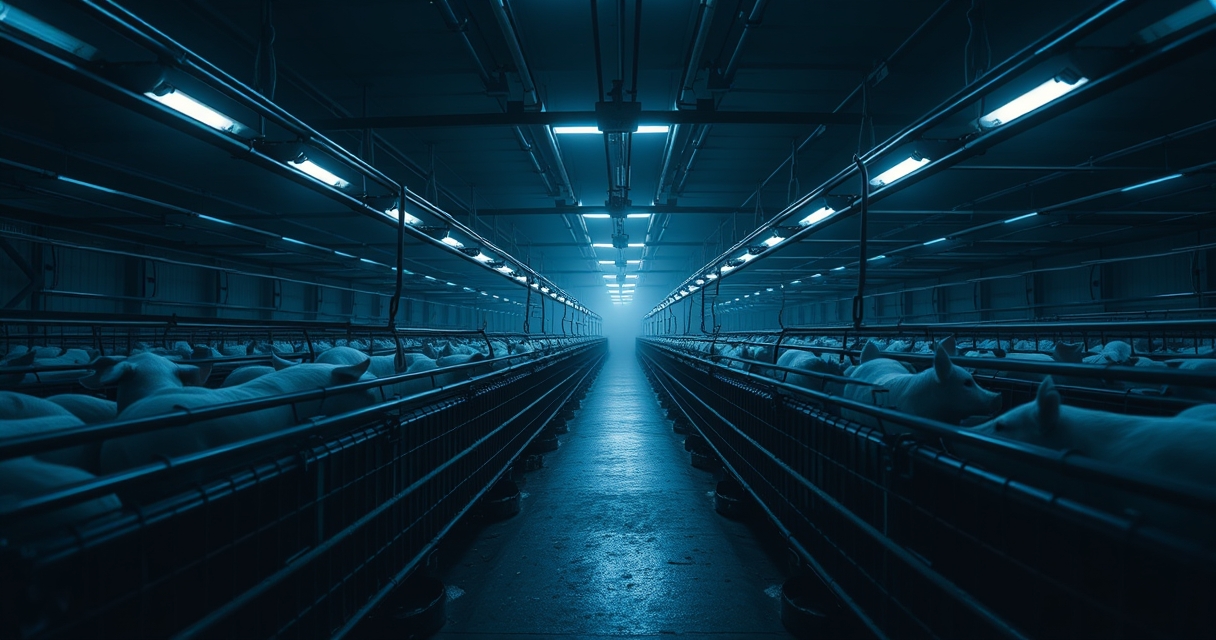
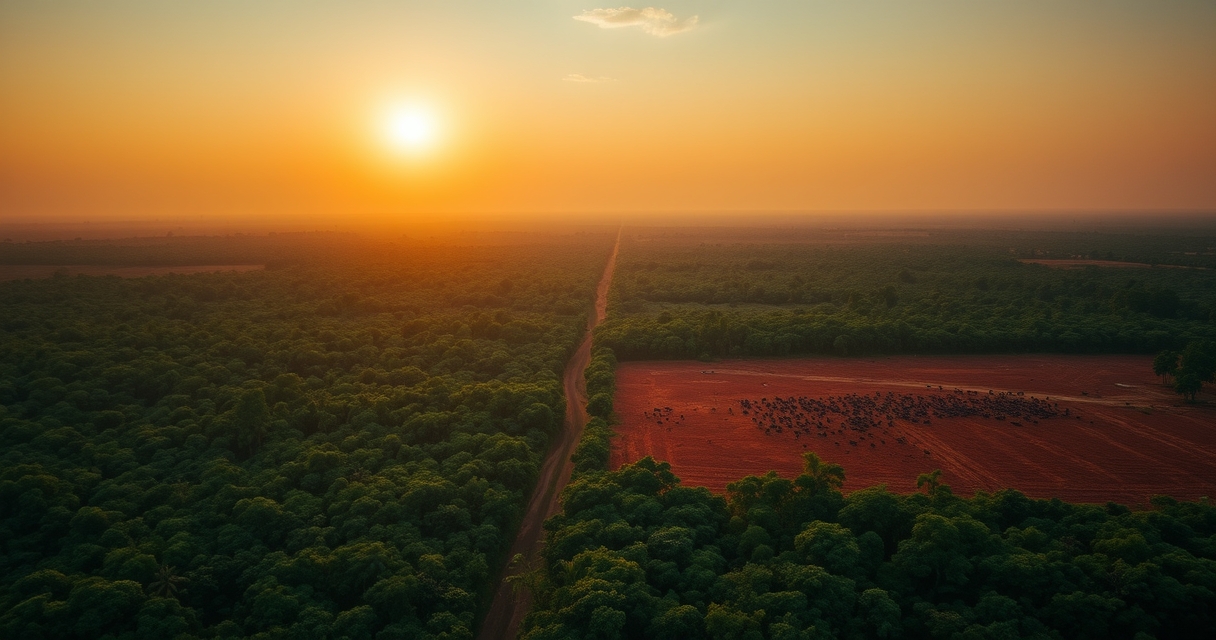
JBS S.A., the world's largest meat processing company, did not become a global behemoth through careful stewardship of the Amazon. The company's rise from a small butcher shop in Brazil to a multinational corporation worth billions was built on the systematic clearing of the world's most vital rainforest. In 2023 alone, Brazilian authorities fined JBS approximately $6.4 million for purchasing cattle from ranches that had been illegally deforested, a penalty that represents less than 0.01% of the company's annual revenue. This is not an anomaly but a structural feature of the business model: by the company's own admitted estimates, it cannot trace the origins of roughly 30% of the cattle it slaughters in the Amazon region. The fines function not as deterrents but as operating costs, a line item in the ledger of ecological destruction.
The supply chain is deliberately opaque. Cattle raised on illegally cleared land are "laundered" through multiple intermediary ranches before reaching JBS slaughterhouses, a process that conceals their origin from satellite monitoring and government inspectors. This system has been documented repeatedly by federal prosecutors in Brazil, yet JBS continues to process cattle from properties listed on the government's embargo list for deforestation. The company's public commitments to "zero deforestation" supply chains, announced with great fanfare in 2009 and again in 2020, have been conclusively shown to be empty promises. An investigation by the Federal Public Ministry of Brazil found that JBS purchased cattle directly from 17 properties that were under active embargo for illegal deforestation between 2017 and 2022.
This is not a story of a few bad actors within an otherwise responsible company. JBS's board of directors, its controlling shareholders the Batista family, and its executives have all overseen a system in which deforestation is not a side effect but a precondition for profitability. The Amazonian land market operates on a simple logic: cleared pasture is worth ten times more than standing forest. JBS does not need to own chainsaws or order trees cut; it only needs to offer prices that make deforestation the rational economic choice for every rancher in its supply chain. And it does, relentlessly. In 2023, JBS reported net revenues of approximately $72 billion, a figure that attests to the immense profitability of a model predicated on the liquidation of the planet's most significant carbon sink.
The Metabolic Rift Is Not a Metaphor
Marx's concept of the metabolic rift, developed in Capital through his analysis of capitalist agriculture, describes a material process: under capitalism, the soil's nutrients are systematically exported to distant cities in the form of food, never to return. The soil is depleted, the countryside is degraded, and a "rift" opens in the metabolic interaction between humanity and the earth. For Marx, this was a concrete, physical phenomenon, not a literary device. The Amazon today offers the clearest proof of his thesis in the twenty-first century. Cattle ranching in the biome does not simply remove trees; it destroys the entire nutrient cycle of the rainforest. The Amazon's famously poor soils, which sustain their astonishing biodiversity only through the rapid decomposition and immediate reabsorption of organic matter, are permanently ruined once the forest canopy is removed.
Within three to five years of deforestation, a cattle pasture loses its fertility. Grass yields decline, ranchers must burn more forest to create fresh pasture, and the original land is abandoned as degraded scrub. This is the metabolic rift made visible: capital takes the accumulated fertility of millennia, converts it into beef, ships it to Shanghai, Riyadh, and Moscow, and leaves behind wasteland. The Amazon does not regenerate after this process; the ecological community that depended on the closed-loop nutrient system is gone. The cattle themselves, as living capital, embody the rift. Each animal grazes on soil that is hemorrhaging carbon, nitrogen, and phosphorus, all of which are exported as meat and leather while the land systematically dies.
The metabolic rift in the Amazon is not an accident that better management can fix. It is the necessary form that cattle ranching takes when subordinated to the profit imperative. A sustainable cattle operation in the Amazon, one that rotated pasture, allowed forest regeneration, and maintained soil fertility, would produce beef at a cost that JBS could not sell on international markets. The entire global meat commodity chain depends on the externalization of ecological costs onto territories that can be mined for their natural capital. The Amazon is such a territory, and its sacrifice is not a bug in the system; it is the system's central function.
Beef Exports as Ecological Imperialism
The meat that comes from deforested Amazon land does not stay in Brazil. JBS exports approximately 60% of its Amazon-sourced beef to markets in China, the European Union, the United States, and the Middle East. This export flow is the material basis of ecological imperialism, a process by which the industrial core of the world economy appropriates the ecological capacity of the periphery to maintain its own consumption levels. Every kilogram of Amazon beef eaten in Beijing or London contains within it the destruction of approximately ten square meters of rainforest. The consumer in the global North enjoys cheap protein; the Amazon basin pays the cost in soil death, species extinction, and carbon release.
The debt of the global South to the global North, accumulated over centuries of colonialism and neocolonial extraction, is being repaid in the form of ecological sacrifice. Brazil's trade surplus in beef, which reached $11 billion in 2022, is a measure not of national wealth but of natural capital liquidation. JBS acts as the intermediary in this transfer, processing the destruction into a commodity form acceptable to global markets. The company's major shareholders, including the Batista family and various international investment funds, reap the rewards. The Brazilian people, particularly the rural poor and the Indigenous communities of the Amazon, bear the costs: poisoned water, exhausted soil, land conflicts, and the loss of a climate system that they depend on for survival.
This is not simply a case of environmental harm that can be addressed through consumer awareness or corporate social responsibility. The demand for Amazon beef is produced by the structure of global food systems. The cheapness of the meat is a function of the unaccounted ecological destruction, and the destruction in turn is a function of the pressures of global competition. JBS cannot afford to source only from sustainable ranches because its competitors do not, and its shareholders demand returns that only the current model can deliver. The alternative, a dramatic reduction in global meat consumption that would lower demand for Amazon pasture, is not available to individual consumers making "ethical" choices at the supermarket; it requires a fundamental restructuring of global agriculture and food distribution, a restructuring that capital will resist with all its resources.
Carbon Credits Cannot Repair What Capital Breaks
JBS has responded to mounting international pressure by announcing a "net zero" commitment for 2040 and by investing in what it calls "nature-based solutions," primarily carbon credit projects in the Amazon. The logic of carbon credits is that the destruction of the rainforest can be "offset" by conserving other forests or planting trees elsewhere. This logic is fundamentally unsound, both ecologically and economically. Ecologically, a carbon credit represents an attempt to commodify the single most complex ecosystem on the planet, reducing its billions of years of evolutionary history, its hydrological cycles, its Indigenous knowledge systems, and its irreplaceable biodiversity to a simple number of tons of CO2. The Amazon is not fungible; a tree planted in a degraded pasture in the Atlantic Forest does not substitute for a tree cut in the Amazon; the species, the soil ecology, and the climate functions are entirely different.
Economically, the carbon credit market reproduces the exact logic that produced the deforestation crisis. Carbon credits are a form of private property rights over atmospheric capacity, and like all such rights under capitalism, they will be accumulated by the wealthy and used to justify continued pollution by the powerful. JBS's carbon credit projects will not stop deforestation; they will simply provide a price at which deforestation becomes a tradeable commodity. If a rancher can earn $10 per hectare by not cutting forest, and a meat company can earn $15 per hectare of carbon credits by paying the rancher not to cut, then the system creates a new market in non-deforestation. But this market is inherently unstable; it depends on constant monitoring, enforcement, and the willingness of buyers to pay a premium that competes with the direct profits of deforestation. The history of carbon markets in tropical forests, from REDD+ in the Amazon to similar programs in Indonesia, suggests that the results are meager at best and fraudulent at worst, with credits sold for forests that were never at risk of being cut.
The carbon credit approach also obscures the central fact that JBS's business model requires the existence of cheap, degraded land that can be converted to pasture. A truly zero-deforestation supply chain would require JBS to pay ranchers a price for their cattle that made it more profitable to keep forests standing than to clear them, and to enforce this standard across tens of thousands of suppliers in a region larger than Western Europe. This is not merely difficult; it is impossible within the current profit structure. JBS's net zero commitment, like those of its competitors, is a public relations instrument designed to delay regulation and pacify investors, not a plan for actual ecological restoration. The company's lobbying arm in Brasília works relentlessly to weaken the Forest Code, prevent the demarcation of Indigenous territories, and block the creation of new protected areas. The hand that signs the carbon credit agreement is the same hand that funds the destruction.
The Amazon Burns Because Profit Rates Require It
The analysis leads to an uncomfortable conclusion. The Amazon is not being destroyed by ignorance, by backwardness, by a few corrupt officials, or by the failures of corporate governance. It is being destroyed because, under the current global economic system, the destruction of the Amazon is the most profitable use of the land. JBS does not deforest; it merely creates the economic conditions in which every rational actor in the region must deforest to survive. The rancher who refuses to clear forest will be outcompeted by the rancher who does; the slaughterhouse that refuses to buy from deforested ranches will lose market share to the one that will; the country that imposes environmental regulations will see its beef industry migrate to the country that does not. This is the iron logic of competition under capital, and it is as inexorable in the Amazon as it was in the factories of Manchester.
The metabolic rift that Marx identified in the nineteenth-century European countryside has now become a global phenomenon, and the Amazon is its most dramatic site. The rainforest, which evolved over 55 million years to maintain a stable climate and support an extraordinary abundance of life, is being liquidated in a few decades to produce hamburgers for a global middle class that does not know where its food comes from. This is not a crisis that can be resolved by better certification schemes, more consumer awareness, or more corporate pledges. It is a crisis of the fundamental relationship between human society and the natural world under capitalism, and it requires a fundamental transformation of that relationship.
The only solution commensurate with the scale of the problem is the removal of the Amazon from the market entirely: a permanent, enforceable moratorium on all deforestation, the recognition of Indigenous territorial sovereignty over the majority of the biome, the conversion of JBS's supply chain to state-owned or worker-controlled enterprises that are not driven by the profit imperative, and a dramatic reduction in global meat consumption to reduce the demand for pasture. This is not a program that can be achieved by working within existing political structures; it requires a movement strong enough to challenge the power of capital itself. The Amazon burns because profit rates require it to burn, and it will continue to burn until the system that demands its sacrifice is replaced. The task for the left is not to make capitalism green but to build a world in which the metabolic rift is healed, a world in which human production is once again subordinated to natural reproduction. The rainforest is waiting. It does not have much time.