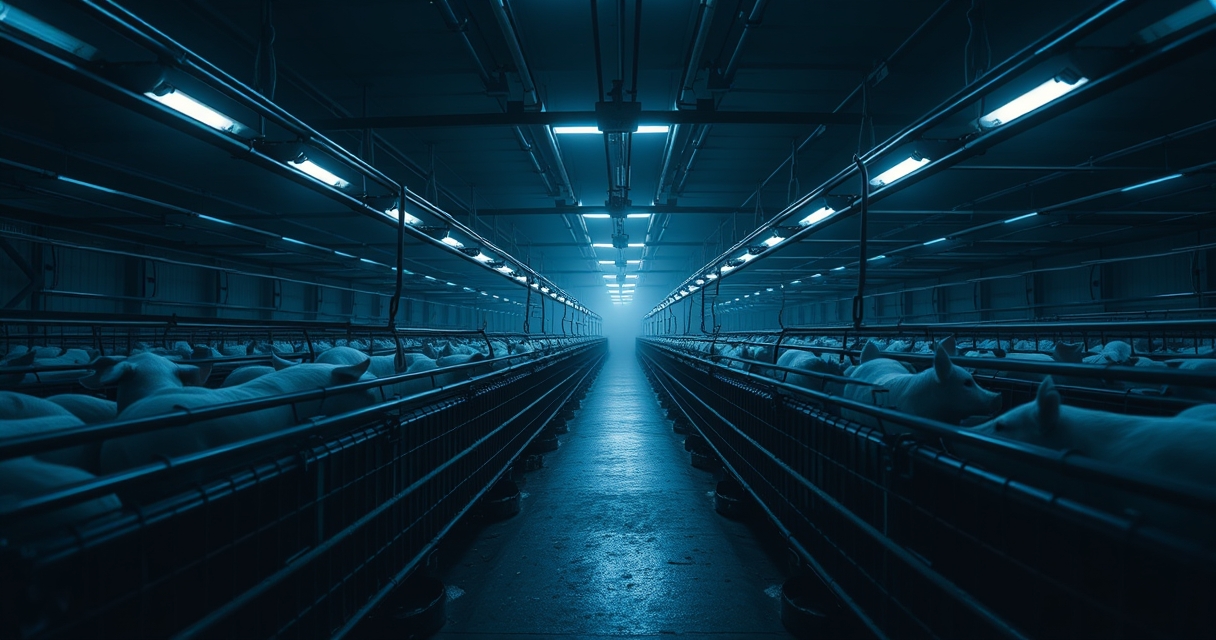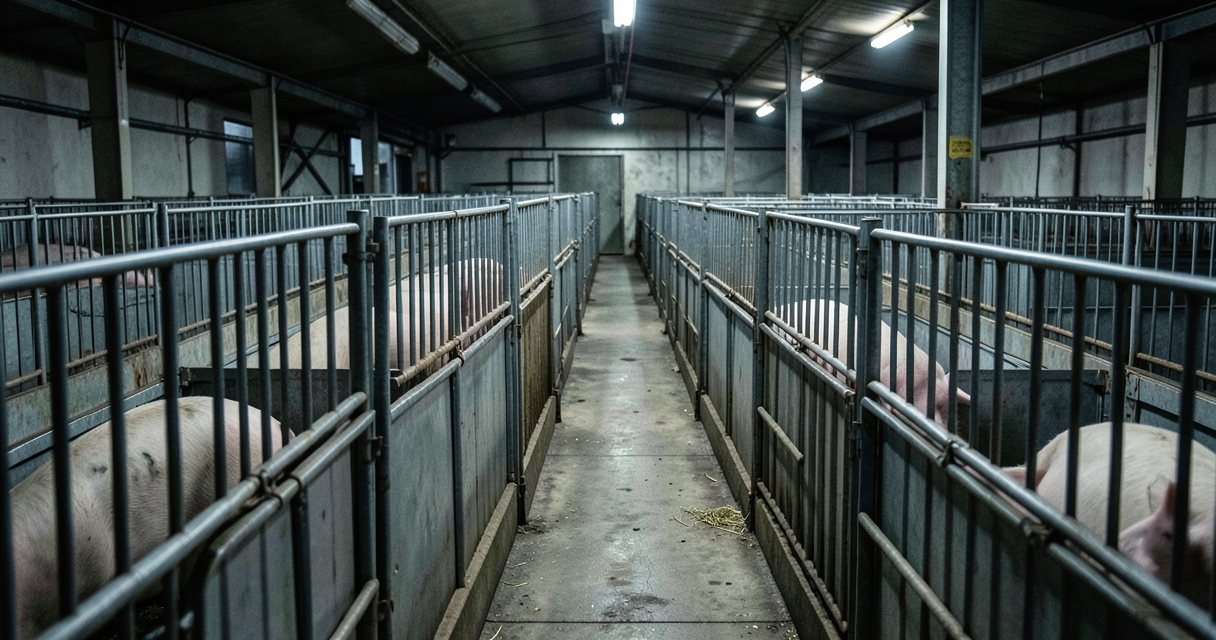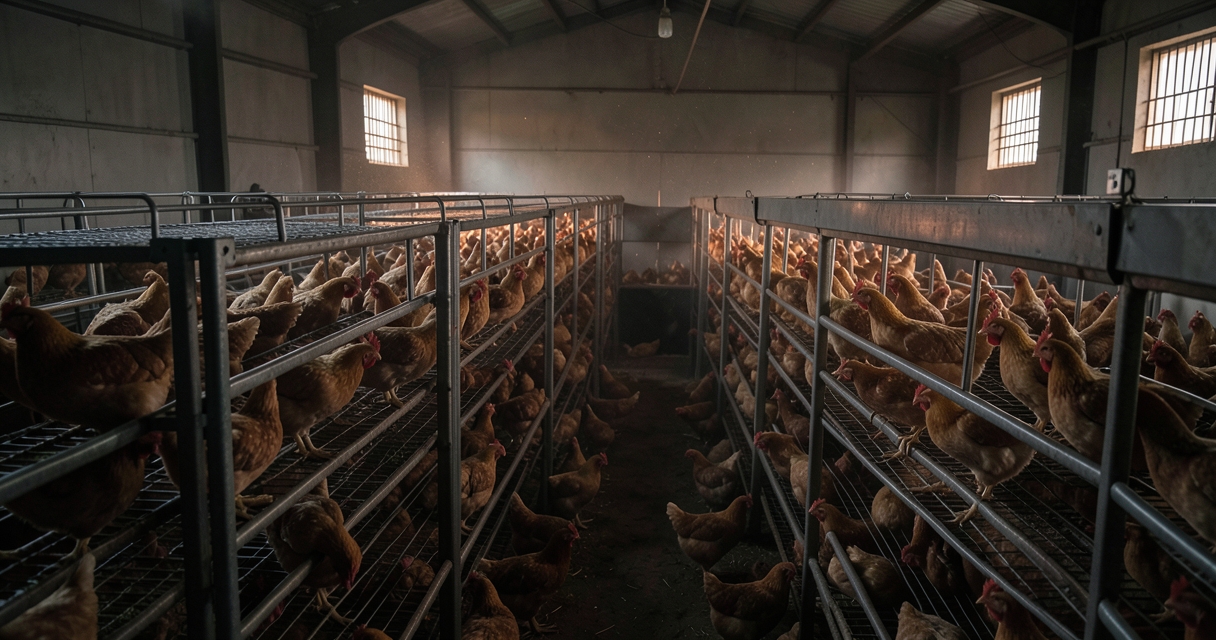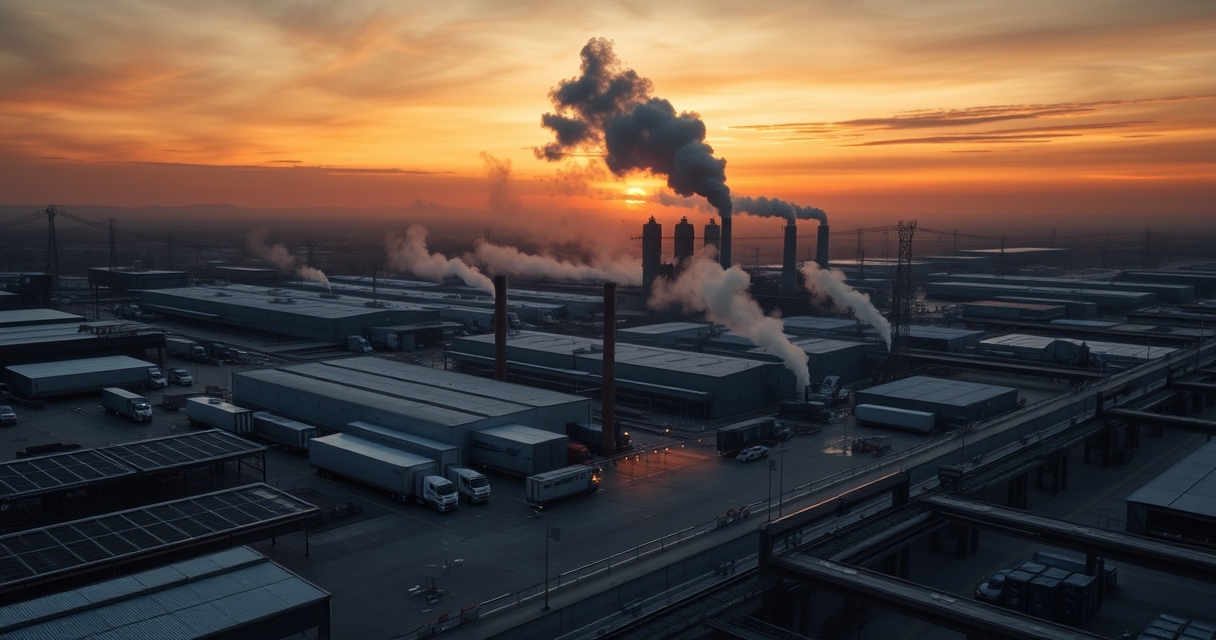
At 6:00 AM in a JBS processing facility in Greeley, Colorado, the line begins to move. Steel shackles clatter along an overhead rail. Birds by the thousand are inverted, stunned, and bled. By the end of the day, that single plant will have processed over 180,000 chickens. Globally, JBS processes 13 million chickens per day. That number is not a statistic. It is a rate of production—a velocity of biological conversion determined not by human nutritional need, not by any natural life cycle, but by the metabolic requirements of capital accumulation. The animal body has been subsumed into the formal machinery of value extraction.
Four Companies Control the Killing Floor
The industrial slaughter of terrestrial animals is not dispersed among thousands of small farms and independent butchers. It is concentrated in four firms—Cargill, JBS, Tyson Foods, and Smithfield Foods—that collectively control the vast majority of beef, pork, and poultry processing in the United States and large portions of the global market. This concentration is not accidental. It is the logical endpoint of a sector driven by consolidation, in which each merger and acquisition has eliminated a competitor, centralized control over supply chains, and depressed the prices paid to the contract growers who raise the animals. The killing floor is not a site of production serving consumer demand. It is a bottleneck through which capital maximizes the velocity of turnover and extracts surplus value at every stage of the circuit.
These four firms do not merely slaughter animals. They own the genetics, the feed, the transport, the processing, and much of the distribution. When a farmer signs a contract with Tyson or Cargill, they surrender control over every input and output. They become an appendage of the corporation's balance sheet, bearing the risk of disease and mortality while the firm captures the profit. This is not a market of independent producers. It is an oligopoly with a direct line to the slaughterhouse door.
The Animal as Raw Material in the Circuit of Capital
To understand industrial animal agriculture, one must first understand that the animal is not the producer of anything in the Marxist sense. The chicken does not own the coop, the feed, or the hatchery. It performs no labor that creates value for itself. The worker in the processing plant—the line worker who wields the knife, who stands in blood and ammonia for twelve hours—that worker is the source of surplus value. The chicken is what Marx called a raw material, a "subject of labor" that is transformed into a product through the application of human labor power. The animal's body, its metabolic processes, its capacity to turn grain into flesh—these are not gifts of nature freely appropriated. They are themselves produced inputs, engineered through selective breeding, antibiotic regimes, and precisely calibrated feeding schedules to maximize the rate of conversion from feed to meat per unit time.
This transforms the animal into a manufactured object. The broiler chicken of 1950 required 70 days to reach market weight. Today, it requires 47. The modern pig gestates in a crate so narrow it cannot turn around, because space is a cost to be minimized, not a welfare consideration. The dairy cow is inseminated annually to maintain lactation, then separated from her calf within hours so that milk intended for her offspring can enter the commodity stream. Every biological limitation—growth rate, feed conversion efficiency, disease resistance—has been subjected to capital's demand for accelerated turnover. The animal is not a being with a life cycle or ecological function. It is a bearer of potential value, a quantity of protein fattened to a target weight and converted to a packaged commodity at a predetermined profit margin.
Vertical Integration as Total Subsumption
The true innovation of industrial animal agriculture is not the mechanized slaughterhouse, which has existed in some form for over a century. It is the total vertical integration of the animal's life from conception to degradation. In the pork sector, Smithfield Foods owns the breeding stock, the feed mills, the farrowing barns, the nursery facilities, the finishing floors, the slaughterhouses, and the processing and distribution networks. This is not merely economic efficiency. It is what Marx described as the real subsumption of labor under capital—the reorganization of the production process itself to serve the imperative of accumulation. Here, the production process is the animal's entire existence. The pig is born into a factory, lives in a factory, and dies in a factory. Every stage of its life has been designed by an industrial engineer to minimize time, cost, and waste.
This subsumption extends to the contract growers who house the animals. They are nominally independent, but they own nothing meaningful. The corporation provides the animals, the feed, the veterinary protocols, and the specifications for the barns. The grower provides the building, the labor, and the debt. They assume the risk of mortality, of disease outbreaks like African swine fever, of volatile feed prices. The corporation assumes the profit. The grower's barn is a site of production in the same sense that a worker's rented apartment is a site of rest—formally private, effectively controlled by the entity with real power. The system of vertical integration is not a food system that happens to use animals. It is a system of extraction in which the animal body and the contract grower's labor are both raw materials to be exploited and discarded.
The Rate of Profit Dictates the Rate of Death
Thirteen million chickens per day. One hundred and fifty million hogs per year globally. Over three hundred million cattle slaughtered annually. These numbers are not the product of human protein demand. They are the product of the rate of profit. The entire apparatus of industrial animal production is calibrated not to feed populations, but to generate returns on invested capital. The slaughter line moves faster not because more people are hungry, but because a faster line reduces the cost per unit of fixed capital—the building, the equipment, the chain—and raises the turnover rate of circulating capital, the feed and the animals themselves. Every second shaved from the processing cycle is a second of unpaid labor extracted from the line worker and a second of biological time stolen from the animal.
This logic drives the relentless push toward concentration and volume. A slaughterhouse processing 200,000 chickens per week is less profitable per bird than one processing 400,000, because the fixed costs of the building and machinery are distributed more thinly. The industry's entire trajectory—larger flocks, faster growth rates, centralized processing, globalized supply chains—is a response to the falling rate of profit in agriculture as a whole. Capital escapes the squeeze on margins in crop production by moving into the faster-turnover, higher-value realm of animal products. Then it applies the same pressure to that realm, driving consolidation and intensification until only the four largest firms remain, each processing millions of lives per day to earn a few cents per unit. The rate of profit dictates the rate of death.
Conclusion: The Logistics of Death Will Not Be Reformed by Consumer Choice
The prevailing liberal response to industrial animal agriculture is the consumer campaign: buy cage-free, pasture-raised, humanely certified. This response assumes that the problem is one of ethical choice within a market that can be improved by conscientious spending. It is, at root, a faith that capital can be persuaded to produce animal products differently if enough consumers signal a preference. This faith is not merely naive. It is an ideological evasion of the structural determination of the industry. No consumer campaign can compel Cargill or JBS to abandon the vertical integration, the line speeds, the confinement systems, and the genetic selection that constitute the very basis of their profitability. These features are not distortions of an otherwise benign system. They are that system. The rate of profit that dictates 13 million deaths per day is not responsive to the ethical preferences of a minority of shoppers. It is responsive to the market share of the four firms, the price of corn and soy, the cost of labor, and the availability of loans for new barn construction.
To believe that industrial animal agriculture can be reformed from within is to misunderstand what it is. It is not a food system with capitalist characteristics. It is a capitalist system that happens to process animals. The logistics of death will not be transformed by sticker campaigns. They will be transformed only when the ownership and control of the processing facilities, the feed mills, the breeding stock, and the distribution networks are removed from the circuit of capital and placed under democratic, worker-led, and community-controlled governance. This is the Marxist analysis: the problem is not the chicken in the cage. The problem is the cage of capital itself. The only adequate response is not to ask the warden for better conditions, but to abolish the prison and build something else in its place.