Duplin County as Capital’s Laboratory
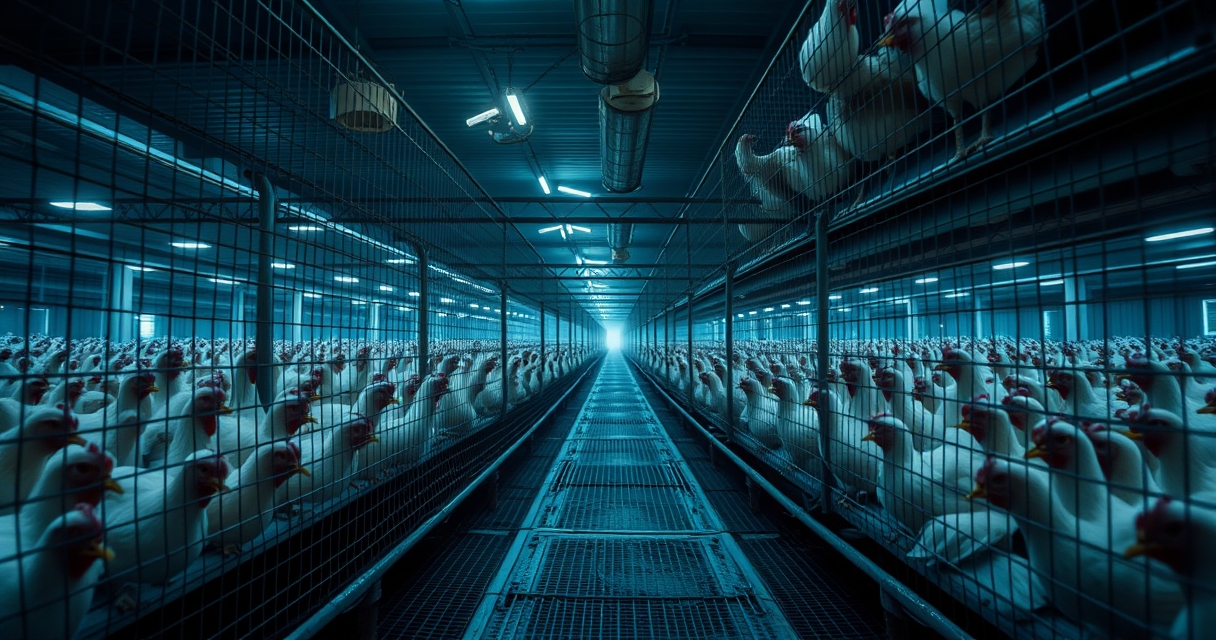
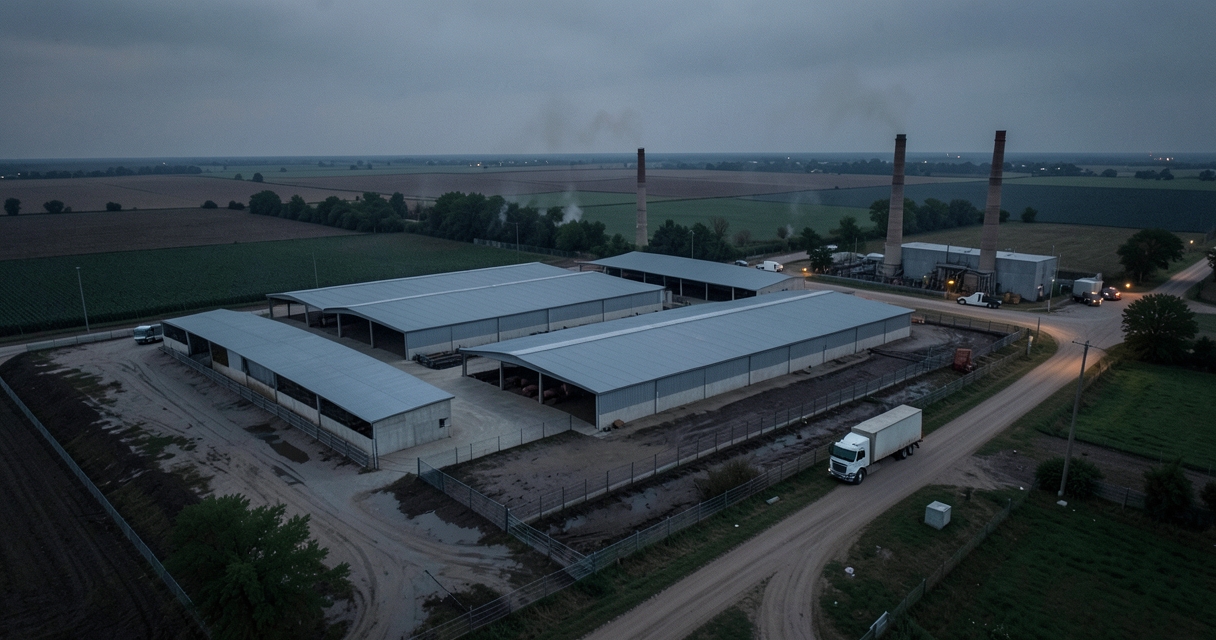
In Duplin County, North Carolina, the arithmetic of exploitation is stark: more than 600,000 hogs occupy concentrated animal feeding operations (CAFOs) while fewer than 50,000 human beings reside in the county. This is not a simple rural demographic curiosity but a deliberate spatial configuration of capital. The CAFO model—owned predominantly by Smithfield Foods, a subsidiary of the Chinese conglomerate WH Group—concentrates living beings into the smallest possible physical footprint to maximize throughput per square foot. The environmental consequences are predictable: Duplin County’s waterways run thick with hog waste, its air thick with hydrogen sulfide from open-air lagoons. Yet the social consequences, less visible to the consumers who purchase Smithfield’s packaged pork in suburban supermarkets, are equally systematic.
Private prison corporations, including GEO Group, operate facilities within commuting distance of Smithfield’s processing plants. The first point of connection is obvious: the same rural counties that lack zoning regulations to resist hog CAFOs also lack the political infrastructure to resist prison contracts. Rural deindustrialization has hollowed out the economic base of these communities, making them desperate for any employment anchor—whether a slaughterhouse or a detention center. Capital exploits this desperation by bidding down wages and conditions in both sectors simultaneously. For Smithfield, the proximity of a prison population provides a reserve army of incarcerated labor should unionization efforts at its processing plants gain traction, while the prison itself offers steady employment for a fraction of the workers displaced by the consolidation of Southern agriculture.
The Same Workers Process Hogs and Fill Prisons
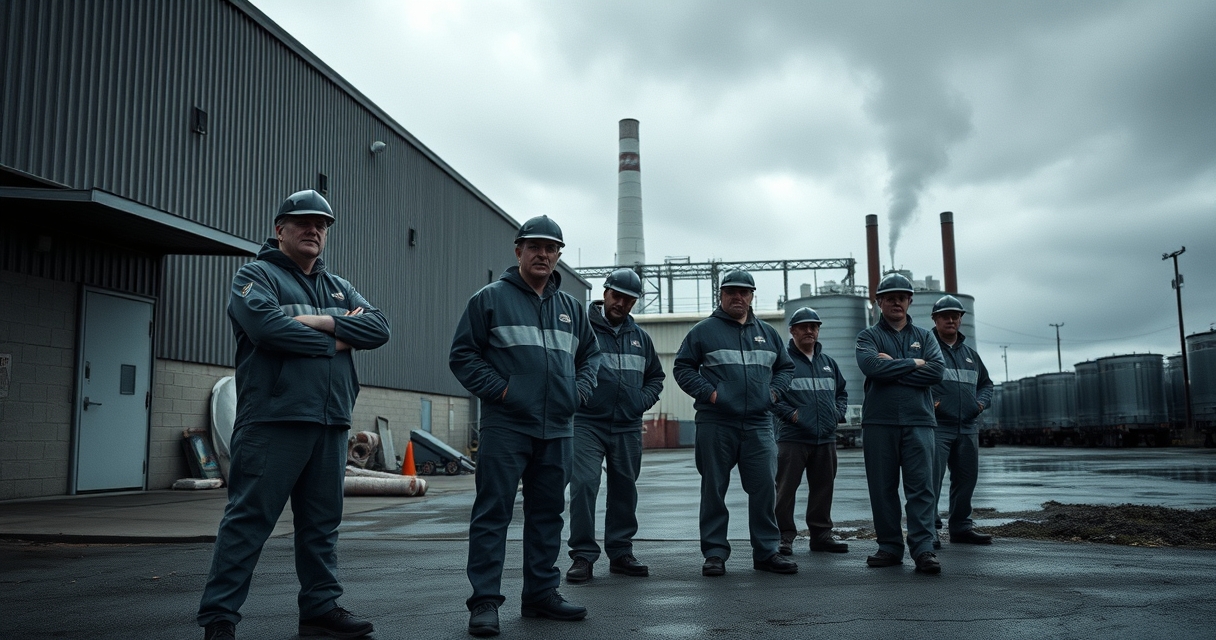
The labor force that enters Smithfield’s plants at 4:00 AM to disassemble 1,100 hogs per hour is overwhelmingly Latino, predominantly undocumented, and systematically segregated from the protections that industrial unionism once provided. These workers suffer the highest rates of repetitive stress injury of any manufacturing sector in the United States; carpal tunnel syndrome, tendon damage, and knife wounds are normalized as “the price of production.” When their bodies break down—and they do break down, typically within five to seven years of starting the job—these workers find themselves with no medical care, no workers’ compensation claims they can file without risking deportation, and no recourse but to seek whatever low-wage employment remains. For those who are male, young, and unable to work, the path from slaughterhouse to jail cell is tragically short. The criminalization of poverty, combined with immigration enforcement’s integration with local policing under 287(g) agreements, means that a workplace injury that renders a migrant worker unable to perform at full speed can become the triggering event for a deportation proceeding—or, for those who stay and work while injured, a workplace accident that brings law enforcement to the plant floor.
The numbers confirm the structural relationship. Data from the Bureau of Justice Statistics shows that Latino men are incarcerated at nearly three times the rate of white men, and undocumented status is a criminal offense in the context of reentry after deportation. The meatpacking industry is the largest private employer of undocumented immigrants in manufacturing, according to the Pew Research Center. It requires no conspiracy theory to connect these dots: the supply chain for Smithfield hog products is also a supply chain for the carceral system. The same rural geography that isolates CAFOs from urban consumers also isolates immigrant communities from legal support, union organizers, and the media spotlight. This isolation is not an accident; it is a feature of the spatial logic that capital has perfected in the American South.
ICE Raids as Labor Discipline in the Meatpacking Industry
The Trump administration’s 2018 ICE raids at a Smithfield plant in Tar Heel, North Carolina, did not occur in a vacuum. They occurred at a moment when the United Food and Commercial Workers Union (UFCW) was attempting to organize the plant’s workers around demands for safety improvements and wage increases. The timing of the raids—which detained more than 130 workers—cannot be separated from the labor struggle. As the Southern Poverty Law Center documented, Smithfield had a long history of cooperating with immigration enforcement to eliminate workers who attempted to organize. The company’s response to unionization drives has consistently been to invite ICE onto the premises, using the threat of deportation to discipline a workforce that might otherwise demand rights that capital finds inconvenient.
This strategy is not confined to Smithfield. The pattern repeats across the poultry and beef processing sectors: Tyson Foods, Cargill, and JBS have all faced accusations of using ICE referrals to undermine labor organizing. The Marxist analysis here is straightforward: immigration enforcement serves as a mechanism of labor discipline in industries where the physical geography makes it possible to concentrate vulnerable workers. The threat of detention is more effective than any wage cut at suppressing labor militancy because it attacks not merely the worker’s economic position but their very existence in the country. Capital benefits doubly: it secures a compliant workforce while simultaneously framing immigration enforcement as a protection for native-born workers—a classic divide-and-conquer strategy that obscures the shared interests of all workers, regardless of documentation status.
The Spatial Politics of Invisibility
The rural siting of CAFOs and meatpacking plants performs a dual ideological function. First, it removes the violence of industrial animal slaughter from the sensory experience of the consumer. Unlike the abattoirs of the early twentieth century, which were located in urban stockyards visible to the public, modern slaughterhouses are hidden behind security fences, buffer zones, and miles of empty farmland. The hog goes in alive; the packaged pork chop emerges at the supermarket with no trace of the animal’s suffering, the worker’s injury, or the environmental contamination left behind. This spatial separation is the material basis for the commodity fetishism that Marx identified: the consumer encounters the finished product without any awareness of the social relations that produced it.
Second, this invisibility extends to the workers themselves. The migrant labor force that processes the nation’s meat is physically invisible to the majority of Americans. These workers live in isolated rural communities, often in substandard housing provided by the company, without reliable transportation or the linguistic ability to engage with journalists or labor organizers. The result is a double invisibility: the exploitation of the animal and the exploitation of the human are both hidden by the same rural spaces. This is not merely a logistical convenience for capital but a political necessity. If urban consumers could see the conditions under which their bacon is produced—if they could witness a slaughterhouse line worker losing fingers to repetitive motion, or a hog confined to a gestation crate so small it cannot turn around—the moral legitimacy of the entire system would face crisis. The spatial politics of invisibility protect the profit margins of Smithfield and its competitors by keeping the full violence of the system out of sight and out of mind.
Can Solidarity Bridge the Killing Floor and the Prison Yard?
The analysis presented here reveals that the carceral geography of industrial meat is not a collection of coincidences but a coherent system of spatial management designed to maximize exploitation while minimizing resistance. The workers who kill hogs, the workers who fill GEO Group prisons, and the migrant workers who fear ICE raids are all subject to the same logic: capital requires concentrations of vulnerable bodies in isolated spaces where the cost of production can be externalized and the cost of resistance can be made prohibitively high. The question that remains open is whether this shared structural position can generate a shared political response.
The history of migrant labor in American manufacturing suggests that the greatest victories for working-class solidarity have come when native-born and immigrant workers recognized their common enemy. The United Farm Workers and the Industrial Workers of the World both built cross-ethnic coalitions that challenged the divide-and-conquer strategies of capital. The geography of the modern meatpacking and carceral systems poses a severe obstacle to such solidarity: rural isolation, language barriers, and the threat of deportation all conspire to prevent the formation of cohesive working-class organizations. But the same spatial concentration that makes workers vulnerable also makes them strategically important. A strike at a Smithfield plant in Tar Heel, North Carolina, would paralyze pork production across the Eastern Seaboard. A work stoppage at a GEO Group facility would unsettle the entire system of private incarceration. These points of potential leverage remain unexploited, but they are not inaccessible.
The path forward requires a political program that refuses to separate the struggles against factory farming, mass incarceration, and immigration enforcement. Such a program would demand not merely better conditions within the current geography but a fundamental reorganization of how we produce meat and how we punish. It would demand that the rural counties of the American South become sites of working-class power rather than dumping grounds for animal waste, human waste, and the dispossessed. The geography of capital’s choosing can become the geography of labor’s strength—but only if the connections between the killing floor and the prison yard are made visible, named, and organized around. The hogs of Duplin County cannot wait; the workers of Smithfield cannot wait; the prisoners of GEO Group cannot wait. The solidarity that unites them must be built now, across the fences and the county lines and the prison walls, or it will never be built at all.