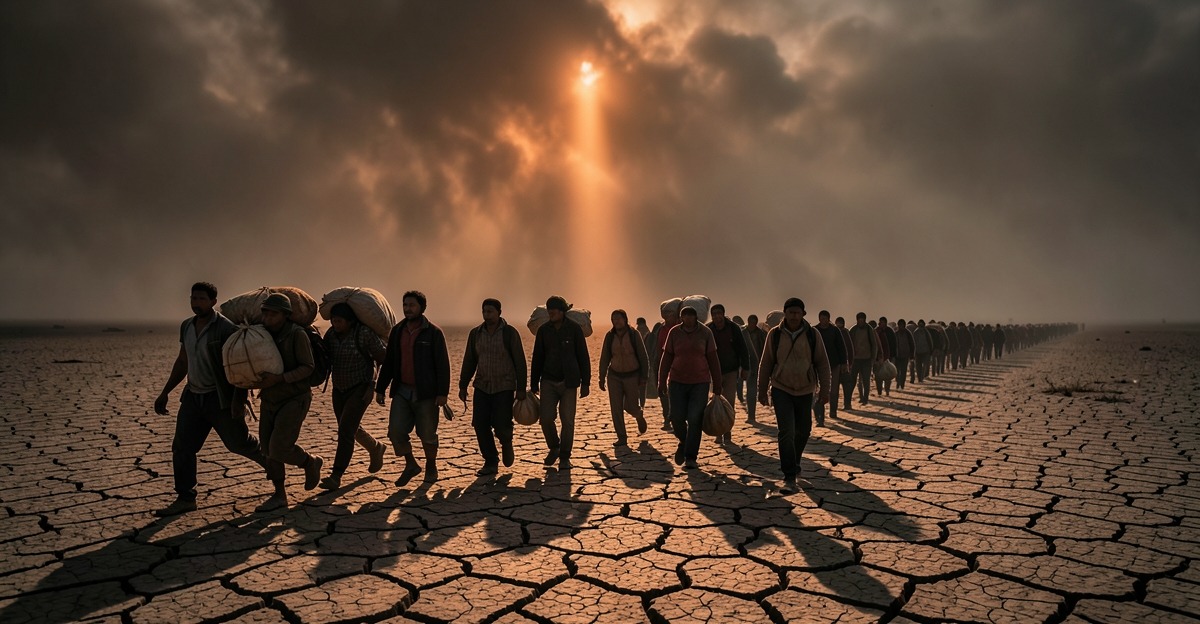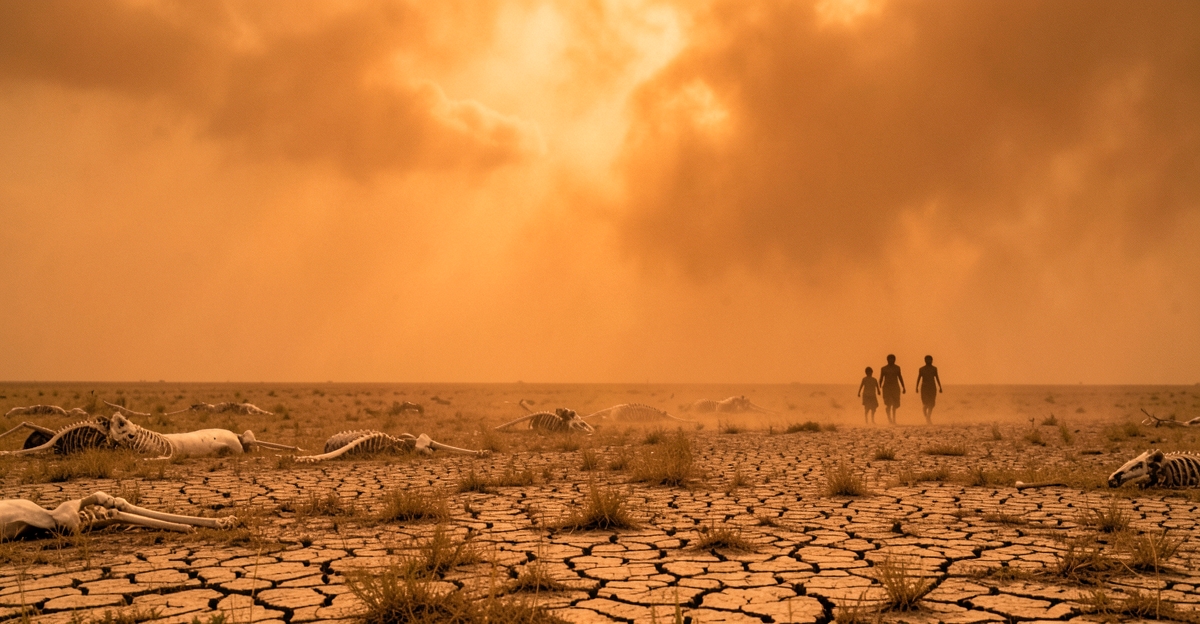
On October 1, 2023, the European Union activated the first reporting phase of its Carbon Border Adjustment Mechanism (CBAM), a policy ostensibly designed to prevent "carbon leakage" by taxing imports based on their embedded emissions. The European Commission hailed it as a landmark of green industrial policy, a necessary tool to meet the bloc's 2050 climate neutrality target. But on the other side of the Mediterranean, in the sprawling, dust-choked expanse of the Sahel, the mechanism registers as something else entirely: a new invoice for a debt the region never incurred. The Sahel produces 0.1 percent of global carbon dioxide emissions, yet it is losing 40 percent of its agricultural output to desertification driven by a climate crisis it did not create. CBAM does not offer these nations a path to sustainable development; it extracts more value from their impoverishment, converting European climate guilt into a structural tariff on the survival of Africa's most vulnerable working class.
1. The Sahel Produces Almost No Emissions but Bears the Worst Climate Consequences
The arithmetic of atmospheric exploitation is brutally simple. Since the Industrial Revolution, the nations now comprising the EU have emitted roughly 22 percent of cumulative global carbon dioxide. The entire African continent accounts for less than 4 percent of historical emissions; the Sahel band—stretching from Senegal to Sudan, encompassing roughly 300 million people—contributes a rounding error. Yet the Sahel is the epicenter of the climate crisis's material violence. Lake Chad, once one of Africa's largest freshwater bodies and the lifeblood of 30 million people across Niger, Nigeria, Chad, and Cameroon, has lost 90 percent of its surface area since the 1960s. The Sahara expands southward at a rate of 48 kilometers per year in some areas, burying arable land beneath mobile dunes. The World Bank projects that 30 million or more people in the Sahel will be climate-displaced by 2050. This is not a natural disaster. It is a mediated catastrophe of capital's atmospheric accumulation. The European working class did not make this decision either; it was the imperial bourgeoisie, operating through colonial administrations and later through the structural adjustment programs of the IMF, that organized a global division of labor in which African nations were consigned to extractive commodity production while Europe industrialized on their resources, their labor, and their atmosphere. The dust storms that now choke the Sahel are the physical detritus of that history.
The consequences are not abstract. Fulani pastoralists in Mali, Hausa farmers in northern Nigeria, Tuareg traders in Niger—these are the actual social subjects of what the climate literature calls "vulnerability." They are the working and peasant classes of the Sahel, organized in production regimes that have adapted to a specific ecological equilibrium for centuries. That equilibrium has collapsed. Rainfall is shorter, more violent, and less predictable. Soil moisture has declined by 20 to 40 percent across the region since 1970. The Sahel's primary productive class, its smallholding peasantry and livestock herders, now confronts a crisis of simple reproduction: they cannot produce enough to feed themselves, let alone generate a surplus for the market. The reserve army of labor—in Marxist terms, the unemployed and underemployed population that capital can draw upon to depress wages—is expanding exponentially, not because of any organic demographic process but because a climatic system has been violently reorganized to serve the energy demands of a continent thousands of kilometers away.
2. EU Carbon Border Taxes Punish Victims of European Industrial History
CBAM operates on a simple principle: importers into the EU must purchase certificates corresponding to the carbon price that would have been paid if the goods were produced under EU emissions trading rules. For exporters in the Sahel—primarily in raw materials, fertilizers, cement, iron, steel, aluminum, and electricity—this constitutes a new layer of customs taxation. The United Nations Conference on Trade and Development estimates that CBAM costs to African exporters could reach USD 25 billion per year. For comparison, that figure exceeds total annual foreign direct investment into all of West Africa. This is a transfer of value from the periphery to the center, executed through the administrative apparatus of environmental regulation. The EU does not propose to return these revenues to the nations most affected by climate change. It retains them for its own green transition fund, effectively financing European decarbonization by taxing the very countries worst positioned to pay.
The carbon tariff is a mechanism of unequal exchange dressed in ecological virtue. The EU's own impact assessment acknowledges that CBAM could reduce African GDP by 1.5 to 2 percent, a figure that dwarfs the paltry climate adaptation finance commitments made at COP summits.
This is not accidental. The architecture of CBAM reproduces, within the sphere of environmental policy, the same unequal relations that characterized colonial extraction. Under formal colonialism, the metropole extracted raw materials at below-market prices and sold finished goods at a markup—the classic mechanism of unequal exchange theorized by dependency theorists like Arghiri Emmanuel and later by Marxist ecologists like John Bellamy Foster. CBAM achieves a similar effect through a different mechanism. The Sahel nations, already constrained by the structural adjustment legacies of the 1980s—privatized utilities, dismantled state agricultural marketing boards, currency pegs that prevent competitive devaluation—cannot afford to decarbonize their nascent industrial sectors. They cannot afford the technology transfer that would allow them to produce with lower embedded emissions. So they will pay the tariff, or they will lose access to European markets, or both. The result is the same: surplus value flows northward, and accumulation in the Sahel is further blocked.
3. Climate Migration from the Sahel Is Imperial Blowback
The World Bank's projection of 30 million climate-displaced persons from the Sahel by 2050 is not a humanitarian projection in the liberal sense. It is a forecast of the geographic recomposition of the global reserve army of labor. When Sahelian pastoralists can no longer graze their herds because the wells have dried, when Hausa farmers can no longer coax millet from cracked, desiccated fields, they do not vanish. They move. They move to the peri-urban slums of Bamako, Ouagadougou, Niamey, and eventually to the coastal cities of Abidjan, Accra, and Lagos. From there, the most desperate, the most dispossessed, will attempt the Mediterranean crossing. The European response—fortification, Frontex, pushbacks, deportation—is the superstructure of a material base that consists of making the Sahel uninhabitable. The carceral wage that Sahelian migrants encounter in Europe is the logical extension of a process that begins with the carbon tariff: both are mechanisms for managing the surplus population that imperial capitalism has generated and now fears.
The term imperial blowback is too polite. It suggests an accidental recoil, an unintended consequence of otherwise well-intentioned policy. There is nothing accidental about the EU's simultaneous sponsorship of CBAM and militarization of its southern border. Both policies serve the same class interest: insulating European capital and labor from the costs of a climate crisis that European capital created. The carbon tariff protects European industry from competition. The border fortifications protect the European labor market from the influx of workers whose wages would undercut the domestic proletariat. Together, they constitute a system of climate apartheid in which the costs of ecological crisis are borne entirely by the class and region that contributed least to its creation. The commodification of migrant labor in Europe—where Sahelian workers are super-exploited in construction, agriculture, and domestic service, denied legal status, paid below minimum wage, and housed in squalid camps—is not a separate issue from climate policy. It is the same logic operating on the same bodies.
4. CBAM Reveals Green Policy as Continued Extraction
Marxist analysis has always insisted that the contradictions of capitalism do not disappear when capital changes its ideological justification. The shift from "free trade" to "green trade" is a shift in the form of extraction, not its abolition. CBAM reveals the underlying reality of climate policy under capitalism: it is a mechanism for redistributing the costs of ecological crisis upward and inward, from the working class to the peasantry, from the core to the periphery. The European Green Deal, of which CBAM is a central pillar, budgets €1 trillion over the next decade for Europe's climate transition. Not a single euro of this is allocated to compensating Sahelian nations for the destruction of their agricultural base. The logic is transparent: the working class of Europe cannot bear the costs of decarbonization, because that would threaten profitability, so those costs are externalized to those with even less political power.
Climate colonialism is not a metaphor. It is the concrete process by which the atmospheric space of the planet is appropriated by the industrial core, and the physical consequences of that appropriation are imposed on the periphery through terms of trade that cannot be refused.
The Sahel's own experiments with green transition—the Great Green Wall project, a reforestation initiative across the width of the continent—are chronically underfunded, receiving less than 20 percent of their pledged financing. Meanwhile, European corporations continue to extract uranium from Niger (supplying France's nuclear power plants), gold from Burkina Faso, and oil from Chad, all under carbon accounting rules that assign those emissions to the producer country, not the consumer. The CBAM adjusts for this by taxing the embedded carbon at the border, but it does not tax the extraction itself. It does not tax the European consumer. It taxes the African exporter. This is the mechanism of unequal exchange operating at the level of atmospheric chemistry: the Sahel produces the raw materials for European energy systems, absorbs the climatic damage from their combustion, and is then charged for the privilege.
5. Who Owes the Climate Debt: The Arithmetic of Colonial Carbon
The arithmetic of colonial carbon is not complicated. The EU has emitted more than 800 billion tons of CO2 since 1750. The Sahel has emitted perhaps 500 million tons—one-sixteenth of one percent of the European total. The cost of adapting the Sahel to climate change—building irrigation systems, restoring degraded land, relocating coastal populations, developing drought-resistant crops—has been estimated by the African Development Bank at USD 1.3 trillion over the next decade. CBAM generates revenues of roughly USD 25 billion per year from African exporters. If even half of that were returned to climate adaptation finance for the most affected nations, the math would begin to approach a just settlement. But no mechanism exists for such redistribution. The carbon tariff is a revenue extraction device, not a compensation fund. The climate debt—the sum of unpaid obligations that the industrial core owes to the periphery for the appropriation of atmospheric capacity—grows larger with every ton of CO2 embedded in European consumption and every ton of Sahelian dust blown across the Atlantic.
The only resolution to this contradiction is the abolition of the system that generates it. Not reform of CBAM, not more generous adaptation finance pledges, not carbon offset markets that allow European corporations to buy "credits" from Sahelian reforestation projects while continuing to emit—these are the mechanisms of continued extraction. The working class of Europe has no material interest in the climate colonialism that its bourgeoisie is constructing. A just transition requires that the costs of decarbonization fall on the accumulated capital that produced the crisis, not on the peasantry that suffered its consequences. It requires that the Sahel's right to develop—to industrialize, to burn the fossil fuels that the West burned to build its wealth—be recognized and funded. And it requires that carbon tariffs become what they claim to be: a mechanism for reducing emissions through collective, equal sacrifice, not a new form of tribute exacted from the world's poorest. Until then, the Sahel dust bowl is not a tragedy; it is a crime, invoiced in the fine print of European environmental law.