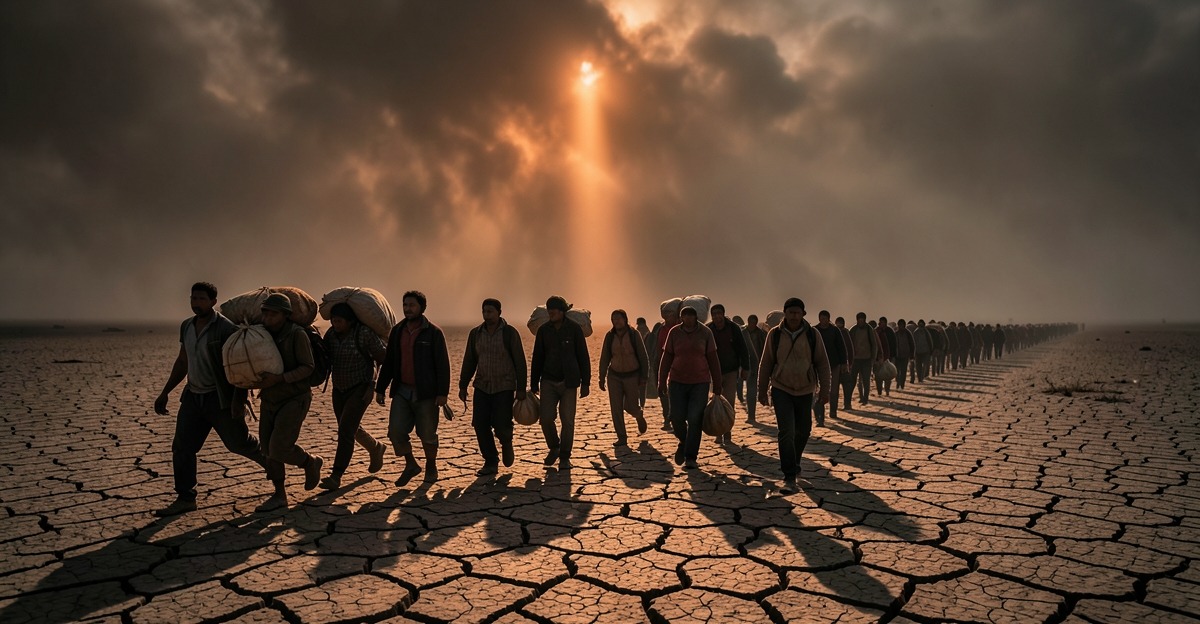
On October 12, 2018, some 7,000 people, mostly from Honduras, crossed the border from Guatemala into Mexico. This was not a sudden, inexplicable event. The caravan was the product of a decade of political violence, economic dispossession, and ecological destruction, all orchestrated within the logic of imperial capital accumulation. To understand why thousands of working-class Hondurans abandoned their homeland, we must trace the intersecting forces of a US-backed coup, the free trade regime of CAFTA-DR, and the climate catastrophe unfolding in the Dry Corridor.
The 2009 Coup Created the Political Conditions for Mass Displacement
On June 28, 2009, democratically elected President Manuel Zelaya was ousted in a military coup. The US State Department, while publicly condemning the act, privately worked to legitimize the new regime, blocking the return of the democratically elected government. This was not a neutral foreign policy stance; it was a direct intervention to protect capitalist interests in the region. Zelaya had moved to raise the minimum wage, increase social spending, and explore a non-binding public consultation on constitutional reform — modest reforms within the boundaries of liberal democracy, but a threat to the oligarchy and its US sponsors.
The post-coup regime of Porfirio Lobo, followed by the openly repressive government of Juan Orlando Hernández, reestablished a police state that had two functions: to suppress organized labor and peasant movements, and to create a stable environment for foreign capital. Dissidents, community organizers, and environmental activists were murdered with impunity. By 2018, Honduras had the highest murder rate on the planet outside an active war zone: 38 homicides per 100,000 people. But this was not the chaos of a failed state; it was the ordered violence of a state functioning as a cartel, with the drug trade and the political apparatus fused at the highest levels.
The working class was not fleeing "violence" in the abstract. They were fleeing the specific violence produced by a US-backed counterinsurgency state that protected the interests of the bourgeoisie at the expense of the majority. The coup eliminated the political terrain for reform, leaving the working class with only two options: submit to super-exploitation or flee. When we name the coup as a cause of displacement, we are naming the US empire as a co-author of the crisis.
CAFTA Destroyed Smallholder Agriculture and Manufactured Urban Poverty
The political violence of the coup was preceded and enabled by the structural violence of the Dominican Republic-Central America Free Trade Agreement (CAFTA-DR), implemented in 2006. In Marxist terms, CAFTA was a mechanism for primitive accumulation: the forcible separation of direct producers from their means of subsistence. The trade deal flooded Honduran markets with subsidized US corn, displacing over 100,000 small farmers who could no longer compete with industrial agribusiness that had never faced true market prices, only state subsidies.
These dispossessed peasants did not simply disappear. They became a reserve army of labor — a pool of unemployed and underemployed workers that capital could draw upon to depress wages generally. They migrated to cities like San Pedro Sula and Tegucigalpa, where they were absorbed into maquiladora assembly plants. In these export processing zones, workers labored for wages of approximately USD 1.50 per hour, sewing clothes for brands like Gap and Nike, without the right to unionize or bargain collectively. The surplus value extracted in this arrangement was immense: workers produced commodities worth many times their wage, with the difference captured by capital.
The conditions in the maquiladoras were not a failure of the free trade model; they were its success. The entire purpose of CAFTA was to create a cheap, disciplined labor force for multinational capital. As Marx noted, capital does not want the abolition of poverty but the perpetuation of it, because a desperate worker is a compliant worker. The peasant, ripped from the land and thrown into the wage-labor market, lost all economic autonomy. The urban working class that formed in these cities was now entirely dependent on wage labor for survival, with no fallback — no plot of land, no subsistence agriculture. This is what the bourgeois press calls "migration from poverty." In reality, it is migration produced by the deliberate destruction of independent peasant production by free trade policy.
The Dry Corridor Climate Crisis Accelerated What Trade Policy Began
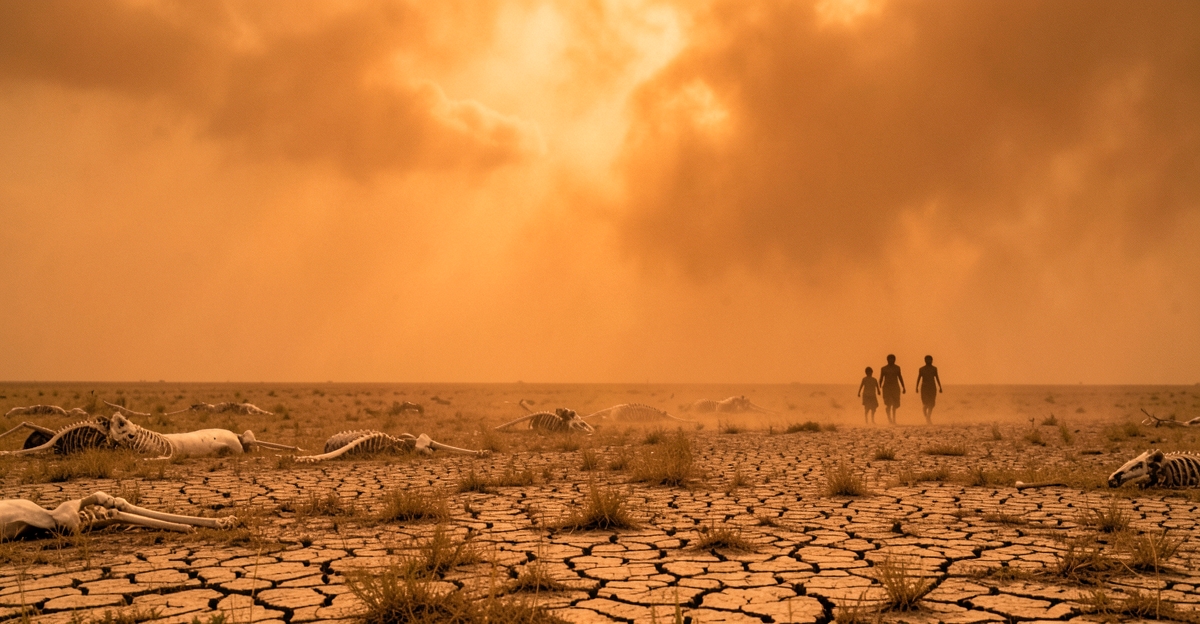
Into this already-devastated economic landscape came the climate crisis. The Dry Corridor, a region spanning Guatemala, Honduras, and El Salvador that is home to millions of subsistence farmers, experienced recurrent drought from 2014 through 2018. By 2018, the drought had affected approximately 3.5 million people in the region, with crop losses of 50-80 percent for maize and beans — the staples of the Honduran diet. These were not natural disasters in any meaningful sense; they were the predictable consequences of a global capitalist system that has, over two centuries, burned fossil fuels to generate profit, externalizing the ecological costs onto the most vulnerable.
The peasantry of the Dry Corridor had already been weakened by CAFTA. Many had lost access to land or had seen their plots shrink. They had no capital reserves, no credit, and no state safety net because the Honduran state was busy servicing debt and subsidizing capital, not feeding the poor. When the rains failed three years in a row, the subsistence farming that remained became impossible. These small farmers were doubly exploited: first dispossessed by free trade, then destroyed by the climate crisis produced by the industrial metabolism of the global North.
Climate displacement must be understood as a class phenomenon. Those with assets can adapt: relocate to less affected regions, purchase water, switch crops. The rural working class in Honduras, however, had no such options. Their immiseration was the product of what Marxists call the contradiction between the forces and relations of production: the forces (industrial capitalism's technology) have generated a planetary crisis, while the relations (private ownership of the means of production) ensure that the costs fall not on the capitalist class that generated the crisis, but on the working class that had no hand in creating it. When 3.5 million people are displaced by drought while global agribusiness profits increase, we are not witnessing a natural phenomenon but a class crime.
The Caravan Was Capital's Contradiction Made Visible
The October 2018 caravan was the convergence point of all these pressures. The peasant who had been driven off the land by CAFTA, the garment worker exploited at USD 1.50 per hour in the maquiladora, the drought-stricken farmer whose land produced nothing, and the mother whose child was threatened by the paramilitary violence of the post-coup state — all these people found themselves in the same objective situation. They were surplus population, not in any natural sense, but in the specific sense that capital in Honduras had no use for them. They could not generate profit for capital; they were instead a drain on the system.
Capital's solution to crisis is always to push the contradictions onto the working class. In Honduras, this meant: cut wages, eliminate protections, suppress dissent, and let the climate burn. When workers resist by moving, capital requires the state to manage that mobility. Hence the militarization of borders, the criminalization of migration, and the expansion of what we have elsewhere called the carceral-wage system — the integration of migrant detention into the labor supply chain. The border is not a line on a map; it is a machine for sorting labor: filtering the valuable workers needed for wage suppression in the US economy, discarding the "surplus" into detention or deportation, and keeping the threat of removal hanging over all migrant labor to depress wages for everyone.
The caravan was a collective solution to a collective problem. By moving in large numbers, the migrants reduced the risk of being preyed upon by gangs and corrupt police. More importantly, they seized control of the narrative. They were no longer isolated individuals petitioning states for mercy; they were a mass movement demanding the right to survive. This terrified the ruling classes of both North and Central America, because it revealed a truth that the ideology of the border tries to hide: the working class is a global class, and its interests are opposed to the nation-state system that divides it and makes it vulnerable.
The response of capital and its allied states was predictable: panic, militarization, and intensified policing. The Trump administration pressured Mexico to detain the caravan, deployed troops to the southern US border, and ratcheted up the asylum backlog. But the crisis did not begin with the caravan, and it will not end with its dispersal. The structural conditions that produced the caravan — coup, free trade, climate collapse — remain in place. Until the working class seizes control of the means of production and reorganizes society around human need rather than profit, the reserves of labor displaced from their homelands will continue to accumulate, and the border will continue to kill.
The caravan was capital's contradiction made visible. It showed that a system based on the endless accumulation of profit by destroying people and planet can only reproduce itself by generating a growing surplus population that it then must police, detain, and exploit. The Honduras caravan of 2018 was not the beginning of a migration crisis, but the visible eruption of a crisis of the capitalist world system. The only resolution is not more border walls, but the abolition of the conditions that make migration a necessity. That requires the destruction of the imperialist state system, the end of free trade regimes that destroy peasant agriculture, and the building of a society where production is planned for use, not profit — where no person must flee their home to survive.