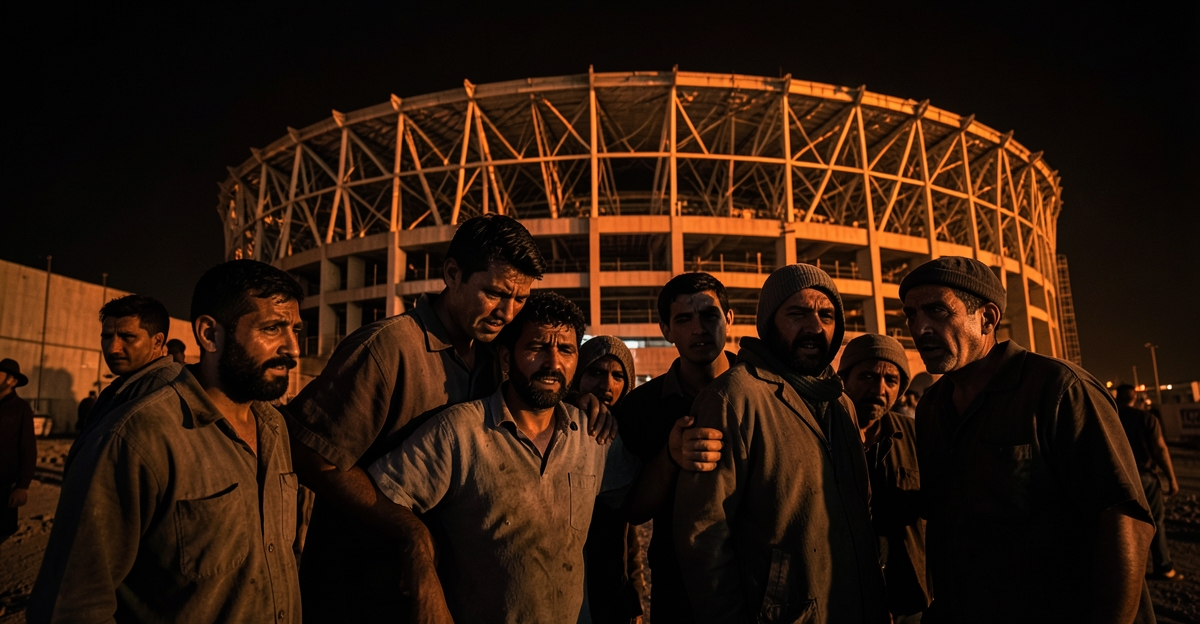
On December 18, 2022, Lionel Messi lifted the World Cup trophy in Lusail Stadium, a glittering monument to capital built at a cost of USD 220 billion, while the families of 6,500 migrant workers had no bodies to bury. That ratio — one life extinguished for every USD 34 million spent — is not a tragic accident of development but the predictable outcome of the kafala sponsorship system, a legal technology designed to extract maximum surplus value from a captive labor force. The kafala system is not a feudal relic nor a cultural peculiarity; it is a contemporary capitalist mechanism of surplus-value extraction that binds migrant workers to employers with state-enforced legal force, creating a reserve army of labor whose mobility is criminalized and whose bodies are disposable.
The Kafala System Transforms Legal Status into a Mechanism of Labor Bondage
The kafala system did not emerge from Qatari tradition; it was codified in 1963 as a response to the oil boom's labor demands, deliberately structured to prevent migrant workers from acquiring permanent status or bargaining power. Under this system, every migrant worker must be sponsored by a Qatari national or company, which holds legal authority over the worker's residency, employment, and ability to leave the country. To understand why capital requires this legal architecture, we must first define surplus value: the difference between the value a worker produces and the wages they receive. Capital extracts surplus value from labor power, but it faces a constant contradiction — workers can resist exploitation by quitting, organizing, or leaving. The kafala system resolves this contradiction for capital by criminalizing exit. A worker who quits without their sponsor's permission becomes an illegal resident subject to deportation and debt imprisonment. This is not a labor market; it is a legally enforced monopsony where the employer is the sole buyer of a worker's labor power. The International Labour Organization (ILO) has documented that migrant workers in Qatar must pay recruitment fees equivalent to months of wages just to enter the country, indebting themselves before they begin working. That debt functions as a disciplinary mechanism: workers cannot leave because they owe money, and they cannot earn enough to pay it off because their wages are fixed by the sponsorship system. The average migrant wage in Qatar is USD 300 per month — less than what a worker produces in a single day on a construction site valued at billions. This is not low pay; it is the extraction of surplus value at rates that would be impossible without the legal coercion of kafala.
Six Thousand Five Hundred Deaths Expose the Cost of World Cup Surplus Value
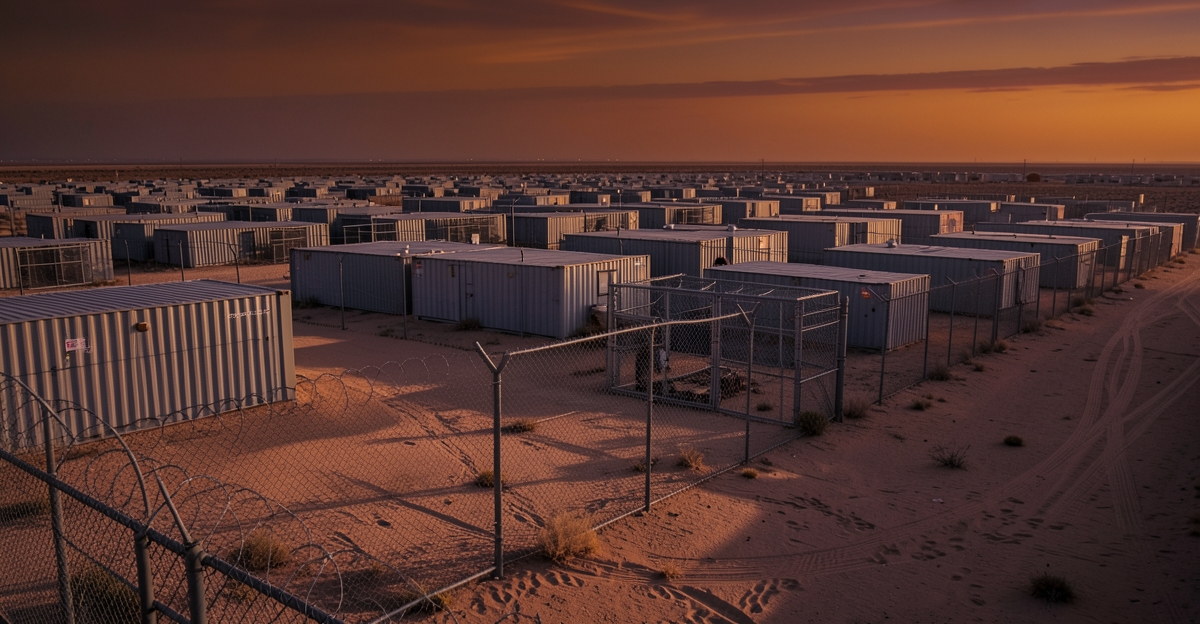
The Guardian investigation that counted 6,500 deaths among migrant workers building World Cup infrastructure since 2010 revealed something more profound than workplace negligence. Those deaths are not accidents; they are the human cost of a system that treats labor power as a commodity whose reproduction costs must be minimized. Marxist political economy teaches us that the reserve army of labor — the pool of unemployed workers that capital can draw upon to suppress wages — operates globally under capitalist imperialism. The kafala system recruits workers from India, Nepal, Bangladesh, and the Philippines precisely because those nations supply labor at below-reproduction cost: the workers' home communities bear the costs of raising, educating, and caring for them, while Qatar receives their productive capacity. When a worker dies on a construction site in Lusail, capital does not lose an investment — it simply recruits another worker from the reserve army. The USD 220 billion spent on the World Cup — by far the most expensive in history — did not purchase safety systems, health care, or fair wages. It purchased stadiums, air-conditioned fan zones, and luxury hotels for FIFA officials, while the workers who built them lived in labor camps with inadequate cooling in summer temperatures exceeding 50 degrees Celsius. A 2020 Human Rights Watch report documented workers sleeping 12 to a room in accommodations that violated the most basic standards of human habitability. This is not a contradiction in the system; it is the system functioning exactly as designed. The surplus value extracted from each worker is maximized when the costs of labor reproduction — housing, food, medical care, safety — are minimized to the point of death. Six thousand five hundred deaths are not a bug in the Qatari development model; they are a feature of its profitability.
Consider the wages in relationship to global labor migration patterns: a Nepali worker who earns USD 300 per month in Qatar would have earned approximately USD 80 per month in Nepal. The employer pays 3.75 times the home-country wage while the worker produces value at Qatari productivity levels — which, on construction projects worth billions, is substantially higher than Nepali productivity. The difference between what the worker produces and what they are paid flows directly to capital, mediated by the kafala system that prevents the worker from selling their labor power to a higher bidder. This is the mechanism of super-exploitation: the extraction of surplus value at rates exceeding what would be possible in a free labor market, enabled by the legal denial of mobility rights. The construction companies — Vinci, HBK, and other multinational contractors — are not passive beneficiaries of this system. They structure their subcontracting chains precisely to insulate themselves from liability while maximizing access to this captive labor force. The kafala system does not merely allow exploitation; it demands it, because the entire profit structure of Qatari development is premised on labor costs that can only be achieved through legal coercion.
Passport Confiscation Reveals the State-Capital Alliance in Worker Control
Every major investigation into the kafala system documents the same practice: employers confiscate workers' passports upon arrival, a practice technically illegal under Qatari law but universally enforced. This confiscation is not a bureaucratic convenience; it is a technique of labor control that Marx identified in his analysis of colonial capitalism. When a worker cannot possess their own passport, they cannot leave the country, change employers, or return home — they are bound to their employer not by contract but by the physical possession of their legal identity. The passport becomes a fetter on labor power, transforming a travel document into a custody instrument. The Qatari state enforces this system through the exit permit requirement: even if a worker somehow retains their passport, they must obtain their sponsor's written permission to leave Qatar. This legal framework means that workers who face wage theft, physical abuse, or dangerous conditions have one option: endure it or become illegal. The state-capital alliance is not metaphorical here. The Qatari Ministry of Interior issues and enforces the sponsorship licenses, the labor ministry processes complaints that are rarely resolved in workers' favor, and the courts require workers to pursue civil cases against their employers while remaining legally bound to the same employer. This is not a failure of governance; it is governance organized around the priority of capital accumulation. The kafala system is to labor migration what the carceral system is to wage exploitation: a legal framework that transforms workers into subjects without the right to quit.
The passport confiscation regime reveals a deeper truth about capitalist migration management. Borders are not neutral lines on a map; they are mechanisms for sorting labor power into categories of mobility and immobility. The Global North and its imperial allies construct borders to restrict the movement of people while facilitating the movement of capital. The kafala system inverts this logic: it enables the movement of workers into Qatar while restricting their movement once inside. Workers cross borders freely because capital needs their labor, but once inside, they encounter an internal border — the kafala sponsorship — that binds them more tightly than any wall. This is the real function of migration control under capitalism: not to prevent labor mobility but to channel it into forms that maximize surplus-value extraction. The passport confiscated from a Nepali construction worker in Doha is the material symbol of this reconfiguration of freedom: the worker is free to sell their labor power but not free to withdraw it from sale. Wage theft under these conditions — and it is endemic, with workers regularly denied payment for months — is not theft in any meaningful legal sense but the routine operation of a system in which the employer has total authority over the conditions of payment.
Reform Without Enforcement Reproduces Exploitation Under New Labels
In 2020, under intense international pressure and ILO scrutiny, Qatar announced reforms to the kafala system: the exit permit requirement was replaced with a notification system, worker mobility was supposedly expanded, and a minimum wage of USD 275 per month was established. These reforms were celebrated by FIFA, the Qatari government, and some NGOs as evidence of progress. But a 2022 Amnesty International investigation found that the reforms exist largely on paper. Workers who attempt to change employers without their sponsor's permission still face retaliation, including denunciation to immigration authorities. The minimum wage is USD 275 per month, but employers deduct housing and food costs — which they are legally required to provide — and the actual take-home pay often falls below USD 150. The ILO office in Doha, established to monitor reform implementation, issues reports documenting continuing violations while praising the reform framework itself. This is the pattern of capitalist reform: change the legal label while preserving the power relations that the law was supposed to govern. The kafala system does not need to exist formally to function effectively; it needs only that workers know their sponsor retains power over their lives, and that the state will not enforce the paper reforms against employers who maintain the old system in practice.
The World Cup itself functioned as a disciplinary event for workers. During the tournament, the Qatari state intensified surveillance of labor camps, restricted worker movement near stadiums, and deported dozens of workers who attempted to organize or protest. The global media attention did not protect workers; it increased the state's incentive to make exploitation invisible. Capital benefits from visibility only when it serves marketing purposes — the USD 220 billion spectacle of modernity — but requires invisibility for the labor that produces it. This contradiction is not resolvable within the framework of reform because the kafala system is not an aberration from capitalist norms but a concentrated expression of them. Every capitalist labor market contains elements of the kafala logic: the employer's power to fire workers disciplines labor in every factory and office. But the kafala system removes even the limited protection of exit, transforming the threat of unemployment into the threat of deportation, debt imprisonment, and family separation. Reform without enforcement is not partial progress; it is the reproduction of exploitation under new ideological labels designed to manage the political contradictions of visible atrocity. The World Cup's migrant workers were not unfortunate victims of a flawed system but the deliberate product of a system that treats labor power as a commodity to be used and discarded. Six thousand five hundred deaths later, the stadiums still stand, the profits have been extracted and repatriated, and the kafala system continues to recruit new workers from the global reserve army of labor. The question is not whether Qatar can reform its system but whether the working class can dismantle the global structures of migration control that make such systems necessary and profitable. The answer will not come from FIFA committees or ILO reports. It will come from the same contradictions that produced 6,500 dead workers: the irreducible conflict between capital's need for disposable labor and labor's need for freedom.