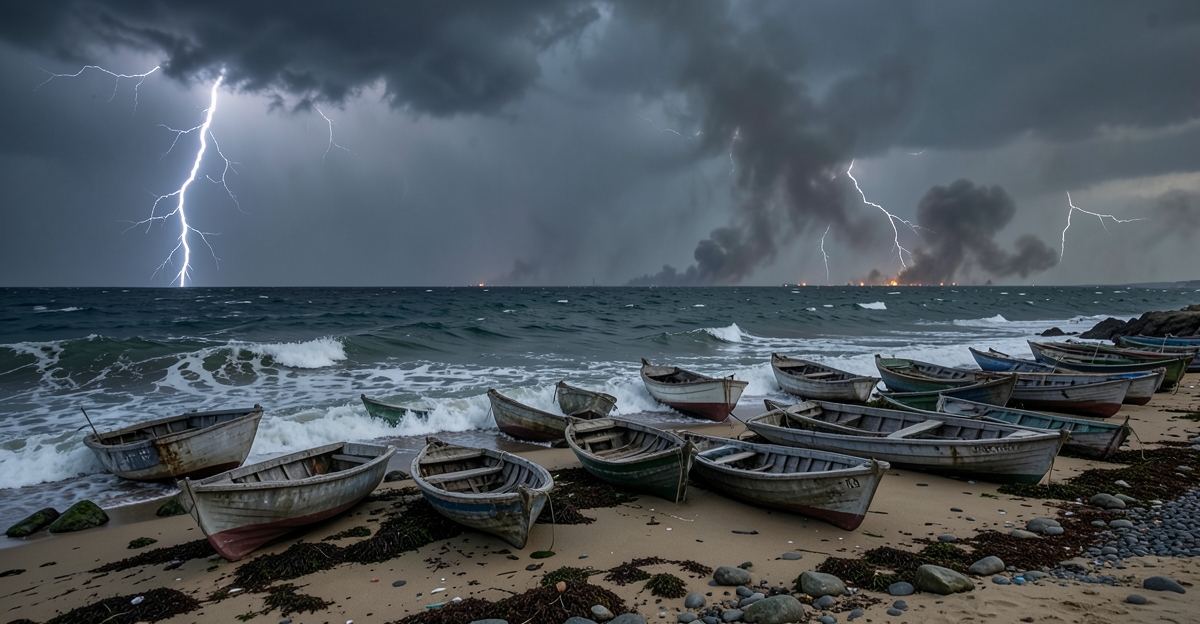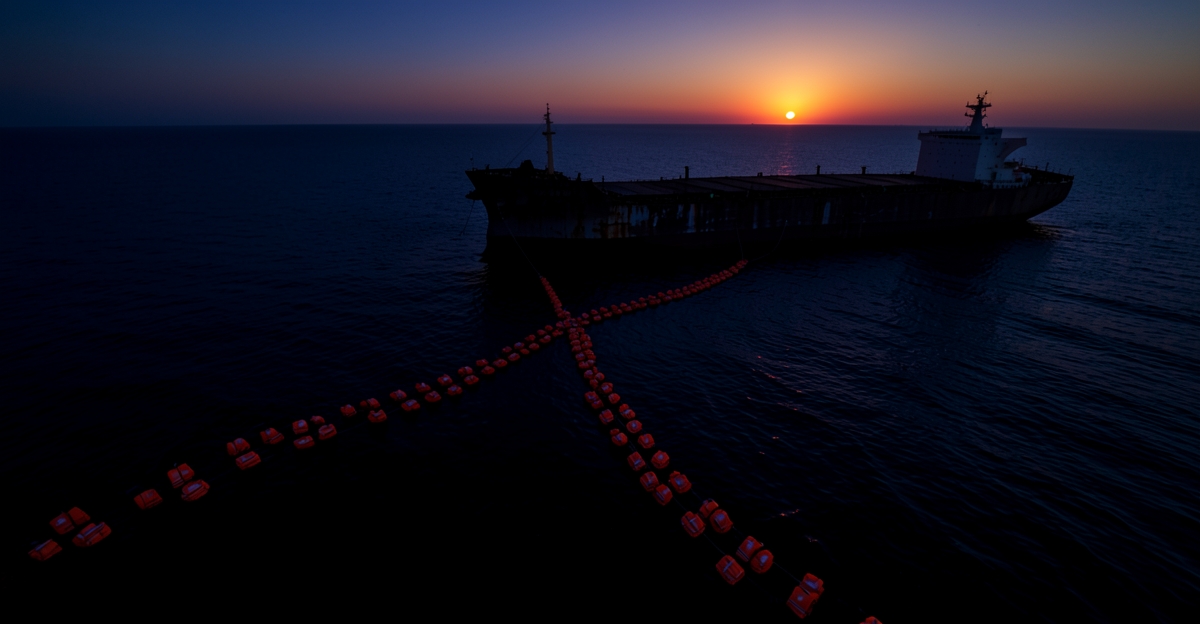
On April 14, 2022, Fabrice Leggeri, the executive director of the European Border and Coast Guard Agency (Frontex), resigned under a cloud of scandal. The European Anti-Fraud Office (OLAF) had spent years compiling evidence that, under his watch, Frontex had systematically participated in illegal pushbacks of migrants in the Aegean Sea. The OLAF investigation, completed that February, found the agency complicit in operations where asylum seekers were forced back into Turkish waters without any opportunity to claim protection. Leggeri did not resign because he opposed pushbacks. He resigned because he got caught. The structure remained intact. Within months, a new director was appointed, the agency's budget was increased to €845 million by 2027, and its standing corps was expanded to 10,000 officers. Pushbacks continued. The Mediterranean labor filter remained operational.
1. Frontex Pushbacks Are Systematic Policy Not Individual Violations
The OLAF investigation, which ran from 2020 to 2022, documented multiple incidents where Frontex vessels were present during pushbacks by Greek coast guard units and either participated directly or failed to intervene. The report concluded that "serious violations of fundamental rights" had occurred and that the agency's management had "systematically failed to take appropriate action." This was not the work of a few rogue officers. It was policy. Between 2015 and 2022, the Greek coast guard, with Frontex support, pushed back an estimated 40,000 to 60,000 migrants into Turkish waters, as documented by Bellingcat, Der Spiegel, and human rights organizations using satellite imagery, vessel tracking data, and survivor testimonies.
Under capitalism, the state does not act against its own interests. The fundamental contradiction here is that European capital needs migrant labor to fill gaps in the domestic working class — particularly in agriculture, construction, logistics, and care work — while the political system must appear to be "securing borders" to manage working-class discontent over wages and conditions. Pushbacks resolve this contradiction through selection. They do not stop migration. They raise its cost to the point where only the most desperate — those whose surplus value can be extracted under the harshest conditions — will attempt it. Frontex is the gatekeeper of this filter, not a humanitarian agency gone wrong.
Data from the IOM Missing Migrants Project shows that since 2014, over 28,000 people have died on the Mediterranean route. Another 25,000 have disappeared. These deaths are not accidents. They are the predictable outcome of a policy designed to maximize the risk of crossing while maintaining a sufficient flow of labor. The deterrence model creates a corpse count that serves as a deterrent signal to potential migrants, while the survivors arrive already indebted to smugglers, traumatized, and with no legal status — in other words, the ideal reserve army of labor: flexible, compliant, and willing to work for less than the domestic working class.
2. The Mediterranean Functions as a Labor Filter Not a Barrier
The Mediterranean is not a wall. It is a sieve. A wall would stop migration entirely, which would starve European capital of the labor it requires. A completely open border would flood the labor market and create political crisis. The filter produces an optimal outcome from capital's perspective: just enough migrants arrive to suppress wages and discipline the domestic working class, but not so many that the political system collapses under the pressure of working-class resentment. This is the materialist analysis of Frontex operations. To understand pushbacks, one must abandon the liberal fiction that Europe is struggling to "manage migration humanely" and instead see the system as it functions: a labor selection mechanism.
The filter operates through three mechanisms. First, the physical danger of the crossing — overcrowded rubber boats, lack of life jackets, long distances in cold water — selects for physical health and endurance. The sick, the elderly, the very young die in disproportionate numbers. Second, the cost of passage, which has risen to $5,000–$10,000 per person on the Central Mediterranean route, selects for those with access to capital or networks of credit, often through debt bondage to smugglers. Third, the psychological trauma of witnessing death at sea, being pushed back, and facing indefinite detention selects for those with the highest tolerance for exploitation and the strongest motivation to endure.
The survivors arrive in Europe having already internalized their own disposability. They have seen people die. They have been pushed back and threatened. They have no legal status, no labor rights to speak of, and an enormous debt to repay. This is not an accident. This is the intended product of the border regime. As Karl Marx wrote, the reserve army of labor — the unemployed and underemployed — serves to discipline those who are employed by threatening them with replacement. The Mediterranean filter produces a hyper-exploitable segment of this reserve army: workers who have been preconditioned by terror to accept wages and conditions that domestic workers would not tolerate.
3. Mare Nostrum to Triton: When Europe Chose Deterrence Over Rescue
The shift from the Italian Navy's Mare Nostrum operation (2013–2014) to Frontex's Operation Triton is the clearest illustration of this logic. Mare Nostrum was a dedicated search-and-rescue operation launched after the Lampedusa shipwreck of October 2013, in which 368 people died. It deployed naval vessels, aircraft, and personnel across the Central Mediterranean, patrolled close to the Libyan coast, and rescued over 150,000 people in its year of operation. It cost the Italian government approximately €9 million per month. European states, led by the United Kingdom and Germany, refused to fund it. They claimed it created a "pull factor" — that is, that rescuing people encouraged more to come.
Triton, which replaced Mare Nostrum in November 2014, was explicitly not a rescue mission. Its mandate was border surveillance and patrolling. Its operational area was 30 nautical miles from the Italian coast — far closer to Europe than Mare Nostrum's area, which had extended to the Libyan coast. The budget was one-third of Mare Nostrum's. The result was predictable: the death rate in the Central Mediterranean tripled within the first year. Migrants were forced onto smaller, less seaworthy boats because human traffickers knew they would not be rescued until they reached European waters. The cost savings achieved by ending Mare Nostrum were paid for in human life.
This was not a mistake or an unintended consequence. It was a deliberate policy choice reflecting the real priorities of European capital. Rescue operations reduce the cost of migration and therefore increase the flow of workers. Deterrence operations increase the cost and select for the most desperate. From the perspective of capital, the optimal policy is one that maintains a steady flow of labor while maximizing exploitation. The Mediterranean death toll is not a bug of the European border regime. It is a feature. The corpses are the advertisement: do not attempt this unless you are willing to die.
4. Leggeri's Resignation Exposed the Agency Without Changing the Structure
When Fabrice Leggeri resigned, the liberal press framed it as a victory for accountability. Leggeri's departure was presented as a sign that the system could correct itself, that rule of law could prevail over the violence of the border. This is a comforting fiction. Leggeri was not fired for running illegal pushbacks. He was forced out because OLAF's investigation made his position untenable and the European Commission needed a scapegoat to preserve the agency's legitimacy. The structures that produced the pushbacks — the mandate, the budget, the equipment, the political incentives — remain entirely intact. Frontex's budget has grown by over 500% since 2015. Its standing corps has expanded. Its surveillance infrastructure — drones, radar towers, patrol vessels — has been reinforced.
The OLAF report itself, while confirming the existence of systematic pushbacks, recommended only administrative reforms: better reporting mechanisms, clearer chains of command, more training. It did not question the fundamental purpose of the agency or the border regime it enforces. A system that is designed to filter labor by killing people cannot be reformed by adding human rights training to the curriculum of its enforcers. The contradiction between Frontex's mandate — "border security" — and the site of its operations — the world's deadliest migration route — is not resolvable within the logic of capitalism. The function of the border is to produce a particular kind of labor force. That function requires violence.
The workers who survive the crossing and arrive in Europe are then subjected to another layer of filtering through the labor market. They enter sectors where wages are low, conditions are hazardous, and rights are minimal. Migrant labor has been central to the suppression of real wages across Europe for the past two decades. An analysis of migrant labor's role in wage suppression reveals that the availability of undocumented workers in agriculture, construction, and hospitality has allowed employers to hold down wages and conditions for the entire working class. The border regime and the labor market are not separate systems. They are two phases of the same process: the production of a flexible, disposable workforce.
5. The Workers Who Survive the Crossing Arrive Pre-Disciplined by Terror
The final element of the Mediterranean filter is psychological. Workers who have endured the crossing, witnessed death, been pushed back, and then successfully arrived in Europe carry with them a profound understanding of their own vulnerability. They know that they survived by chance, that they could have drowned, that they owe their lives to smugglers who may still hold debt over them. They know that they have no legal status, no right to stay, no access to public services. They know that a single complaint to an employer about wages or conditions could result in deportation. They arrive pre-disciplined by terror.
This is what makes them so valuable to capital. A workforce that has internalized the threat of death and deportation is a workforce that does not organize. It does not strike. It does not demand overtime pay or safety equipment or the right to join a union. It works for cash, under the table, at wages that undercut the domestic working class and drive down conditions for everyone. The carceral logic that disciplines these workers is not limited to the border. It extends into the workplace through threats of detention and deportation. An examination of carceral wage super-exploitation shows that the same logic that disciplines prison labor — total control over the worker's mobility and basic existence — applies in diluted form to undocumented migrants in Europe.
The upcoming 2030 FIFA World Cup in the Middle East has provided another illustration of how border and labor regimes intersect. The commodification of migrant labor for megaprojects follows the same logic: a filter that selects for the desperate, a system that strips workers of rights, and a state apparatus that polices movement and suppresses dissent. The Mediterranean is not unique. It is merely one node in a global system of labor filtration that extends from the Sahara to the Gulf, from the U.S.-Mexico border to the Andaman Sea. Everywhere, the same pattern appears: capital demands labor, but only labor that can be super-exploited; the border produces that labor by killing and deterring everyone else.
The deaths are not incidental. They are the point of the system. Each corpse in the Mediterranean is a signal to others: do not come unless you are willing to die. Each survivor is a filtered worker: selected, traumatized, and ready to be exploited. This is not a humanitarian crisis. It is a functioning labor market mechanism. Understanding it as such is the first step toward building the political forces that can tear it down.