The USDA grants a "humane" label to a slaughterhouse at the exact moment Tyson's contractors are live-streamed stomping, kicking, and waterboarding pigs at a processing facility in Missouri. This is not a contradiction. It is the unified logic of a system that must advertise mercy precisely because it delivers only death. The state does not fail to regulate the animal-industrial complex. The state performs regulation in order to make industrial killing legible, palatable, and profitable.
We are dealing here with speciesism not as a prejudice held by individuals but as a material ideology—a system of beliefs and practices produced by the capitalist state and by capital itself to naturalize the exploitation of non-human animals. Ideology, in the Marxist sense we adopt here, is not false consciousness floating above reality. Ideology is the set of material rituals, state apparatuses, and cultural representations that reproduce the relations of production. The USDA, Tyson Foods, the consumer advertising budget, and the ag-gag laws together constitute this ideological apparatus. They manufacture consent for the daily slaughter of ten billion land animals per year in the United States alone. Our task is to name each mechanism and show how it works.
The USDA Does Not Fail to Regulate — It Performs Regulation to Legitimize Industrial Killing
The Humane Slaughter Act of 1958 requires that cattle, pigs, and sheep be "rendered insensible to pain" before exsanguination. The USDA is charged with enforcement. Inspectors stand on the kill floor. They watch. They stamp. This is the inspection theater. When undercover investigators reveal animals thrashing while conscious, when hooves flail against the shackle chains, the press frame is always the same: regulators failed, enforcement is underfunded, agencies are captured. This frame assumes the USDA exists to protect animals. It does not. The USDA exists to guarantee the flow of animal bodies to market with a legitimizing seal of approval.
Seventy-three percent of USDA inspection failures at slaughter facilities result in nothing more than a verbal warning. Criminal prosecution is virtually nonexistent. A 2022 report by the Government Accountability Project documented that USDA inspectors who attempt to enforce the Humane Slaughter Act aggressively are reassigned, demoted, or harassed. The agency is not asleep at the wheel. The agency is driving the truck. The ideology works precisely because the state appears to be on the side of animal welfare while its material practice facilitates the destruction of animal life at the cheapest possible cost. We must see the inspection stamp for what it is: a fetish commodity, a magical seal that transforms death into a consumer good.
The state's role in animal exploitation is not secondary to capital. It is constitutive. Without the USDA's certification, interstate sale of meat is illegal. The state creates the market for flesh by defining what counts as edible, by funding slaughterhouse construction through loan guarantees, and by absorbing the externalized costs of waste disposal and zoonotic disease surveillance. The regulatory apparatus is a subsidy to capital, not a constraint upon it. Every USDA sticker on a package of Tyson chicken is a state guarantee that the violence required to produce that package will not be investigated too closely.
The Humane Label Is the Opium of the Meat Aisle
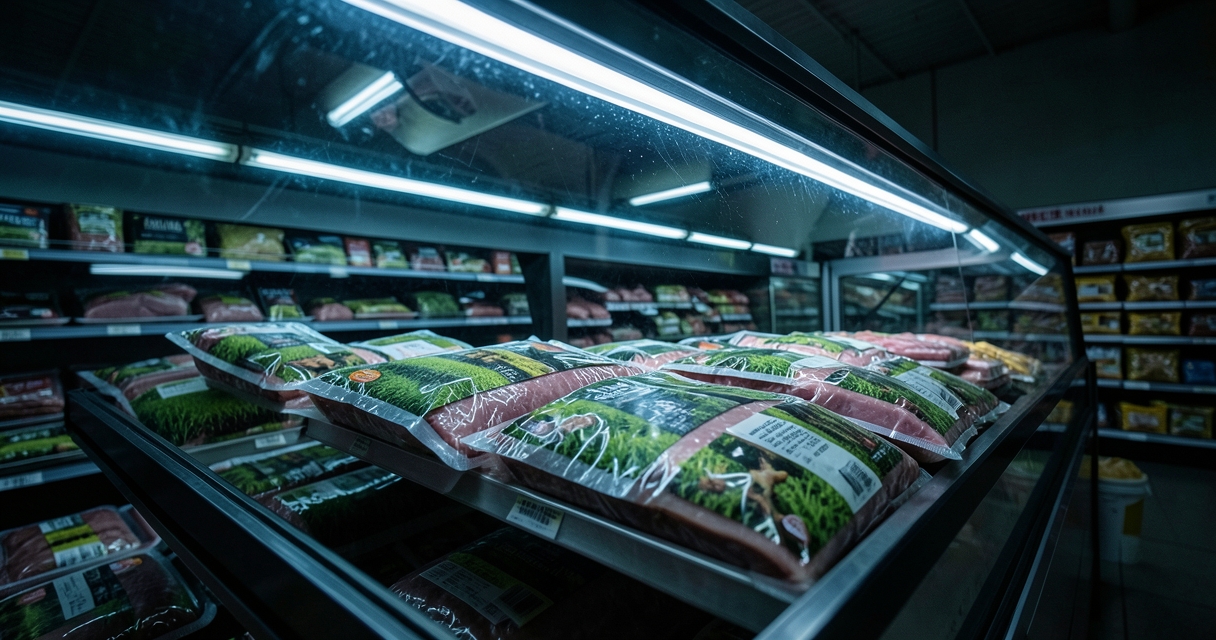
Walk into any American supermarket. The packages bear pastoral imagery: red barns, green pastures, smiling cartoon cows. The words "humanely raised," "grass-fed," "cage-free," "Certified Humane" appear on plastic trays containing the disassembled corpses of animals raised in industrial confinement. These labels function exactly as religion functioned for Marx—they are the sigh of the oppressed creature, the heart of a heartless world, the soul of soulless conditions. The humane label does not describe reality. It compensates for reality.
Consumers know, at some level, that the animal did not die peacefully. The label exists to absorb that knowing, to convert it into purchasing satisfaction. When a consumer buys a "humanely raised" chicken, they are not buying chicken. They are buying absolution. They pay a premium not for better living conditions for the animal—the vast majority of certified humane operations still perform the same slaughter—but for the ideological comfort of believing the system has been reformed. This is commodity fetishism extended to the moral domain. The social relation of total dominion over animal life is hidden behind a label that promises care.
"The label 'Certified Humane' is the most sophisticated marketing tool ever developed to make people feel good about eating animals who suffered just as much as those without the label."
This is not an argument about consumer deception, which presumes that honest labeling could fix the problem. The problem is not that labels lie. The problem is that the entire framework—labeling, certification, third-party auditing—legitimizes the premise that raising animals for slaughter can be humane. The very concept of humane slaughter is an ideological construction. It permits the system to appear reformed while the fundamental structure of animal property remains untouched. We must ask not whether the label is accurate but what work the label performs in reproducing the relations of production. The answer is clear: the label pacifies opposition without altering the fact of the kill.
Advertising Severs Meat from Its Animal Origin
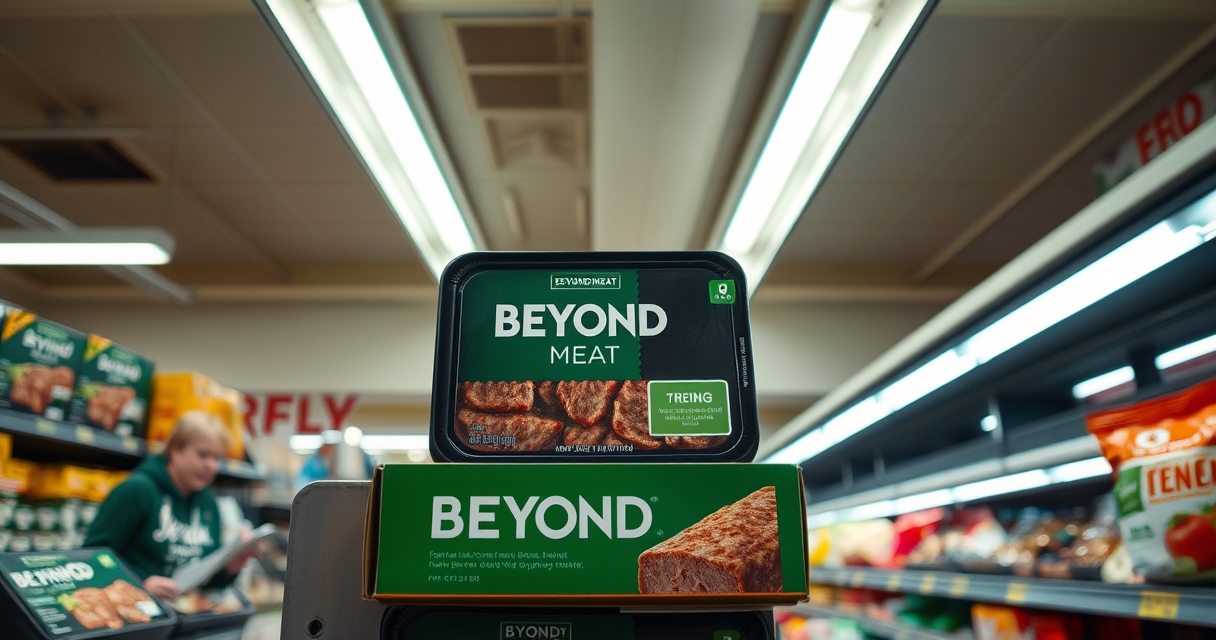
Tyson Foods spends over one billion dollars annually on advertising. That advertising never shows a slaughterhouse. It never shows a confinement barn. It never shows the moment of death. Instead, it shows families around dinner tables, children laughing, a football game on television. The chicken nugget is a finger food, not a dismembered body. The beef patty is a summer afternoon, not a carcass on a disassembly line. This is the systematic erasure of the animal origin of meat, and it is not incidental to meat production. It is essential to it.
The factory farm depends on distance—spatial distance between the slaughterhouse and the city, but also representational distance. Advertising produces what Marx called the "semblance of independence" between commodities and the labor—and here, the life—that produced them. When Tyson shows a farmer shaking hands with a veterinarian, it creates the image of death as care. When it sponsors NFL broadcasts, it associates its product with strength and community, never with the terrified squeals that produce that product. Every commercial is an ideological operation: it severs the commodity from its material conditions of production.
This severs is not accidental. Tyson's internal marketing documents, leaked in 2019, explicitly instruct creative agencies to "avoid imagery that draws attention to animal handling or processing." The instruction is not about consumer preference. It is about ideological control. If consumers were forced to confront daily the image of what they eat, the entire system of animal exploitation would face a legitimacy crisis. Advertising prevents that crisis by substituting an imaginary relation to animal life for the real one. The hamburger becomes an abstract object, divorced from the steer, divorced from the slaughterhouse, available for pure ideological inscription.
Ag-Gag Laws Enforce the Ideology When Representation Threatens to Break Through
But images do not always stay contained. Workers, journalists, and activists have documented what happens inside factory farms and slaughterhouses. The footage is devastating: workers beating cows, pigs trapped in gestation crates, chickens with broken legs dragging through waste. This footage threatens to break the ideological spell. It shows the animal origin of meat. It shows the violence that advertising hides and that labeling papers over. The state's response is instructive.
Ag-gag laws—legislation criminalizing undercover investigation of agricultural facilities—now exist in fourteen states. These laws do not protect animals. They protect the ideological apparatus from disconfirmation. When an activist enters a Tyson facility and records what actually happens, they are not merely trespassing. They are revealing the contradiction between the industry's representation of itself and its material practice. The state steps in to re-seal that contradiction through criminal penalty. The ideology must be enforced when representation fails to do the job.
The factory farm system does not merely kill animals. It structures the conditions of visibility under which that killing can occur. It forbids the witness. It bans the camera. It prosecutes the whistleblower. This is not a paranoid industry. This is a rational response to a system built on a lie. The lie is that meat production can be humane. The truth is that animal exploitation requires the systematic denial of the animal subject—and when that denial is challenged by evidence, the state provides the enforcement.
"If the public could see the conditions inside these facilities, they would stop eating meat. That's why the industry fights so hard to keep cameras out."
We must reject the liberal framing that ag-gag laws are about property rights or biosecurity. Biosecurity is a cover. The real threat is ideological. The camera exposes the gap between the "humanely raised" label and the animal who dies terrified, exhausted, and in pain. It exposes that the label is a commodity sold to the consumer to purchase moral quiet. And it exposes that the state will use violence—arrest, prosecution, imprisonment—to protect that commodity from scrutiny. When the ideology fails, the state apparatus is revealed in its naked repressive function.
Conclusion: Can We Sever the Ideology from the Base?
We have traced the ideological apparatus of speciesism from its production at the USDA through its circulation in the humane label and advertising to its enforcement through ag-gag laws. But we must now ask the question that follows from our analysis: can speciesist ideology be dismantled while the capitalist mode of production remains intact? The humane label is not a correction of capitalist animal exploitation. It is a product of it. Advertising is not a supplement to factory farming. It is a condition of its possibility. Ag-gag laws are not an aberration. They are the state's logical response to a system that must hide its own operations to survive.
The radical conclusion is that speciesism as ideology cannot be reformed. It can only be overthrown. But that overthrow requires more than changing our diets or demanding better labels. It requires dismantling the material structures—the slaughterhouses, the confinement barns, the brand marketing departments, the regulatory capture apparatus, the criminalization of witness—that produce the ideology in the first place. To destroy the ideology, we must destroy the factory farm. To destroy the factory farm, we must confront the property relations that make animals into commodities and the state that protects those relations.
The question is not whether we can think our way out of speciesism. The question is whether the working class, and the movements it builds, can organize against the total system that extracts labor from humans and life from animals alike. That struggle is not yet won. But to frame it in liberal terms—as a matter of consumer choice, label accuracy, or regulatory enforcement—is to remain trapped inside the very ideology we must destroy. We do not need better labels. We need the abolition of the conditions that make those labels necessary.