The Bloodless Rite of Passage
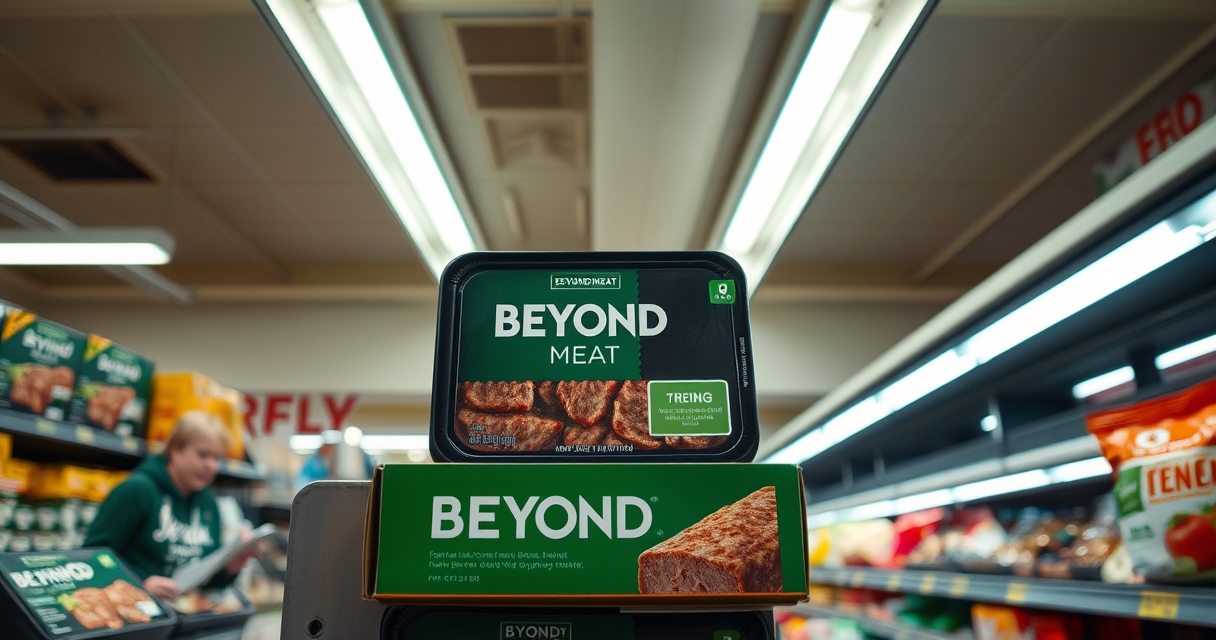
On May 2, 2019, the Nasdaq bell rang for a new kind of sacrificial offering. Beyond Meat, the El Segundo-based purveyor of plant-based protein, opened at $46 per share, more than double its initial public offering price. By day's end, the stock had surged 163 percent, valuing the company at over $3.8 billion. The financial press, never one to withhold ecstasy from a rising asset, christened the event a watershed moment for sustainable capitalism. On trading floors across Manhattan, grown men celebrated a burger that bleeds without blood, drips without death, satisfies without sin. It was a perfect commodity: one that promised absolution in every bite.
To the Marxist sensibility, however, the Beyond Meat IPO was never a rupture in the capitalist food system. It was the system's highest expression of itself—a moment when capital discovered it could sell not only the commodity but the guilt the commodity produced. Theodor Adorno's analysis of the culture industry becomes indispensable here. In Dialectic of Enlightenment, Adorno and Max Horkheimer argued that the culture industry produces the appearance of rebellion while meticulously reproducing commodity logic. The plant-based patty, we contend, is this thesis made edible: a pseudo-rebellion that leaves the material relations of food production entirely untouched.
The Pseudo-Individuality of the Plant-Based Patty
Adorno's concept of pseudo-individuality describes a phenomenon in which mass-produced cultural goods simulate uniqueness while being fundamentally identical. The standardized pop song that momentarily distinguishes itself with a novel bridge, the Hollywood film that offers a slightly different ending—these are not expressions of genuine difference but of a pre-programmed variation that serves to maintain the illusion of choice. The Beyond Burger and the Impossible Burger are textbook examples of pseudo-individuality applied to food. Both products are laboratory-designed, venture-capital-funded, patent-protected commodities that offer the consumer the feeling of ethical differentiation while requiring no structural change in behavior.
The consumer who chooses a Beyond Burger over a beef patty is making a choice that is entirely contained within the horizon of capitalist consumption. They are not opting out of factory farming; they are selecting from a range of products that have been pre-authorized by capital. The plant-based patty's "difference" is precisely what allows the system to absorb critique without transforming. When the chairman of Tyson Foods, a company responsible for the slaughter of hundreds of millions of animals annually, can invest in Beyond Meat and appear on stage as a visionary, the pseudo-individuality of the product reveals its function: to provide capital with a clean conscience.
Venture Capital Does Not Fund Revolutions
It is instructive to examine the ownership structure of the plant-based protein sector. Beyond Meat's early investors included Tyson Foods, the agribusiness behemoth; Kleiner Perkins, the venture capital firm; and a constellation of wealthy individuals whose fortunes derive from industries the company's marketing suggests it opposes. Impossible Foods has received backing from Bill Gates, Google Ventures, and UBS. There is nothing anomalous about this. Capital has never hesitated to invest in its own critique when that critique can be monetized. What venture capital does not fund, and by its nature cannot fund, is revolution.
The Marxist distinction between use-value and exchange-value is essential here. The Beyond Burger's use-value is caloric sustenance; its exchange-value is determined by the market. But the commodity also carries what we might call a moral-exchange value—a premium the consumer pays not for better nutrition or taste but for the feeling of ethical superiority. This premium flows upward, not outward. It accrues to shareholders, executives, and early investors. It does not flow to the migrant workers who pick the peas from which pea protein is extracted, nor to the communities where monocropping depletes topsoil and groundwater, nor to the animals that continue to die in numbers that dwarf the plant-based sector's output by several orders of magnitude.
Beyond Meat's own annual reports acknowledge that their supply chain includes facilities that process animal products alongside plant-based ones. The same factory that produces Beyond Burgers may also process beef. The same logistics network delivers both products. The same retailers shelve them side by side. The material base of the system is unchanged; only the superstructure of marketing has been renovated.
Commodity Fetishism 2.0: The Burger Obscures Its Own Supply Chain
Classical commodity fetishism, as Marx described it in Capital Volume I, refers to the process by which the social relations of production are obscured by the relationship between things. The commodity appears before the consumer as a magical object, its origins effaced, its true cost invisible. The plant-based patty represents commoditiy fetishism 2.0: it not only obscures its supply chain but actively re-narrates it as something virtuous. The consumer who buys a Beyond Burger is encouraged to believe they know exactly where their food comes from—a clean laboratory, free of suffering, governed by science and compassion.
This is, of course, a fantasy. The raw materials for plant-based protein—peas, soy, rice, coconut oil—are grown in industrial monocultures that rely on synthetic fertilizers derived from fossil fuels, pesticides that decimate insect populations, and water extraction practices that deplete aquifers. The processing facilities that transform these commodities into textured vegetable protein are energy-intensive and produce significant waste streams. The plastic packaging, the refrigerated supply chain, the carbon footprint of distribution—none of these vanish because the patty is plant-based. They are simply relocated to a different point in the production chain and rendered invisible by the commodity's ethical halo.
What is more, the fetishism extends to labor. The workers who produce Beyond Meat products are not engaged in a fundamentally more dignified form of labor than those who work in slaughterhouses. They perform repetitive, poorly compensated tasks in facilities that, while perhaps less gruesome than a Tyson slaughterhouse, are not immune to the pressures of capitalist production: speed-ups, wage suppression, union busting, and safety violations. The commodity form does not liberate labor; it merely disguises it in different clothing.
The Culture Industry of Guilt
Adorno's culture industry thesis ultimately concerns the management of disappointment. The culture industry provides the illusion of happiness so that real happiness becomes unnecessary. In the case of plant-based protein, guilt is the raw material that the industry processes into profit. The consumer arrives at the grocery store bearing the weight of factory farm capitalism—the knowledge, however suppressed, that their eating habits are implicated in one of the most systematic cruelties human civilization has devised. The plant-based patty offers a product that metabolizes this guilt into purchase.
This is why the marketing of Beyond Meat and Impossible Foods relies so heavily on the language of moral equivalency. "Bleeds like beef," "tastes like meat," "100 percent plant-based"—the advertising copy strives to convince the consumer that no sacrifice is required. One can have all the pleasures of the carnivorous diet without any of its moral costs. The culture industry promises a world in which contradictions are resolved at the level of consumption, not production. But the contradiction between the consumer's ethical aspirations and the destruction wrought by animal agriculture cannot be resolved at the checkout counter. It can only be managed, deferred, and sold back to the consumer at a premium.
The long-term trajectory of the plant-based sector confirms this analysis. Beyond Meat's stock has fallen over 90 percent from its 2019 peak. The company has laid off workers, reduced production, and revised growth projections downward. This is not because consumers lost interest in ethical eating; it is because the commodity form cannot sustain the weight of the moral expectations placed upon it. The plant-based patty was never more than a product. When the hype cycle exhausted itself, the underlying contradictions of capital reasserted themselves. The market does not reward virtue; it rewards accumulation.
We must ask ourselves whether there is any path forward within the commodity form that does not reproduce the very dynamics it claims to oppose. The plant-based patty, for all its technological sophistication, remains a commodity produced for exchange, not for need. It is subject to the same imperatives of profit, competition, and accumulation that govern every other commodity. Its "ethical" dimension is not a qualitative difference but a pricing strategy.
No Right Life Within the Wrong One
Adorno's aphorism—"there is no right life within the wrong one"—captures the dilemma of the ethically-minded consumer under capitalism. The Beyond Burger is not a step toward a liberated food system. It is a product that offers the feeling of liberation while leaving the system that necessitates liberation intact. The abolition of factory farming will not be achieved through consumer choice; it will be achieved through the transformation of the social relations that make factory farming profitable. This means confronting not only the beef industry but the property relations, the wage system, and the state power that sustain it.
The plant-based patty does not rupture the capitalist food system; it extends it. It does not challenge commodity fetishism; it perfects it. It does not liberate the consumer from guilt; it sells guilt back to the consumer as a luxury good. The Beyond Meat IPO was not the beginning of a revolution in food; it was a moment in which capital demonstrated its infinite capacity to absorb critique and convert it into exchange-value. The burger that bleeds without blood is not a sign of things to come. It is a monument to the present—a present in which even our most earnest attempts to do the right thing are returned to us as products in a package, priced for sale, and emptied of any power to change the world.