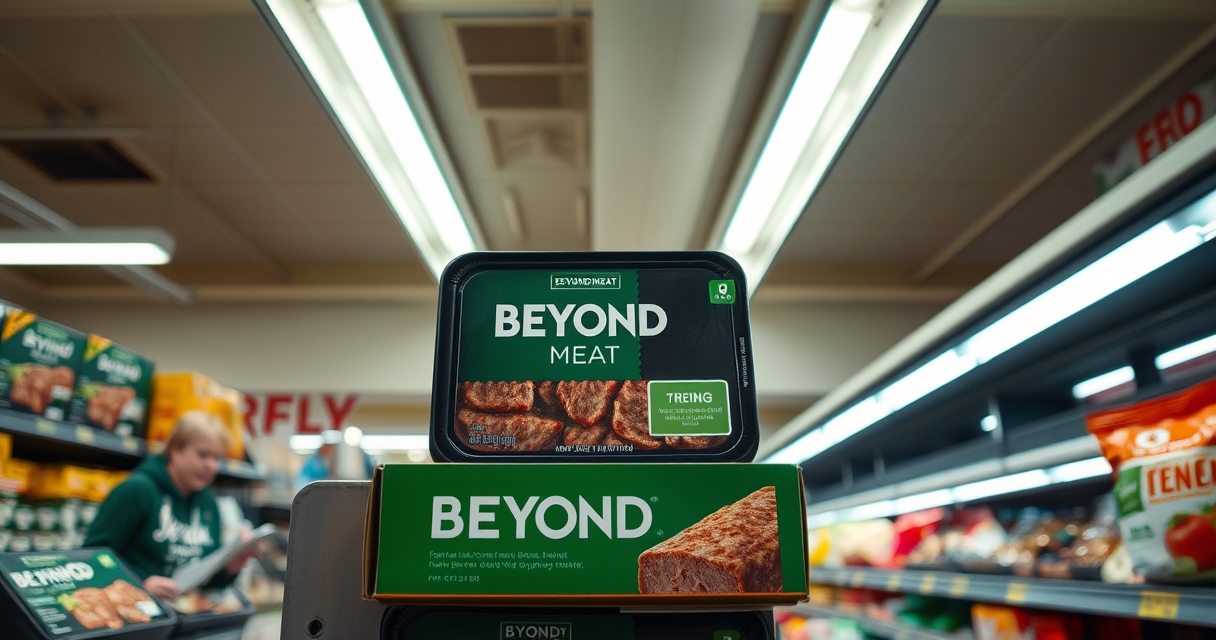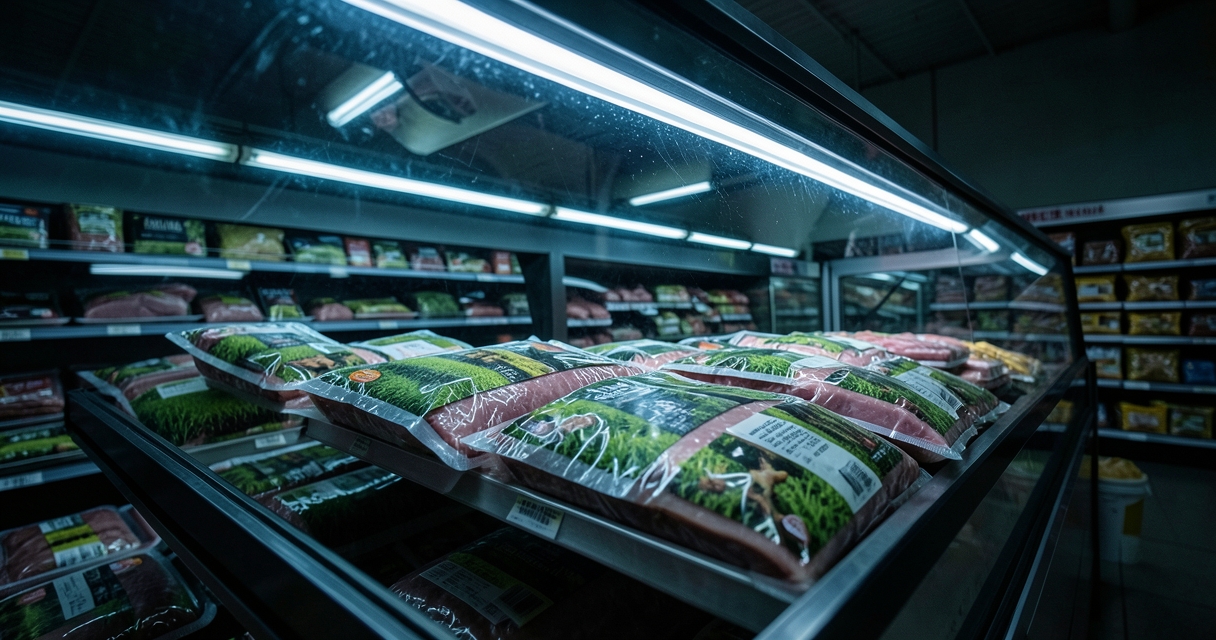
Consider the scene. A package of boneless, skinless chicken breasts, shrink-wrapped on a Styrofoam tray and sealed under a film of transparent plastic. The product label features a red barn, a white fence, a verdant pasture, and a hen pecking contentedly at the grass under a cerulean sky. The consumer, standing in the refrigerated aisle under fluorescent light, registers this image in a fraction of a second. It is a pastoral idyll. It is also a total lie. The actual chicken whose fragmented body parts now rest in the tray never saw sunlight, never touched grass, and never experienced the inside of a red barn. It lived its entire brief life in a windowless shed, standing on wire mesh, inhaling the aerosolized waste of thirty thousand other birds, its beak clipped, its bones weakened by accelerated growth, until the moment workers — often undocumented migrants laboring under conditions of extreme exploitation — hung it upside down by its legs and cut its throat over an electrified water bath. None of this history is visible in the package. That is the point.
The supermarket meat aisle is not a neutral space of distribution. It is a curated gallery of commodity aesthetics, and every element — the color-corrected flesh, the bucolic illustration, the euphemistic language, the separation of cut from creature — performs ideological work. Supermarket meat packaging functions as an ideological apparatus in the strict sense outlined by Louis Althusser: it interpellates the consumer as a subject who consents, silently and without direct coercion, to a system of industrial violence. The package does not merely conceal; it produces consent. It allows the consumer to purchase the product of suffering without confronting the system that generates it. This essay argues that supermarket meat packaging is an ideological apparatus that produces consent for industrial violence through three interlocking mechanisms: visual erasure, linguistic manipulation, and the spatial separation of consumer from production.
The Pastoral Image Is a Lie with a Marketing Budget
The visual lexicon of meat packaging is remarkably consistent across brands, price points, and supermarket chains. Barns, fields, fences, sunshine, and smiling cartoon animals populate labels, sleeves, and in-store signage. These images are not produced by accident or from a desire for aesthetic charm. They are the product of intensive market research conducted by the major agribusiness conglomerates — Tyson Foods, JBS, Cargill, and their subsidiaries — which have long understood that the consumer's comfort with purchasing dead animal flesh depends on not seeing the conditions under which that flesh was produced. The pastoral image functions as a screen, literally covering over the reality of the Concentrated Animal Feeding Operation (CAFO), the slaughterhouse floor, and the labor regime that makes cheap meat possible.
This visual erasure is not a passive omission; it is an active construction of a false reality. The image of the happy hen on the pasture is a lie with a marketing budget. Its purpose is to trigger what cultural theorist Roland Barthes called the "mythological" function: to transform historically contingent, politically fraught relations into natural, eternal, self-evident truths. The pastoral myth says: this chicken was happy, this farmer cared, this meat is wholesome, this system is fine. The actual chicken's life of pain, the worker's life of injury, the environmental destruction of nitrogen runoff — all of this is rendered invisible through a single cheap illustration. The commodity aesthetic performs the classic ideological inversion: it presents the product of a violent industrial process as the organic gift of a benevolent nature.
Language Does the Work of Concealment
Visual erasure is reinforced by linguistic manipulation. The language of meat packaging is a carefully crafted lexicon of euphemism, abstraction, and dissociation. Consider the terms that appear on packaging labels: "all-natural," "humanely raised," "free-range," "farm-fresh," "no antibiotics ever." These phrases are not descriptions; they are rhetorical defenses against the consumer's potential moral qualms. They gesture toward ethics while systematically foreclosing any actual investigation of conditions. The term "humanely raised," for instance, has no single legal definition in the United States and is regulated only through voluntary third-party certification programs that are themselves captives of the industry. It means whatever the packager wants it to mean, which is usually nothing at all.
The most profound linguistic operation is the systematic dissociation of the cut of meat from the living animal. The package of "chicken breasts" does not say "murdered hen." The package of "ground beef" does not say "pulverized cow." The "pork chop" does not say "pig." This is not merely a matter of politeness or taste; it is a form of linguistic alienation that severs the commodity from its life-history. As cultural theorist Carol J. Adams has argued in her seminal work "The Sexual Politics of Meat," the English language contains a structurally racist and sexist vocabulary for meat that corresponds to the domination of animals and women under patriarchy and capitalism. The living animal — the pig, the cow, the hen — is rendered an absent referent, its existence negated by the language that names its dead body. The packaging completes this linguistic murder by presenting the flesh without the history.
The grammar of the package label is also revealing. It uses the passive voice or no voice at all: "Raised without antibiotics" (by whom? under what conditions?), "Product of USA" (which industrial facility?), "Inspection passed" (by what standards?). The active agent — the corporation that owns the CAFO, the managers who set line speeds, the workers who perform the killing — is systematically erased from the sentence. Language does not merely describe the commodity; it constitutes the conditions under which the consumer can relate to it without revulsion. It performs the ideological function of naturalizing what is produced, presenting the commodity as though it fell from the sky rather than emerging from a bloody system of production relations.
The Spatial Politics of the Supermarket: Distance as Ideology
The supermarket itself is an ideological space, and the meat aisle is its most carefully designed zone. The store is organized to produce a radical separation between the consumer and the site of production. The slaughterhouse is not visible from the parking lot. The CAFO is not visible from the produce section. The clean, brightly lit, climate-controlled interior of the supermarket is a space engineered to produce amnesia about the muddy, bloody, toxic exterior that makes its contents possible. This spatial separation is not incidental; it is structural to the functioning of industrial agriculture. The system depends on the consumer never seeing the chicken shed, never smelling the ammonia, never hearing the screams.
Marxist geographer David Harvey has written extensively about how space is organized under capitalism to facilitate accumulation and obscure exploitation. The supermarket is a perfect instance of this spatial logic. The meat aisle is clean precisely because the slaughterhouse is dirty; the consumer is at peace precisely because the worker is in peril; the price is low precisely because the animal's life is cheap. These relationships are not visible in the store, and their invisibility is a condition of the transaction. The consumer who feels virtuous purchasing "humanely raised" chicken is able to feel that virtue only because the store has collaborated with the packager to conceal the conditions that actually produced the flesh.
This spatial distance also does the work of temporal forgetting. Meat in the supermarket does not appear to have a history; it appears to have simply arrived, pristine and ready. The packaging does not tell you how many days the bird suffered, how many workers were injured processing it, how many gallons of waste were released into the environment. The commodity form of meat is ahistorical by design. It presents the product as a thing, not a process. It invites the consumer to relate to the commodity as an object of consumption, not as the frozen moment of a living, dying, laboring system. The spatial politics of the supermarket thus serve the same function as all capitalist ideology: they naturalize a system of production that is in fact historically specific, politically maintained, and fundamentally violent.
Breaking the Spectacle Requires More Than Information
A common response to the revelations of industrial violence is informational: if consumers only knew the truth, they would change their behavior. This position, while understandable, is naive in its faith in market choice and its underestimation of ideological power. The problem is not merely that consumers lack information; it is that they are embedded in a whole system of commodity aesthetics, spatial organization, and habitual consumption that has been designed to produce consent. Providing information — documentary footage, undercover investigations, nutritional data — is necessary but insufficient. The ideology of the meat aisle is not a problem of ignorance; it is a problem of systemic mystification.
The supermarket spectacle operates at the level of affect, habit, and infrastructure. The consumer reaches for the package not after a rational deliberation about animal welfare but out of a combination of price sensitivity, convenience, brand familiarity, and the unreflective acceptance of the commodity as natural. Breaking the spectacle therefore requires not just more information but a transformation in the conditions under which information is received. It requires collective action: worker-led campaigns to organize slaughterhouse labor, producer cooperatives that bypass the corporate packagers, community-controlled distribution networks that reduce the spatial distance between eater and source, and ultimately the transition to a food system organized not around profit extraction but around human and animal need. Food sovereignty, not ethical consumerism, is the horizon of this struggle.
Marxist analysis teaches that ideology cannot be defeated on the terrain of ideas alone; it must be defeated through the practical transformation of the material conditions that produce it. The meat aisle cannot be reformed through better marketing or clearer labels. The pastoral image will not be replaced by a truthful one if that truth still arrives in a package owned by Tyson Foods. The ideological apparatus of supermarket meat packaging is not a free-floating discourse; it is anchored in the material interests of the agribusiness monopoly, the structure of the retail labor market, and the spatial logic of capital accumulation. To break the spectacle, we must break the system that sustains it. This is a political task, not a purchasing decision.
Synthesis: Commodity Aesthetics in the Meat Aisle
The meat aisle offers a condensed lesson in the functioning of capitalist ideology at its most intimate point: the moment of purchasing food for one's family. The package of chicken breasts bearing the pastoral farm image is not a mere container; it is an ideological apparatus that produces consent for industrial violence. Its pastoral imagery erases the CAFO and the slaughterhouse. Its euphemistic language dissociates the commodity from its living, dying origin. Its placement in the clean, brightly lit supermarket conceals the spatial logic of exploitation that makes the transaction possible. These three mechanisms — visual erasure, linguistic manipulation, and spatial separation — work together to naturalize a system of production that is, in fact, historically specific, capitalist, and violent.
This is precisely the function of commodity aesthetics under capitalism: to present the product of exploitative social relations as though it were the spontaneous gift of nature or the fruit of benevolence. The pastoral image on the chicken package does the same ideological work as the images of smiling workers on a tech corporation's website or the "sustainable" label on an oil company's advertisement. They are not descriptions; they are defenses. They protect the system of accumulation from the moral revulsion that would arise if the truth were allowed to appear. The meat aisle is a gallery of this deception, and every consumer who walks through it is being interpellated — hailed, called, recruited — into a system of consent.
To refuse that interpellation is to begin the work of political transformation. It is not enough to see through the spectacle; we must build the material conditions under which no spectacle is needed. The food system can be organized differently: around the dignity of farm labor, the welfare of animals, the health of ecosystems, and the sovereignty of communities over their own sustenance. This is not a utopian fantasy but an existing demand of movements around the world. The task of Marxist analysis is not only to expose the lie but to identify the forces that can overcome it. The workers, the farmers, the organizers, and the community networks are those forces. The ideological apparatus of the meat aisle can be dismantled, but only by those for whom its dismantling is a material necessity. History is on their side.