The contradiction at the heart of Netflix can be measured in its quarterly reports. In Q4 2023, the platform posted $8.83 billion in revenue from 260 million subscribers. Those subscribers consumed over 100 million hours of content daily. Yet the WGA and SAG-AFTRA strikes of 2023—the longest labor actions in Hollywood history—were fought precisely against the economic logic Netflix embodies. The platform that promised abundance delivered precarity. The algorithm that claimed to know what viewers wanted produced alienation. This is not a market correction. This is the material expression of streaming capitalism’s basic contradiction: the drive to extract maximum value from every hour of attention and every hour of creative labor, regardless of the human cost.
Attention Is Not a Resource—It Is Raw Material
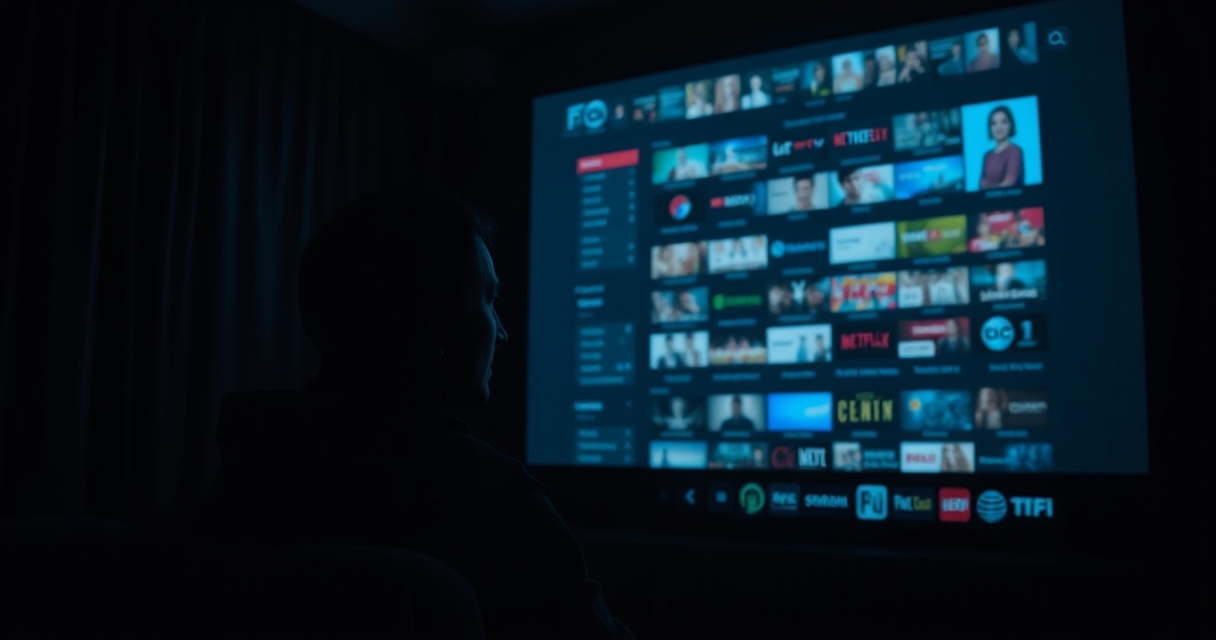
Bourgeois economics treats viewer attention as a scarce resource Netflix competes for. This framework obscures the actual relation. Attention under capitalism is raw material for the production of surplus value. Netflix’s recommendation engine is not a convenience—it is a value-extraction device. Every algorithmically curated thumbnail, every autoplayed episode, every personalized homepage is designed to transform user time into commodity time. The platform encloses cultural consumption, converting the open field of what one might watch into a closed circuit of what the algorithm feeds. This is the efficient cause of Netflix’s revenue model: not the selling of entertainment, but the systematic capture and commodification of conscious human activity. The 100 million daily hours are not consumption. They are labor—the labor of producing value through attention.
The Myth of Democratization Masks the Exploitation of Creative Labor
The standard defense of streaming capitalism argues that platforms like Netflix democratized production. Anyone could pitch a show. Global audiences could access world cinema. This discourse of democratization served a concrete function: it justified the destruction of residual payment structures built over decades of union struggle. The WGA and SAG-AFTRA strikes made visible what the commodity form obscures—that streaming platforms extracted working-class creative labor at below-reproduction costs while executives captured the full surplus. When Netflix reports subscriber growth as value creation, it erases the screenwriters earning poverty wages and the actors whose contracts eliminated residuals. The WGA/SAG-AFTRA strike was not a dispute over percentages. It was the working class recognizing that the platform model had redefined labor exploitation as technological progress.
Algorithms Demand Standardization—Culture Requires Difference
Adorno grasped that the culture industry’s logic was not distribution but production: the system manufactures pseudo-individuality while standardizing content to maximize surplus value extraction. Netflix’s algorithm performs this function with unprecedented precision. The platform does not simply recommend what fits user taste—it dictates the conditions of production. Shows are commissioned on the basis of data indicating which narrative structures, which genre combinations, which actor types maximize watch-time. The result is a catalog of 17,000 titles that generate the experience of infinite variety while producing the reality of finite formula. The commodity fetishism at work here is particularly insidious: the algorithm appears as a neutral mediator of taste when it is in fact a disciplinary mechanism enforcing the commodity form on cultural production itself. Every Netflix original represents capital’s demand that culture submit to the logic of reproducible surplus value.
The Contradiction of Streaming Scarcity
The industry discourse calls it “streaming wars.” This is ideological misdirection. The contradiction is not between platforms competing for market share, but between the platform model’s promise of access and its material result: artificial scarcity. Netflix owns 17,000 titles but licenses content to itself, creating windows of availability that function as digital enclosure. The same logic that encloses attention also encloses the cultural commons. When a film disappears from Netflix, it is not an accident of licensing—it is the commodity form reasserting its control over cultural circulation. The platform model requires scarcity to maintain the price form. Abundance would destroy the basis of the subscription fee.
Steel-men argue that despite these contradictions, Netflix reduced gatekeeping, allowed diverse voices to reach global audiences, and provided cheap entertainment to working-class families. This argument mistakes the form of access for its content. Yes, a subscription costs less than cable. But the commodity form reduces liberation to market access. The issue is not the number of titles available. The issue is the relation of production that determines what can be produced, under what conditions, and for whose benefit. The diversity of Netflix’s catalog is diversity within the straitjacket of the profit imperative. It is the pseudo-individuality Adorno diagnosed, now automated and scaled.
The Factory Floor Is Your Living Room
The physical factory of industrial capitalism concentrated workers in space, enabling them to recognize their common condition. The platform factory of streaming capitalism disperses workers into individualized consumption, isolating them within algorithmic bubbles. When the viewer selects a Netflix original, they engage in a double alienation: the content has been produced through exploited labor, and the act of watching produces the value that justifies that exploitation. The 100 million daily hours are not leisure. They are the working day of the attention proletariat. The contradiction will not resolve itself through better algorithms or fairer residuals within the existing model. The platform as factory makes the working class of both producers and consumers visible to themselves—provided they learn to see through the commodity form. The material basis for solidarity is already there, in the 100 million hours, the 260 million subscriptions, the $8.83 billion in quarterly revenue. The question is when those who supply the raw material will recognize their power.