The Strike That Broke the Frame
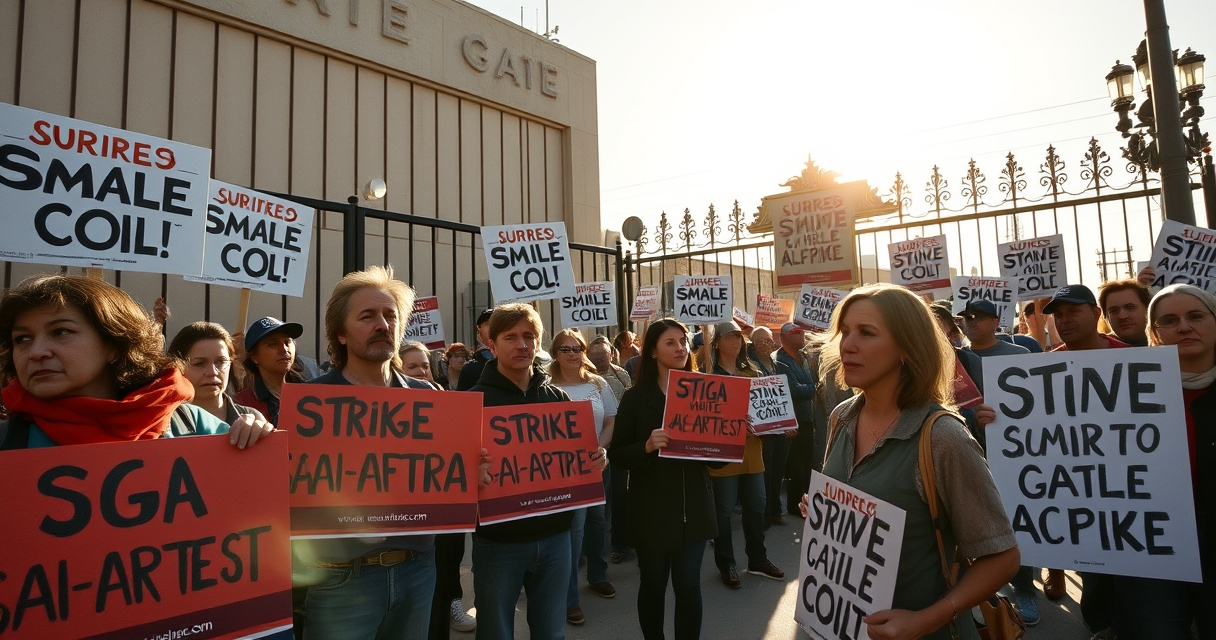
On May 2, 2023, the Writers Guild of America (WGA) walked off the job. They stayed out for 148 days. On July 14, SAG-AFTRA joined them, shutting down Hollywood for the first time since 1960. For casual observers, these strikes looked like a dispute over streaming residuals — a narrow fight about backend payments. They were wrong. The 2023 Hollywood strikes were not a quarrel about contract language. They were an eruption of the fundamental contradiction that defines the streaming economy: the structural necessity of expropriating creative labor's full value under the guise of technological progress.
For a decade, streaming platforms concealed their accumulation model behind the rhetoric of disruption and innovation. The WGA and SAG-AFTRA strikes ripped that veil away. What they revealed was that streaming capital cannot survive without reducing creative workers to a proletarianized class — not as a temporary squeeze, but as the permanent condition of its profitability.
The Residual as Deferred Wage: Streaming's War on Compensation
Under the old Hollywood system, residuals functioned as a form of deferred wage. When a television episode aired in syndication or a film played on cable, writers and actors received a percentage of the revenue. This wasn't charity. It was a recognition that creative labor continues to generate value long after the initial production is complete. The residual was a mechanism to capture a portion of the surplus value produced by the reuse of intellectual property.
Streaming destroyed this mechanism. Platforms like Netflix, Amazon, and Disney+ treat their libraries as fixed-cost assets. They pay a one-time licensing fee or production cost, then extract value from the catalog indefinitely. The writer who creates a show that streams for years sees no increase in compensation as the platform's subscriber base grows. The actor whose face drives engagement across markets receives nothing when the algorithm promotes their work to new audiences.
This is not an oversight. It is the core of the streaming business model. By eliminating residuals, streaming capital seizes what was previously a shared portion of surplus value and converts it entirely into platform profit. The WGA's demand for a new residual structure was not a grievance about fairness. It was a demand to be recognized as co-producers of value in an economy that treats their labor as a one-time cost to be minimized.
AI as a Weapon Against Creative Labor
The studios' proposals regarding artificial intelligence during the negotiations revealed precisely how they conceive of labor. The Alliance of Motion Picture and Television Producers (AMPTP) proposed that AI-generated scripts could be considered "literary material" — meaning they could be used to replace human writers. They further proposed that writers could be hired only to polish AI output, a process that would effectively atomize the writing craft into a task of editing machine-generated content.
This was not a technological proposition. It was a class proposition. The AMPTP sought to use AI not as a tool for enhancing creative work, but as a mechanism for deskilling and devaluing it. In Marxist terms, AI represents the application of dead labor — the accumulated knowledge and techniques of millions of human workers — to discipline and replace living labor. The studios wanted to turn the writer from a creator into a contingent editor, stripping the labor process of the craft knowledge that gives workers bargaining power.
SAG-AFTRA faced a parallel assault. The studios proposed scanning background actors' bodies, paying them a single day's wage, and then owning that digital likeness in perpetuity. This was a transparent attempt to transform the living actor into a digital asset — a fixed piece of capital from which the platform could extract value without any further labor costs. The strike broke this proposal, but the threat remains. The streaming economy's hunger for content creates an inexorable pressure to replace expensive human production with machine-generated simulacra.
Mini-Rooms and the Intensification of Exploitation
The "mini-room" phenomenon illustrates how streaming intensifies exploitation even when it nominally employs creative workers. In the traditional network model, a showrunner assembled a writers' room for the duration of a full season — typically 22-24 episodes. Writers were employed for months, developing episodes, breaking stories, and collaborating. Streaming's model of 8-10 episode seasons, combined with "mini-rooms," compresses this process. Writers are hired for a few weeks to outline a season, then laid off while individual scripts are produced.
This fragmentation serves capital in two ways. First, it eliminates the steady employment that once sustained middle-class creative workers. A television writer who worked one 22-episode season per year could survive. A writer who works three mini-rooms per year must scramble constantly, accepting less pay per project and losing the organic mentorship and career progression that defined older structures. Second, mini-rooms destroy solidarity. When writers are hired and fired in rapid cycles, they never develop the collective identity that enables union militancy.
The result is an intensification of labor: the same or greater total output (measured in hours of streaming content) produced by a more atomized, more contingent workforce. This is the hallmark of proletarianization — the transformation of skilled, stable labor into precarious, deskilled wage-work.
The "Unprofitable" Streaming Model: A Contradiction of Capital, Not Labor
For years, the streaming platforms defended their compensation structure by pointing to their own financial losses. Netflix, for all its revenue, was famously debt-financed. Disney+ lost billions in its early years. The narrative was clear: streaming is a losing business; labor must share the burden of losses.
This argument requires scrutiny. The streaming platforms are not unprofitable in any genuine economic sense. They are simply — as capital always is — chasing growth. The losses were investments, designed to capture market share and eliminate competitors. The logic is not: we have insufficient revenue to pay labor. The logic is: we must reinvest all revenue into expansion to achieve monopoly position, after which we can dictate terms to both labor and consumers.
The streaming model's "unprofitability" is a consequence of capital's growth imperative, not of insufficient surplus extraction from labor. When platforms claim they cannot afford higher residuals, they are saying: we cannot both pay labor enough to sustain creative careers and grow at the rate our shareholders demand. They choose growth. This is not an economic necessity. It is a class decision.
Concessions Won, Contradictions Intact
The WGA and SAG-AFTRA won significant concessions: new residual structures for streaming, AI protections, minimum staffing for writers' rooms, and restrictions on digital replicas. These victories matter. They demonstrate that creative workers can fight and win when they act collectively. They also prove that the union form, despite its limitations, can extract concessions from capital under the right conditions of militancy.
But the structural contradiction remains. The streaming accumulation model is predicated on the permanent reduction of labor costs. As long as platforms compete for subscribers by expanding libraries, they will face relentless pressure to cheapen content production. The strikes won temporary relief — a recalibration of the distribution of surplus value. They did not change the fundamental fact that the streaming economy treats creative labor as a cost to be minimized rather than a source of value to be shared.
The Hollywood strikes of 2023 were the most significant labor actions in the entertainment industry in sixty-three years. They taught creative workers that militancy works. The next step — for those who see the class struggle clearly — is to recognize that the contradiction cannot be resolved within the streaming model itself. Capital will always seek to proletarianize labor, whether through residuals, algorithms, or AI. The only durable solution is to remove the production of culture from the logic of accumulation entirely.
Read more on the political economy of streaming: Netflix and the Commodification of Attention, Commodity Fetishism Is Not a Mistake, and Teachers, Strikes, and the Remaking of Class Struggle.