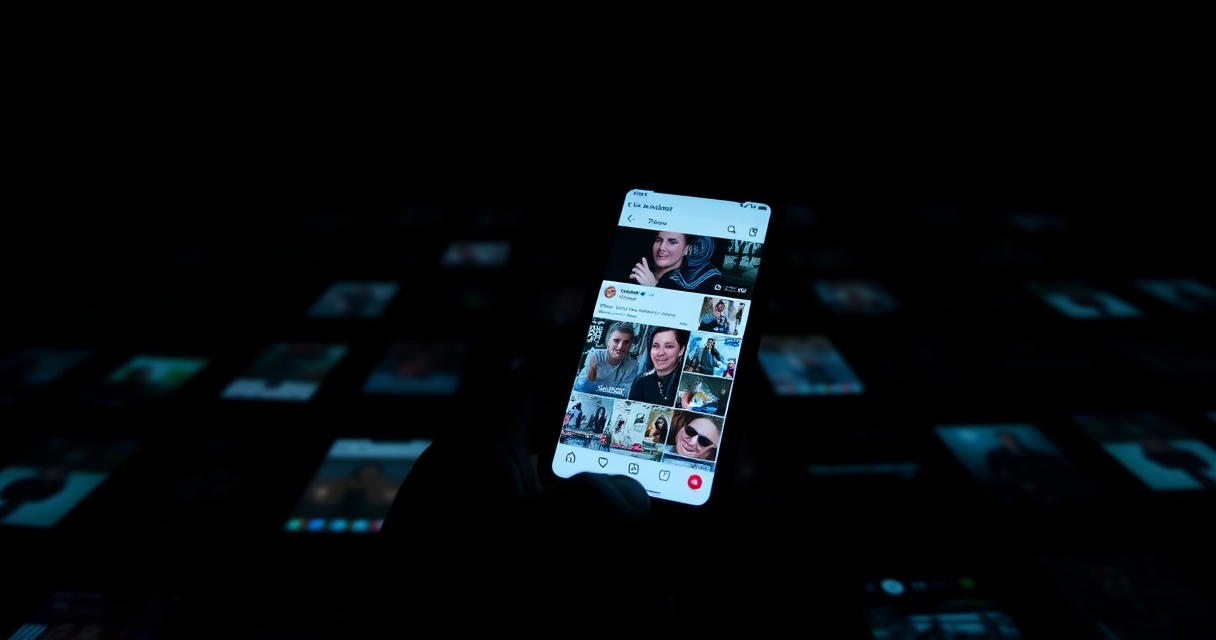
Spotify pays artists an average of $0.003 to $0.005 per stream. In 2023, the company reported €13.2 billion in revenue. The gap between what creators receive and what the platform extracts is not a market inefficiency—it is the business model. This is not hyperbole; it is the cold mathematics of platform capitalism. Every time a listener presses play, a tiny transfer of value occurs: labor from the musician, extracted by the platform, converted into shareholder returns.
The Spotify recommendation algorithm does not merely suggest songs—it transforms music from a use-value (aesthetic experience, cultural expression, communal ritual) into pure exchange-value. This completes the subsumption of musical production under capital that the recording industry began a century ago. Adorno saw this coming: the culture industry standardizes taste, stamps out spontaneity, and reduces art to administered amusement. What Adorno could not have anticipated is the algorithmic precision with which this administration now operates. The algorithm does not discover what you like; it produces a version of you that likes only what can be efficiently monetized.
Consider how the algorithm commodifies listening itself. Playlist curation—the "Discover Weekly," the "Mood Booster," the "Focus Flow"—is not a service; it is a regime of value extraction disguised as personalization. Each mood-based playlist trains listeners to approach music instrumentally: not as an encounter with another consciousness across time and space, but as a tool for productivity, emotional regulation, or ambient background. The listener becomes a consumer of affective commodities, and the musician becomes a producer of content optimized for algorithmic integration.
The proletarianization of musicians follows logically from this structure. Per-stream payments below the cost of reproduction—the cost of equipment, studio time, rehearsal, housing—are not an oversight. They are the natural outcome of a system where the platform owns the means of distribution and sets the price of access to audiences. The gig economy comes for the artist: millions of streams do not equal a living wage because the exchange-value of music has been driven to near zero at the producer level, while aggregating into billions at the platform level. This is primitive accumulation, digital style—the enclosure of the musical commons.
Adorno’s standardization thesis finds its contemporary vindication in the algorithmic production of playlist-ready music. Record labels now produce songs specifically designed to satisfy algorithmic criteria: short intros, predictable structures, repeatable hooks, "jump" patterns. The algorithm becomes a de facto composer, dictating form through the invisible hand of recommendation metrics. Music that resists algorithmic capture—the lengthy, the dissonant, the experimental—is simply not surfaced. It exists in a digital hinterland, unfound and unheard.
The standard liberal rejoinder: "But Spotify gives independent artists global reach!" This is true only in the most impoverished sense. Reach without payment is exploitation, not opportunity. A global audience that cannot sustain your livelihood is a global audience of parasites, not patrons. The platform extracts the surplus value of global distribution and leaves the musician to subsist on the margins of their own success. To call this democratization is to confuse the expansion of precarity for the expansion of freedom.
The concrete image that haunts the platform economy is the musician with millions of streams but no rent money. This is not a contradiction; it is the synthesis of capital’s latest phase. Music has become a fetishized object in the strict Marxian sense—it appears to have value in itself, as though the streams themselves generate wealth, while the actual social relations of production (the hours of practice, the cost of instruments, the labor of composition) are systematically obscured. The algorithm is the veil. And like all veils in capitalist society, it is torn away not by argument but by crisis—when the musician cannot pay rent, when the platform raises its subscription price again, when the streaming bubble bursts.
Until that crisis comes, the machine will keep spinning. The algorithm will keep recommending. And the musicians will keep producing the raw material of a system that returns them nothing but exposure—the eternal promise of capitalism, which is always just enough to keep you working, never enough to set you free.
Read our analysis of commodity fetishism as systemic, not mistaken and our examination of attention labor under platform capital.