On January 9, 2023, when hundreds of thousands of Burkinabè poured into the streets of Ouagadougou waving Russian flags and chanting for the departure of French ambassador Luc Hallade, the scene was not—as Western media framed it—a spontaneous outburst of mob rule. It was the logical culmination of sixty-three years of neocolonial extraction masquerading as sovereign partnership. What the Sahel is experiencing is not a regional crisis of democracy, but the convulsive birth pangs of a genuinely anti-imperialist front emerging from the wreckage of barki—the informal French sphere of influence where financial sovereignty was ceded, monetary policy was dictated from Paris via the CFA franc pegged to the euro, and raw materials like Burkina Faso's gold and Mali's cotton were systematically undervalued in service of French industrial capital.
The Sahel Coups Reflect Anti-French Popular Sentiment, Not Military Ambition
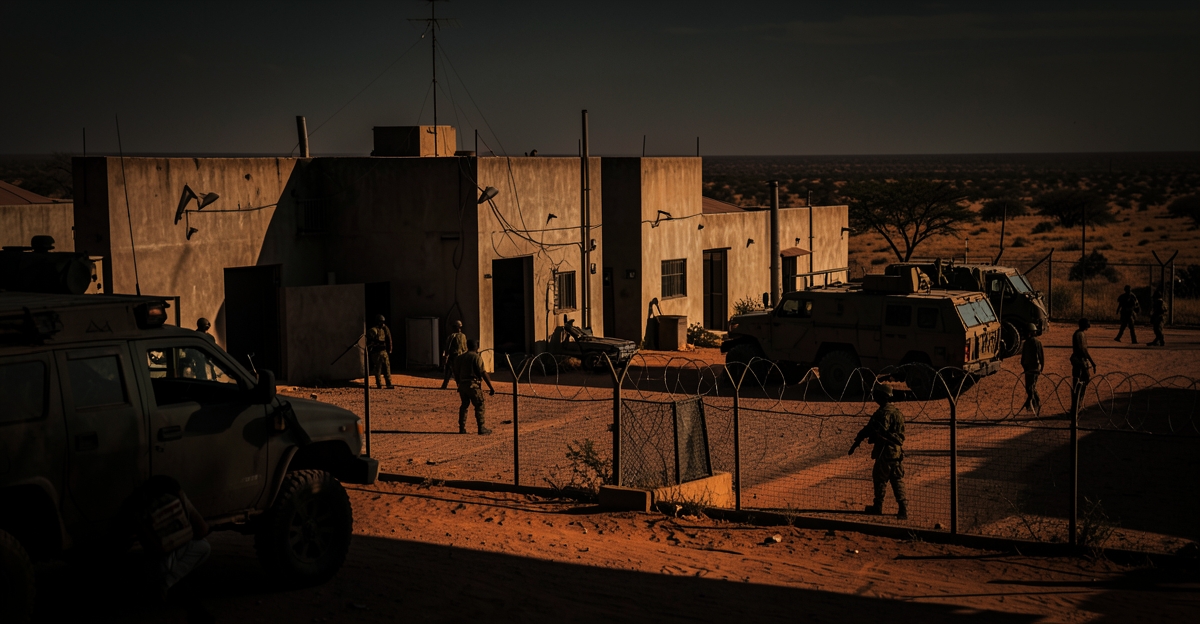
Between May 2021 and September 2022, military officers seized power in Mali, Burkina Faso, and Niger. But unlike the patrimonial coups of the 1960s—where colonels swapped out one comprador elite for another while keeping French neocolonial structures intact—these takeovers emerged from a popular base that had already organized against French presence. In Mali, the M5-RFP protests that preceded the 2020 coup demanded not just President Ibrahim Boubacar Keïta's resignation but the renegotiation of military accords with France. In Burkina Faso, Captain Ibrahim Traoré, who seized power at age 34, inherited a movement that had already expelled French troops and forced the closure of France's military base in Kamboinse by February 2023. By December 2023, Niger's junta had expelled French ambassador Sylvain Itté and terminated military agreements dating to independence.
The evidence for popular sovereignty lies in the polling. A 2023 Afrobarometer survey showed 67% of Burkinabè supported the coup that removed President Roch Marc Kaboré, while in Mali, 73% of respondents approved of military rule in the same period. These are not endorsements of militarism per se. They are expressions of desperation: when civilian regimes serve foreign extractive interests, the barracks become the only institution capable of delivering a rupture. Marxism recognizes the military as a contradictory site—it can serve as the repressive arm of bourgeois order or, under specific conditions, as the vehicle for national liberation when the political base has exhausted juridical democracy as a transformative tool.
France's Operation Barkhane Failed Because It Was Never About Security
Launched in August 2014, Operation Barkhane deployed 5,500 troops across the Sahel with a stated mission of counterterrorism. It ended in November 2022, having spent over €2.5 billion euros, with jihadist violence increasing by 1,700% in Mali alone since the operation's start, according to the Armed Conflict Location and Event Data Project (ACLED). But the metrics of failure are misread if we take the security mission at face value. Barkhane's actual function was infrastructural: it secured the extraction corridor from Niger's uranium mines at Arlit—which supplied 75% of France's electricity from nuclear power—through Mali to the Atlantic coast. French officials admitted as much when Macron's 2017 Ouagadougou speech called for "rethinking" the partnership, only to double down on military presence until popular protest made it untenable.
Marxist political economy calls this the material basis of neocolonial intervention: military force is deployed not to stabilize but to maintain the terms of trade favorable to the metropole. France's uranium import from Niger alone totaled €4.3 billion in market value between 2010 and 2022, while Niger received under €300 million per year in total French aid. When Niger's new junta suspended uranium exports to France in July 2023, the true stakes became visible: French energy security was never separable from Sahelian exploitation. The failure of Barkhane was therefore not operational but political—it could not stabilize a system predicated on theft.
The Alliance of Sahel States as Anti-Imperialist Formation
On September 16, 2023, Mali, Burkina Faso, and Niger signed the Liptako-Gourma Charter, establishing the Alliance of Sahel States (AES). The document explicitly commits members to "collective defense against external aggression" and refuses to "return to the folds of ECOWAS so long as it remains a tool of Western imperialist interests." This is not merely rhetorical posturing. The AES has concretely redirected security cooperation: joint patrols along the Mali-Niger border replaced French airspace monitoring; a common diplomatic front at the United Nations successfully blocked a French-led resolution for military intervention in Niger in October 2023; and intra-alliance trade is being denominated in local currencies rather than the euro, undermining the CFA franc system.
The AES represents what Marxist theorist Kwame Nkrumah called a regional anti-imperialist front: a tactical alliance of national bourgeoisies and military bureaucracies that, while not socialist in character, nevertheless performs objectively anti-capitalist functions by disrupting the circulation of imperial capital. By ejecting French troops, canceling extraction contracts with Areva and TotalEnergies, and establishing an independent monetary zone, the AES has done more to advance Sahelian sovereignty in twelve months than civilian regimes managed in sixty years. The limitation, however, is structural: the AES has not socialized the means of production within its member states. Mining revenues still flow to domestic elites, though now Russian-aligned rather than French-aligned.
Russia's Wagner Presence Complicates the Anti-Imperial Narrative
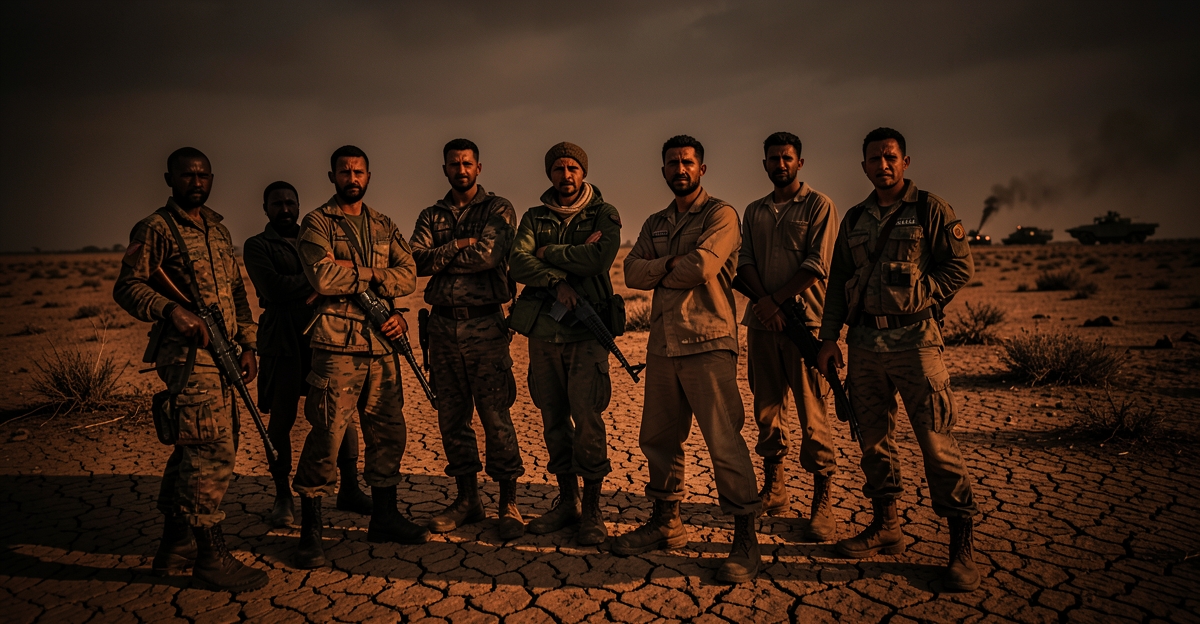
Here the anti-imperialist analyst must steel-man the most serious counter-argument: the entry of Russia's Wagner Group (now reconstituted as Africa Corps) into Mali in December 2021, followed by Burkina Faso in early 2023, cannot be dismissed as simply another imperial rotation. Wagner represents a distinct form of predatory capital—private military firms operating outside state accountability, extracting gold concessions and satellite mining data in exchange for counterinsurgency operations. In Mali, Wagner troops have been documented committing human rights abuses in the Moura region (March 2022) and the Kidal offensive (October 2023), killing an estimated 500 civilians. These actions contradict the AES's stated commitment to popular sovereignty.
But the steel-man analysis must also recognize the asymmetry: Russia's extraction in the Sahel remains orders of magnitude smaller than France's sixty-year extractive regime. Wagner's estimated $200 million in potential gold revenue from Mali (per US Treasury estimates) is a fraction of the $4.3 billion France extracted via uranium alone. More importantly, Wagner's presence has no institutional framework for long-term neocolonial control: Russia lacks the banking infrastructure, monetary levers, and cultural hegemony that French neocolonialism built over generations. The Wagner presence is parasitic but not systemic—it weakens French imperialism without constructing an equally durable replacement. The contradiction is material, not moral: the Sahel's anti-imperialist movement accepts Russian blood-for-gold bargains because the immediate enemy remains France, but this tactical alliance risks substituting one extraction regime for another.
Popular Sovereignty Requires More Than Military Rule
The fundamental Marxist critique of the Sahel juntas is not that they are undemocratic—in the formal bourgeois sense, they obviously are—but that they have not fundamentally restructured the relations of production. In Burkina Faso, Traoré's government has raised taxes on mining companies by 20% and redistributed land seized from foreign agribusiness to small farmers; in Mali, the junta has nationalized four gold mines previously held by Canadian and Australian firms. These are significant reforms, but they remain within the framework of state capitalism rather than popular socialism. The working classes and peasantries who poured into the streets to demand French departure have not seen equivalent redistribution of domestic wealth: the mining sector still operates on wage-labor extraction, and the state's primary budget expenditures remain military procurement (over 40% of Burkina Faso's 2024 budget, per IMF data).
The path to popular sovereignty in the Sahel requires moving from negative liberation—the expulsion of imperial forces—to positive liberation: the construction of democratic institutions that transfer economic power to the producers themselves. This means workers' committees in the gold mines that set extraction rates; peasant assemblies that determine land redistribution; and a regional monetary union that democratically controls credit allocation rather than simply replacing French with Russian financial flows. The Marxist concept of permanent revolution applies here: the anti-imperialist stage must immediately transition into the social revolution, or the military vanguard will calcify into a new bureaucratic ruling class.
The AES has accomplished what sixty years of juridical independence could not: it has broken the French stranglehold on the Sahel. But breaking chains is only the first act. The second act—transforming extractive wealth into social wealth, military discipline into popular democracy, and regional solidarity into internationalist socialism—remains unwritten. The Jula and Mossi traders in the Bobo-Dioulasso markets who sold their last goats to finance the Burkina Faso junta's first months did not do so to replace French colonels with Burkinabè ones. They did so to make sovereignty real. Whether the current regime class can deliver that reality, or whether it will become the next obstacle to it, is the central question of the Sahelian revolution. History, as Marx wrote, unfolds twice: first as tragedy, then as farce. The Sahel has had enough tragedy. Whether it escapes farce depends not on flags or uniforms, but on whether the popular classes who created this opening can now take the movement into their own hands.