In 1971, the last Chagossians were herded onto cargo holds of ships bound for Mauritius and Seychelles. Unlike the iconic photograph of a Vietnamese child fleeing napalm, or the stacked bodies of Sharpeville, there is no single, searing image of this expulsion. The erasure was the point. The British Foreign Office, acting on a request from the Pentagon, needed an island with no history and no people—a logistical black box in the Indian Ocean. The silence surrounding this event is not an accident of history but a structural requirement of imperialism: the violence of primitive accumulation is most effective when it leaves no witnesses. What happened to the Chagossians was not a tragic necessity of Cold War security, but a deliberate act of primitive accumulation—the violent expropriation of an entire people to service Anglo-American capital and military strategy. The struggle for their right to return is not merely a humanitarian question but a concrete test of whether anti-colonial internationalism can break through the logistical architecture of empire.
The Base is Not an Anomaly: Diego Garcia is the Logical Outcome of Late British Imperialism
The Chagos Archipelago was not accidentally selected as a base site. The 1965 Lancaster House Agreement deliberately detached the archipelago from Mauritius and Seychelles just before their independence, creating the British Indian Ocean Territory (BIOT) as a constitutional fiction designed to host a US military installation. This territorial fragmentation was a classic imperial maneuver—divide a colonized people's land, impose a legal framework that erases their existence, and then claim the resulting "uninhabited" territory as a strategic asset. The base was not a response to Soviet naval expansion, which was minimal in the Indian Ocean until the late 1960s. It was a projection of what David Harvey terms a "spatial fix"—the geographical reorganization of capital and military power to overcome internal crises and maintain global hegemony. The 1966 Five Power Defence Arrangements were not about collective security but about formalizing US dominance under a British colonial alibi.
The Deception and the Deterrent: How the Forced Removal was Planned and Executed
The US Joint Chiefs of Staff memo of May 1964 demanded an "uninhabited" island for military facilities in the Indian Ocean. The UK responded by lying about the presence of the Ilois (the Chagossian Creole population), claiming only a few "contract laborers" were present to maintain coconut plantations. The so-called "Bandu agreement" of 1967, which purportedly compensated the islanders for lost livelihoods, was a fiction: the total compensation paid to the entire Chagossian population was £650,000—less than the cost of a single fighter jet. The British destroyed the economic base of the archipelago by burning coconut plantations and culling the dogs owned by the islanders. The culling was not about hygiene or disease control; it was a symbolic and material act of elimination. To destroy a people's dogs is to destroy their home. The operation was total, and it was planned with the meticulous cruelty of an imperial bureaucracy that had learned from the High Clearances in Scotland and the enclosures in Ireland.
The Legal Battleground: From UK Courts to the ICJ Advisory Opinion
The Chagossian legal struggle has exposed the bankruptcy of liberal legalism when confronted with imperial power. In the 2000 Bancoult judgment, the UK High Court ruled the forced removal unlawful. Within four years, the British government used an Order in Council—a relic of prerogative power that bypasses parliamentary oversight—to overturn the ruling and permanently exclude the Chagossians from their homeland. This was not a technical legal maneuver but a demonstration of what Marxists understand as the state's monopoly on legitimate violence: when law threatens imperial interests, the state simply changes the law. The 2019 International Court of Justice Advisory Opinion, which declared the UK's administration of the Chagos Archipelago unlawful, was a moral and legal victory. But the ICJ has no enforcement mechanism. The UK and US have ignored it, and the United Nations General Assembly resolution calling for return remains unimplemented. The legal process has shown that the Chagossian case is legally unassailable but politically powerless—a contradiction that points toward the necessity of political struggle beyond the courtroom.
The Material Calculus: Why the UK and US Refuse Resettlement
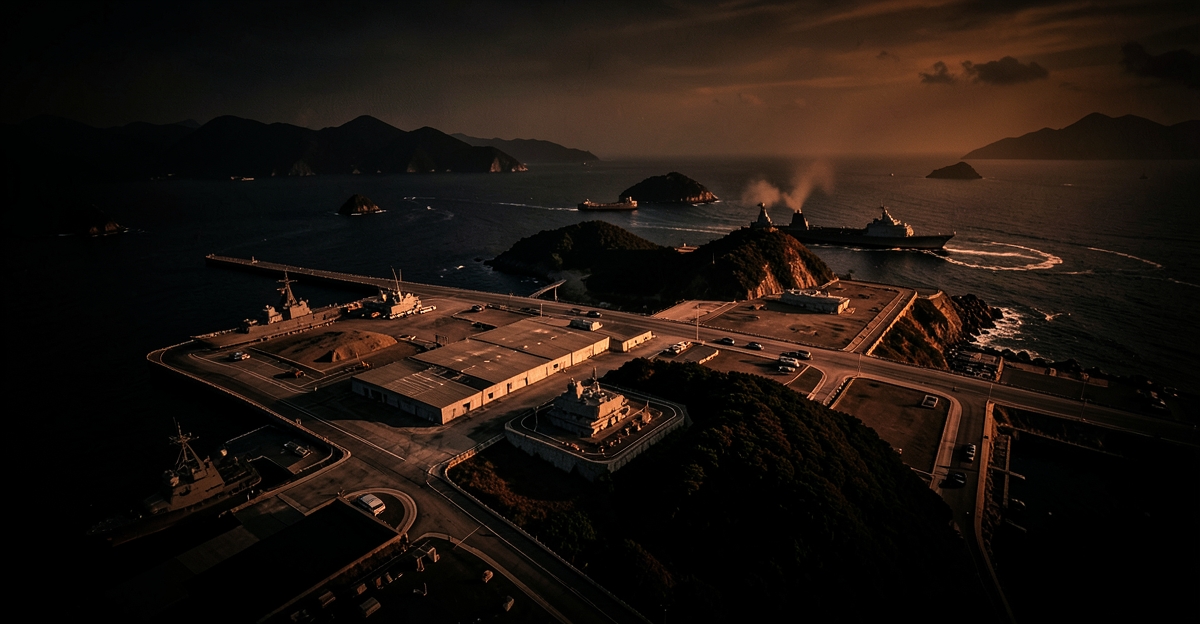
The strategic value of Diego Garcia is not about military necessity but about logistical dominance. The base supports B-2 and B-52 strategic bombers capable of reaching Iran, Afghanistan, and the South China Sea. It was a launch point for Operation Enduring Freedom and remains a key node in what US Strategic Command calls "global strike capacity." The 1966 Exchange of Notes between the UK and US leases the island until 2036, with an option for renewal. The cost of resettlement—estimated at £50–100 million—is a fraction of the annual operating budget of the base. The objection is not financial but political. To admit the Chagossians' right to return is to admit the original theft. It would expose the entire architecture of the BIOT as a colonial fraud and set a precedent for other displaced peoples, from the Palestinians to the Rohingya. The base exists to project power; the refusal to return exists to protect the ideological fiction that the base was built on empty land.
A Strategic Weakness: The Chagossian Return as a Flashpoint in the Indian Ocean
The Chagossian diaspora is not passive. Organizations like the Chagos Refugees Group, led by Olivier Bancoult, and the UK Chagos Support Association have built a sustained international campaign. Mauritius has taken the case to the International Tribunal for the Law of the Sea and the European Court of Human Rights. The United Nations, despite its institutional impotence, has provided a platform that frames the issue as unfinished decolonization. The UK's "Global Britain" pretensions are vulnerable here: how can a country that claims to champion rules-based international order maintain a colony in defiance of the ICJ? The US, for its part, is increasingly reliant on Diego Garcia as its naval capacity declines relative to China's. The base is a strength, but the political liability of the Chagossian issue is a growing weakness. The Chagossian struggle is a pressure point in the global imperial system—a place where the contradictions between legality, morality, and power become visible.
Decolonization is Not a Metaphor: What the Right to Return Demands of the Left
The liberal approach to the Chagossian issue—compensation and a memorial, but no return—accepts the base's existence and the imperial architecture it serves. This position, often presented as "realistic," is actually a capitulation: it treats the base as permanent and the Chagossian presence as historical. A Marxist analysis rejects this premise. The right to return is not a humanitarian gesture but a reparatory demand that challenges the spatial fix of capital and military power. It requires the removal of the base, not just symbolic acknowledgment. This is not a demand for a pastoral idyll—the Chagos Archipelago was a plantation society with its own internal class relations—but a demand for sovereignty over a territory that was stolen through primitive accumulation. The Chagossian struggle is a concrete test of whether anti-colonial internationalism can articulate a politics that goes beyond legal reform and challenges the material infrastructure of imperialism.
The Counter-Argument and Its Immanent Critique
The strongest opposing position is the "strategic necessity" argument: Diego Garcia is an irreplaceable asset for global stability, deterrence against revisionist powers (China, Russia, Iran), and humanitarian intervention. The Chagossians are a tragic cost of maintaining a global order that, for all its flaws, prevents worse outcomes. Compensation and a memorial are the realistic, humane outcome. This argument fails on its own terms. The base's deterrent effect is speculative at best—there is no evidence that Diego Garcia prevented a single war or saved a single life. The base has been used for rendition flights, torture, and unlawful detention. The "humanitarian intervention" claim is a post-hoc justification for a facility designed for offensive power projection. If strategic necessity justifies the displacement of an entire people, then strategic necessity is not a principle but an alibi for imperial violence. The compensation argument assumes that what was stolen can be priced—but the value of a homeland cannot be commodified. The argument collapses into a tautology: the base must exist because the base must exist.
The Chagossian return is not a sentimental demand but a strategic question. It tests whether the left can move beyond critique to concrete solidarity—whether we can connect the struggle of a displaced people to the broader fight against the global network of military bases that sustain US-led imperial capitalism. The base at Diego Garcia is a node in a system. To dismantle it is to weaken the system. To demand the return of the Chagossians is to insist that the land and its people are not inputs to a war machine but subjects of their own history. The archipelago is still there. The people are ready. The question is whether the forces of anti-colonial internationalism can match the logistical power of empire with a political power of their own.