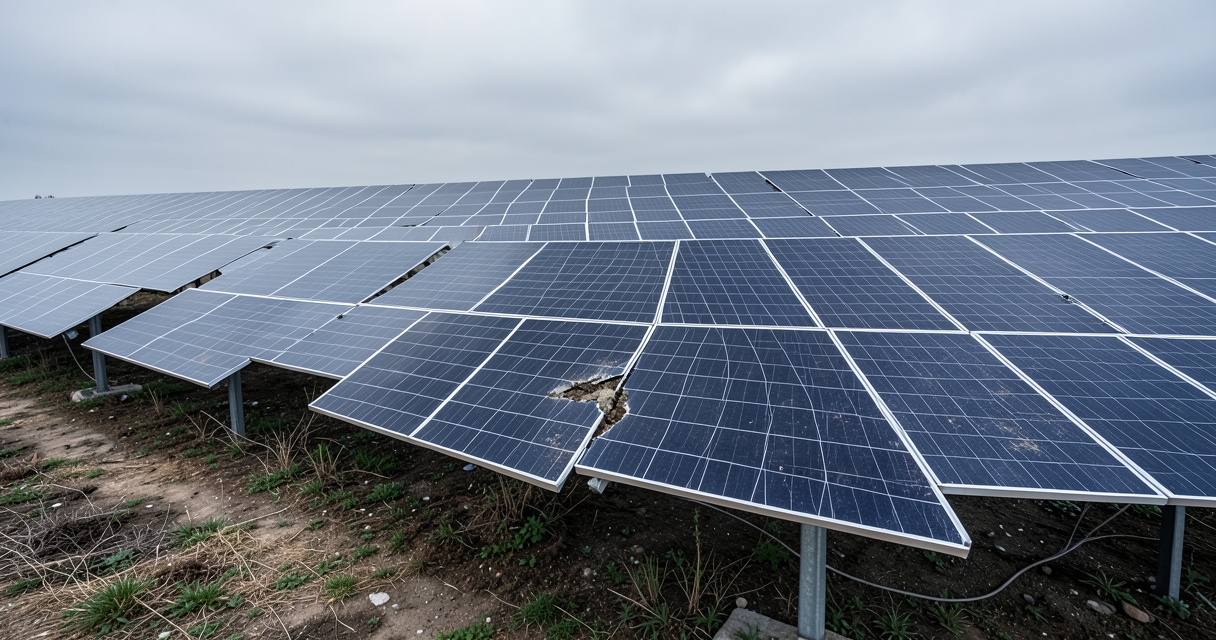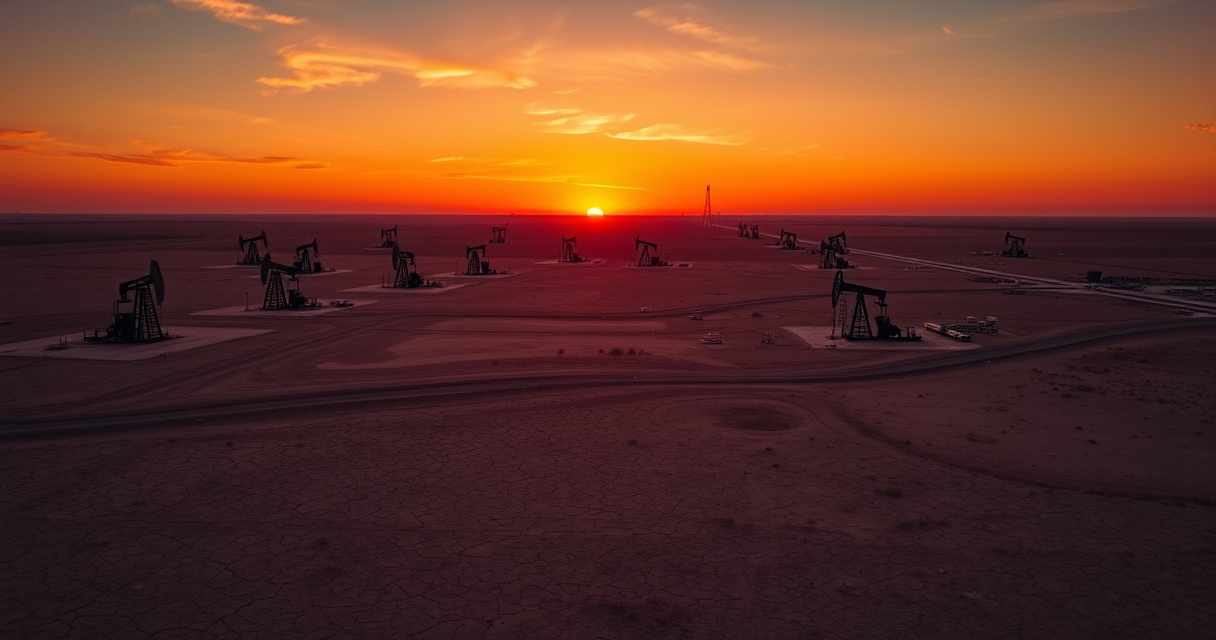
In the Permian Basin of West Texas, the earth is being drained of both its oil and its water. Every year, operators inject roughly 26 billion gallons of fresh water into the ground to fracture shale formations, releasing trapped hydrocarbons. This volume equals the annual domestic consumption of over 1.2 million American households. Yet the region is in the grip of a drought that has lasted two decades and is intensifying with every passing season. The contradiction is not accidental—it is structural. It is the metabolic logic of capital laid bare in arid soil.
1. The Water Cost of Extraction
Hydraulic fracturing requires between 2 and 10 million gallons of water per well. In the Permian, the average lateral length exceeds 10,000 feet, demanding the upper end of that range. The water must be fresh—almost potable—because saline water damages equipment. It is mixed with silica sand and a cocktail of chemicals — biocides, scale inhibitors, friction reducers — then blasted at pressures exceeding 9,000 psi. The resulting flowback returns as toxic brine, laden with heavy metals, radium, and hydrocarbons. Only a fraction is treated. The rest is injected into deep disposal wells, lost to the hydrological cycle for geological time.
The source of this water is the Ogallala Aquifer, one of the largest freshwater reserves on the planet, and the shallower Dockum Group aquifers that lie beneath the basin. These aquifers were formed over millennia. They are being depleted at rates that exceed recharge by factors of 100 to 1,000. In parts of the Permian, the water table has dropped by over 200 feet since 2010. The value extracted — oil sold on global markets — is private. The cost—irreversible desiccation of a watershed — is socialised across the planet.
This is not a technology problem. It is a property relation. The water is treated as an input, a factor of production, because its price does not reflect its geological scarcity or its ecological function. Capital treats nature as a free lunch. The lunch, however, is finite.
2. Capital Accumulation vs Aquifer Depletion
Marx, in volume one of Capital, identified what he called the “metabolic interaction” between humans and the earth — the cycle by which we take from the soil and return to it. But capitalism, he argued, “disturbs the metabolic interaction between man and the earth ... it destroys both the physical health of the urban worker and the mental life of the rural worker.” In the Permian, that disturbance has become a rupture. Capital accumulates not by cycling matter but by mining it: extracting fossil carbon from the lithosphere, extracting fossil water from the hydrosphere both to produce surplus value.
The oil extracted from the Permian in 2025 alone yielded approximately $200 billion in revenue at prevailing prices. The water used—roughly 26 billion gallons—is priced at pennies per barrel. In economic terms, water constitutes less than 1% of total extraction costs. The entire incentive structure of the industry drives toward maximal water consumption per well because the water is cheap, the oil is valuable, and the externalised costs are deferred to communities and ecosystems that do not appear on any balance sheet.
This is the deep logic of the metabolic rift: the separation of production from the conditions of its own reproduction. The extraction of oil from the Permian generates profits today, but it consumes the water that will be needed to sustain agriculture, livestock, and human life in the region for decades. The aquifer does not replenish on human timescales. The rift is not a market failure; it is a necessary outcome of a system that requires constant expansion and treats the earth as a limitless supply depot. Those who defend “fracking with best practices” miss the point: no practice can reconcile infinite growth with a finite planet.
Compare this logic with the factory farming system analysed in the metabolic rift of industrial animal agriculture—the same pattern of converting living cycles into linear waste streams. In both cases, the unity of production and reproduction is severed.
3. Workingâ€'Class Communities Bear the Ecological Cost
The towns of Odessa, Midland, and Pecos lie at the epicentre of the Permian boom. Their populations have swelled with workers drawn by the promise of wages higher than those available in the declining agricultural and service sectors. These are materially, historically, workingâ€'class communities. They are also the communities that drink the water, breathe the air, and live atop the disposal wells.
Studies conducted by the University of Texas and the Environmental Defense Fund have found elevated levels of benzene, hydrogen sulfide, and volatile organic compounds in the air near Permian well pads. In the town of Wink, groundwater samples showed arsenic and selenium at concentrations exceeding federal safety standards — directly attributable to fracking fluid migration through failed well casings. The Texas Department of State Health Services has documented a 40% higher rate of childhood leukaemia in counties with high fracking intensity than in nonâ€'drilling counties.
The same pattern appears in every extractive frontier: the profits are siphoned to Houston, New York, and London, the toxins are left in West Texas. This is the geography of class struggle written into the landscape. The working class produces the energy that powers the global economy and receives, in return, poisoned aquifers, chronic respiratory disease, and a stolen future. It is not a coincidence—it is the predictable result of a system in which the owners of capital control the means of production and the means of life.
The border regime that disciplines migrant labour in the fields of California operates on the same principle: the state enforces a reserve army of labour, ensuring that capital can externalise costs onto disposable populations. In West Texas, the state enforces the rights of capital to externalise ecological costs onto disposable communities. The mechanism is different; the logic is identical.
4. The Permian as Paradigm of Ecological Crisis
The Permian Basin is not an exception—it is a synecdoche. The metabolic rift that operates there operates everywhere capital extracts value from nature. The same logic drives deforestation in the Amazon, overfishing in the North Atlantic, soil exhaustion in the American Midwest. Everywhere, the cycle of matter is subordinated to the cycle of capital. Everywhere, the reproduction of life is sacrificed to the accumulation of abstractions.
But the Permian condenses this logic with unusual clarity because water—the most basic biological necessity—is consumed directly in the act of extraction. There is no intermediary. The oil is sold; the water is gone. The drought is not an external shock to the system; it is the system. Capital’s need for continuously expanding production requires the continuous transformation of living water into dead profit. That transformation is not accidental. It is the metabolism of capital itself.
The movement for climate justice often frames fossil fuel extraction as a problem of emissions, of atmospheric carbon. That framing is necessary but insufficient. The crisis is not only a matter of what goes up into the sky but of what is taken out of the ground, and out of the hands of the people. The water crisis in the Permian is a direct expression of the same metabolic rift that drives the climate crisis. They are two aspects of the same contradiction: a system that must grow forever by destroying the ecological conditions that make growth possible.
The only resolution is to break the metabolic rift itself—to bring the extraction of value back under the conscious control of the associated producers, to plan production in accordance with ecological cycles rather than profit cycles. That means taking the Permian Basin off the market. It means nationalising the oil fields under democratic, workingâ€'class control and winding down extraction on a timeline dictated by ecological necessity rather than shareholder dividends. It means rebuilding the relationship between the social metabolism and the natural one—repairing the fracture that capital has opened.
Until that happens, the Permian will continue to bleed water for oil. The 26 billion gallons will become 30, then 40. The drought will deepen. The children of Odessa and Pecos will continue to breathe benzene. That is not a prediction; it is the trajectory of the system. Metabolic rift is not a metaphor. It is a material process, and it is killing the planet by degrees. The question is whether we will recognise the fracture before the rift becomes a chasm.