Seventy-Five Thousand White Coats, One Demand: Stop Killing Us for Profit
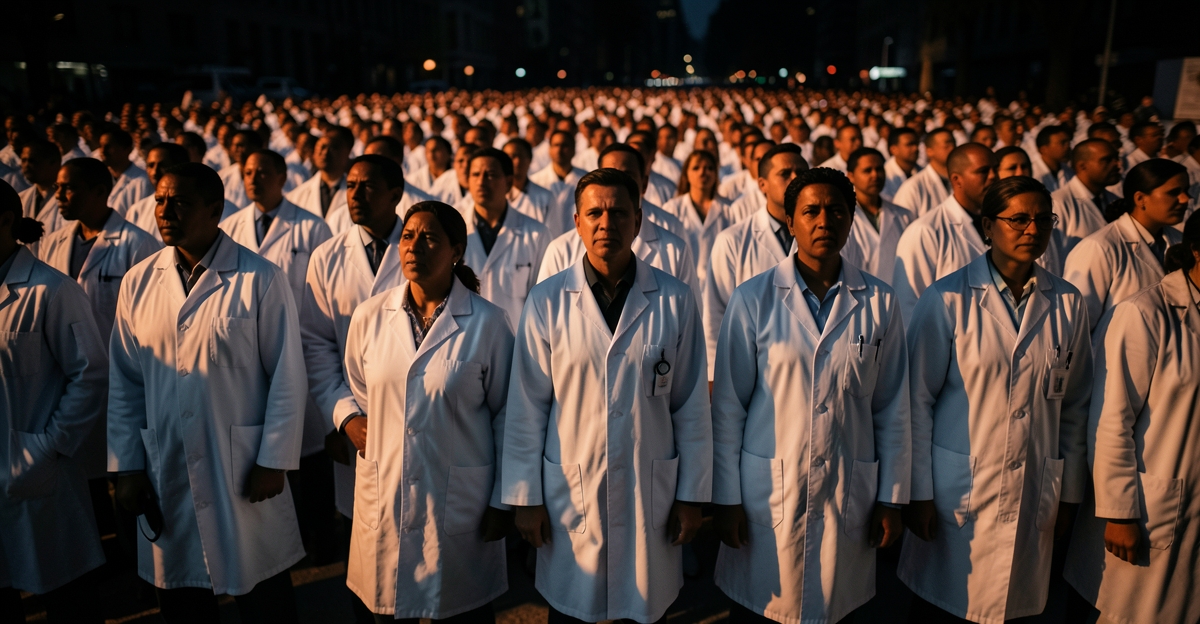
On October 4, 2023, seventy-five thousand Kaiser Permanente healthcare workers walked off the job. It was not a warning. It was not a symbolic gesture. It was the largest healthcare strike in American history—and it sent a bullet through the heart of the lie that "patient safety" and "corporate healthcare profits" can coexist. The scale alone should have commanded national solidarity. Instead, Kaiser management—alongside a chorus of liberal pundits and hospital administrators—deployed capital's most potent ideological weapon against these workers: How dare you strike? You are endangering patients.
The Ideology of Moral Blackmail
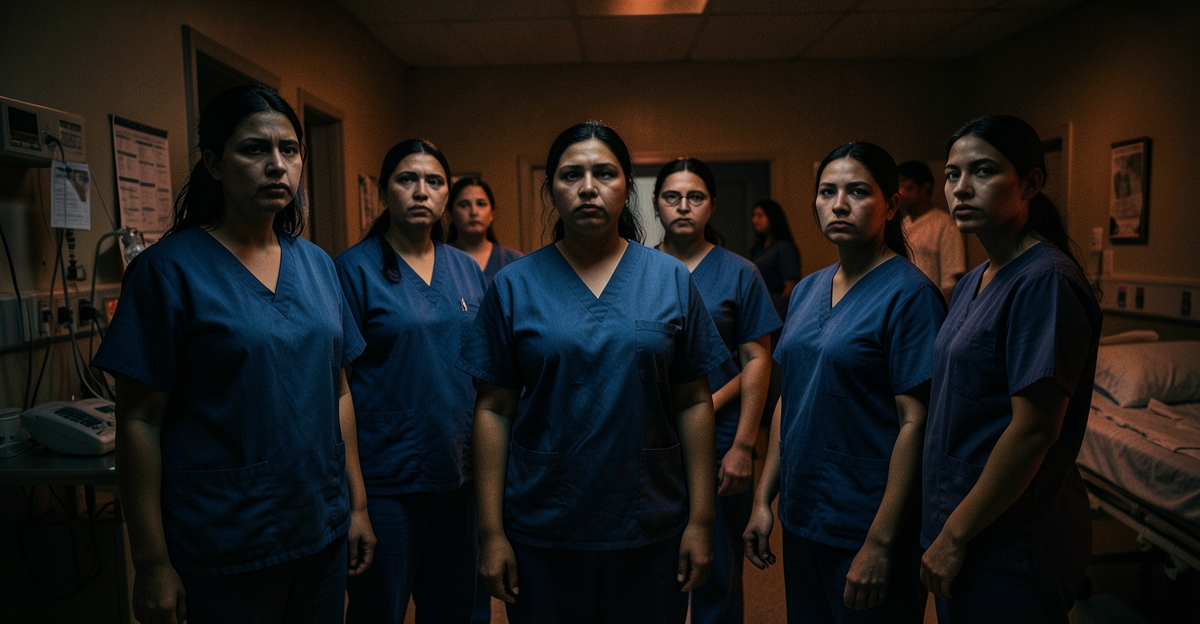
Healthcare workers face a unique form of ideological subordination. Unlike auto workers or warehouse pickers, their labor is directly entangled with human life and suffering. Capital exploits this entanglement ruthlessly. When nurses strike, the employer does not simply call them greedy. It calls them immoral. It parades out the specter of the abandoned patient, the delayed surgery, the unstaffed ICU. Kaiser's public relations machine ran this playbook perfectly, accusing the Coalition of Kaiser Permanente Unions of "putting patients at risk" while simultaneously refusing to address the staffing crisis that is the primary threat to patient safety.
This is not hypocrisy. It is ideological warfare. By framing the strike as an act of violence against patients, capital transforms the collective withdrawal of labor—the only real power workers possess—into an ethical violation. It demands that healthcare workers internalize a contradiction: that their duty to heal must include accepting the conditions that make healing impossible.
The Real Patient Endangerment: Understaffing, Burnout, and Profit Extraction
Let us examine what Kaiser calls "responsible staffing." In 2022, Kaiser Permanente reported a net income of $3.1 billion. Its executives received millions in compensation. And yet, throughout 2022 and 2023, the corporation systematically reduced frontline staffing levels, increased mandatory overtime, and refused to fill vacant positions. The result was predictable: burnout, medical errors, patient neglect, and a workforce running on fumes. The same nurses Kaiser now accuses of endangering patients had been begging management for months—for years—to address the staffing crisis. Management ignored them.
The strike was not the cause of patient endangerment. The strike was the symptom of a healthcare system that treats human life as a cost to be minimized and human labor as a resource to be extracted until failure. Capital's logic is brutally simple: every dollar spent on an additional nurse is a dollar not returned to shareholders. When workers refuse to cooperate with their own exploitation, capital calls it "abandonment." But the abandonment that matters is the systemic abandonment of patients to a profit-driven machine that values their insurance premiums more than their survival.
This dynamic is not unique to healthcare. We have seen it on the factory farms where workers must slaughter animals at speeds that guarantee injury and contamination—a system that commodifies life itself until both animal and worker are reduced to inputs in a profit algorithm. We have seen it in the pharmaceutical industry, where companies like Eli Lilly charge thousands for insulin while claiming patent protection—a privatization of life-saving science that kills diabetics who cannot afford their own medication. And we have seen it in the classroom, where teachers who strike for smaller class sizes and adequate resources are accused of "hurting children"—a charge that collapses the moment one asks who is really hurting children by underfunding their schools.
The Steel-Man Objection: Do Healthcare Workers Have a Duty Not to Strike?
Let us grant the counter-argument its strongest form. Healthcare workers, the objection runs, have taken an oath. They have a special obligation to put patient welfare above all else. A strike—particularly an indefinite or prolonged strike—inevitably causes harm. Patients die. Surgeries are delayed. Emergency rooms become overwhelmed. Therefore, healthcare workers should not strike. They should negotiate within the bounds of their professional duty.
This argument has emotional weight. It appeals to the very real dignity of care work and to the sacrificial ethos many healthcare workers genuinely embrace. But it is ideologically frozen. It assumes that the status quo is a neutral baseline against which a strike represents a rupture. In reality, the status quo already kills patients. Understaffing kills. Burnout kills. Mandatory overtime kills. The subordination of clinical judgment to administrative cost-cutting kills. The question is not whether a strike causes harm, but whether it causes less harm than the alternative—which is continued acquiescence to a system that systematically destroys both workers and patients.
Furthermore, to say that healthcare workers "have a duty not to strike" is to say that they have a duty to accept whatever conditions capital imposes. It is a demand for unilateral disarmament in a class war that capital is already waging against patients and workers alike. The opposite is true: healthcare workers have a heightened duty to strike precisely because patient safety is inseparable from working conditions. Every nurse who walks out is saying, with her feet, that she will not be an accomplice to her own exploitation or to the endangerment of those she treats.
Synthesis: The Strike as a Moral Act
The October 2023 Kaiser strike represents a watershed moment in the class struggle over healthcare. For decades, the labor movement in healthcare has been paralyzed by the ideology of patient endangerment—the fear that any collective action would be painted as a betrayal of the sick. Kaiser workers broke that paralysis. They understood, correctly, that the conditions destroying their bodies and their ability to provide care were themselves the greatest threat to patient safety.
Capital's response—accusing strikers of endangering patients—is not an argument. It is an incantation. It is a spell designed to discipline workers into accepting exploitation as a form of ethical conduct. The spell only works if workers believe that their labor is a gift rather than a commodity, that they owe their bodies to capital in a way that other workers do not. The Kaiser strike proves that healthcare workers are beginning to break the spell.
The path forward is clear. The demand must not be for "better" working conditions within the profit framework, but for the decommodification of healthcare itself. So long as hospitals answer to shareholders, patient safety will remain subordinate to the bottom line. So long as insurance companies extract surplus from every diagnosis, nurses will be set against patients in a zero-sum game that neither can win. The strike is not a breakdown of that system. It is the first step toward building something else: a healthcare system in which the only patient endangerment is the one capital has already created, and the only moral duty is to tear it down.
The 75,000 who walked out did not endanger patients. They named the danger. They refused it. And they gave the rest of the working class a lesson in what solidarity actually means: recognizing that our safety and our dignity are not separable from the safety and dignity of those we serve. That is not a violation of duty. That is duty fulfilled.