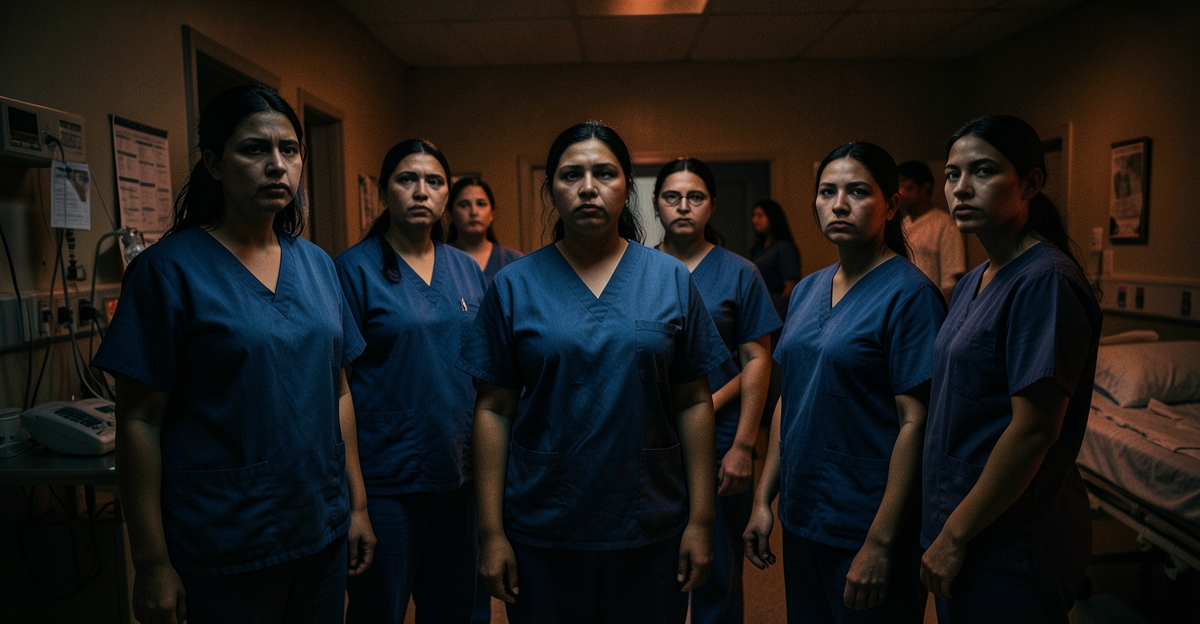
In April 2020, while New York City hospitals overflowed with COVID-19 patients, registered nurse Sandra Martinez worked twelve double shifts in a single week. She slept in her car to avoid bringing the virus home to her children. Her hospital system, Northwell Health, reported $1.2 billion in operating revenue that quarter. Martinez could not make her rent. She qualified for food stamps. When she asked about hazard pay, administration reminded her that nursing was a "calling." The word "essential" appeared on yard signs across the city. It did not appear on her paycheck.
This is the central contradiction of the essential worker ideology: those deemed most necessary to social reproduction are systematically denied the material conditions necessary to reproduce themselves. The pandemic did not create this dynamic—it merely stripped away the ideological veil that hides it.
The Function of the "Hero" Label: Ideological Discipline by Other Means
The "essential worker" designation functions as a mechanism of ideological discipline, converting what should be recognized as exploited labor into a moral obligation to sacrifice. When capital designates a worker "essential," it performs a peculiar inversion: the worker's objective importance to the system is acknowledged, but this acknowledgment becomes justification for demanding increased exploitation, not compensation for it.
Consider the numbers. Between March 2020 and March 2021, U.S. hospital corporations saw profit margins increase by 25-40%, driven by federal relief funds and elective surgery backlogs. HCA Healthcare, the largest for-profit hospital chain, reported $6.4 billion in net income in 2020—a 40% increase from 2019. During the same period, nurse turnover rates exceeded 20%, with average travel nurse pay reaching $5,000 per week while staff nurses received nothing beyond their base wages.
The "essential" label accomplished what explicit union-busting or wage suppression could not: it framed material deprivation as spiritual virtue. "You're a hero" meant "you don't need hazard pay." "We're so grateful" meant "we won't hire more staff." "Essential" became a wage in its own right—a wage paid in ideology rather than currency.
This is not simply hypocrisy; it is a structural necessity of capitalism. The care sector, like the pharmaceutical industry's extraction of monopoly rents from essential medicines, depends on the systematic underpayment of the labor that actually produces health outcomes. If nurses were paid according to their objective value to the system—if their wages reflected the fact that they, not hospital executives or pharmaceutical shareholders, are the actual producers of care—the profit margins on which healthcare capital depends would evaporate.
A hospital's $1,200 charge for an IV bag is not about the bag's material cost. It is about extracting surplus value from every moment of a nurse's labor, from the preparation of the bag to its administration to the monitoring that follows. The "essential" label is the ideological cover that allows this extraction to proceed without resistance.
The Vocation Trap: Caring Labor Under Capital
The exploitation of nurses is secured not merely through economic coercion but through the ideological construction of care work as a vocation rather than labor. Nursing is feminized, historically underpaid, and framed as a moral calling precisely because this framing makes class consciousness impossible. How can you strike against a calling? How can you demand better wages for a vocation?
This is the classic strategy of capital when confronted with labor that is genuinely essential to social reproduction. Because care work cannot be outsourced or automated without catastrophic social consequences, capital must find non-economic means of ensuring its continuous supply. The "vocation" ideology—reinforced by hospital administrators, nursing school curricula, and media representations—functions as a subsidy to capital. It is a mechanism by which workers are convinced that their exploitation is actually fulfillment.
During the pandemic, this mechanism operated with brutal efficiency. Nurses were expected to accept increased risk of infection, inadequate PPE, and crushing patient loads not because they were compensated for it but because the "vocation" demanded sacrifice. When nurses died—and hundreds did—the hospital systems issued press releases about their "heroism" and "dedication." They did not issue compensation to their families. They did not alter the staffing ratios that had killed them.
The parallel to other industries organized around "essential" exploitation is instructive. Factory farm capitalism relies on the same logic: the labor of slaughterhouse workers, deemed essential during supply chain disruptions, is compensated at subsistence levels while the corporations that own the production process extract massive profits. In both cases, the "essential" designation functions not as a promise of improved conditions but as a threat: you are too important to leave, too necessary to be compensated, too essential to refuse.
The Steel-Man Counterargument: Recognition as Its Own Reward
The liberal defense of the essential worker framework deserves serious engagement. The argument runs: recognition matters. When workers are seen, valued, and appreciated, this has genuine psychological and social benefits. The pot-banging, the yard signs, the media coverage—these represent a real shift in the cultural valuation of care work. Perhaps, over time, this cultural recognition will translate into material gains. Perhaps the conversation about "essential" workers has opened space for labor organizing and policy change.
This argument is not entirely wrong. Recognition does matter. Workers deserve to be seen. The fact that for-profit healthcare systems and the state apparatus were forced to publicly acknowledge the centrality of care work represents a small victory, a crack in the ideological wall that normally renders this labor invisible.
But the crack is not the breakthrough. Cultural recognition without material transformation is not a gift; it is an exchange. Capital offers symbolic acknowledgment in place of hazard pay, increased staffing, universal healthcare, or the abolition of for-profit hospital systems. The yard signs are a currency designed to devalue the only currency that matters: the power to refuse exploitation.
This is where the liberal framework reaches its limit. Recognition, in capitalism, is always the recognition of exploitation. Capital can afford to celebrate nurses precisely because it has calculated that celebration costs nothing and prevents everything. The celebration of sacrifice is a mechanism for ensuring its continuation.
From "Essential" to Organized: The Only Recognition That Matters
The contradiction at the heart of the essential worker ideology—that workers are too essential to compensate, that their necessity is precisely what justifies their exploitation—cannot be resolved within the framework of capitalist healthcare. It can only be abolished by breaking that framework.
Nurses are essential. This is true. But the political task is not to demand that capital properly compensate "essential" workers. Capital cannot do this, because "essential" labor is precisely the labor on which surplus value extraction depends. Paying such labor its full value would dissolve the profit margins on which hospital systems and pharmaceutical corporations depend. The recognition that capital offers is necessarily counterfeit; it is an ideological wage designed to suppress the material one.
The same logic that makes nurses "essential" is the logic that makes the DEI framework a cover for continued exploitation: both offer symbolic inclusion while preserving material extraction. The yard signs and the diversity training are structurally identical—they are the cost capital pays to avoid paying the real cost of labor.
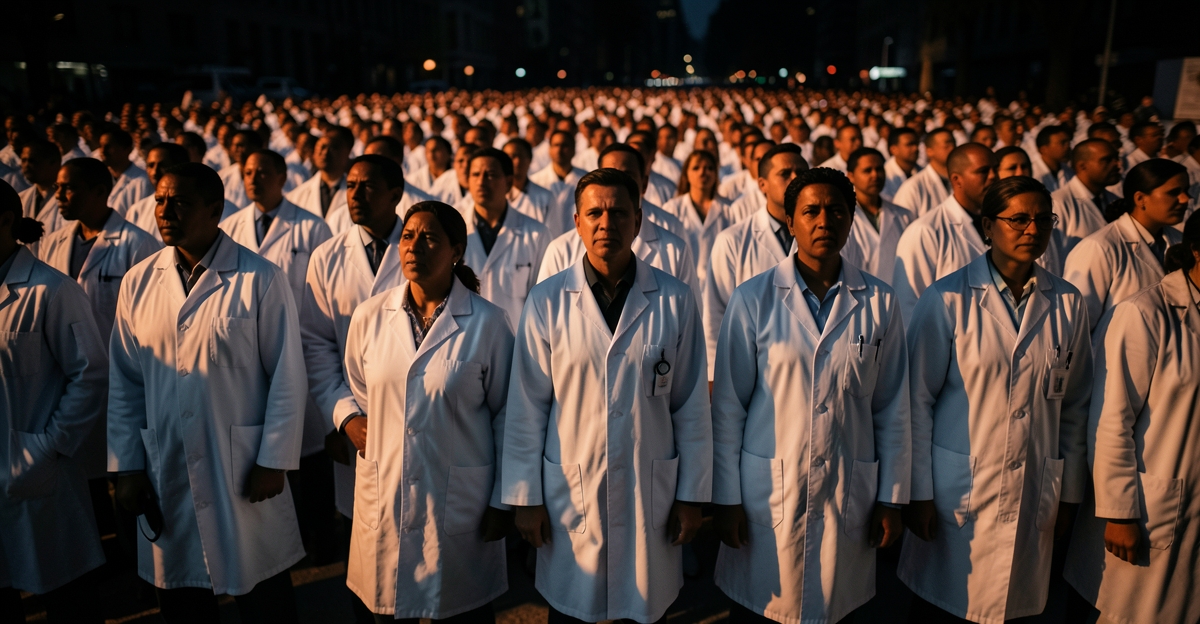
The real recognition—the only recognition that matters—is the recognition of shared exploitation. When nurses recognize that their "essential" status is the mechanism of their exploitation, and when they act on this recognition through collective organization, the ideology cracks. The 2021-2022 wave of nurse strikes—more than 40 major work stoppages in two years—demonstrated that the "hero" label can be rejected. Striking nurses carried signs reading "Heroes Get Paid" and "Essential Means Collective Bargaining." They understood what the media and the hospital administrators could not acknowledge: that the opposite of "essential" is not "exploited" but "organized."
Synthesis: The Abolition of the "Essential" Category
The essential worker ideology is not a mistake or a failure of recognition. It is a strategy. It is how capital manages the contradiction between its dependence on care labor and its need to undercompensate that labor. The "essential" label is the ideological suture that holds this contradiction together, allowing exploitation to continue under the sign of veneration.
The task, then, is not to demand that capital properly recognize care work within the existing framework. The task is to abolish the framework that makes such "recognition" necessary. This requires the destruction of the for-profit healthcare system and its replacement with a socialized model in which "essential" becomes meaningless because all labor that reproduces life is valued equally and compensated adequately.
Until that day, every yard sign, every pot-banging moment, every media tribute to "healthcare heroes" should be read for what it is: an attempt to pay a wage that cannot be cashed. The nurse who cannot afford rent while working double shifts in a system that profited billions from her labor does not need recognition. She needs the power to stop working. She needs the organization that can wield that power. She needs a healthcare system that treats her labor as a cost to be minimized and a life to be valued equally with those she saves.
The essential worker lie is that necessity is its own reward. The truth is that necessity, under capitalism, is simply another name for exploitation. And the only response to exploitation is not gratitude, but class struggle.