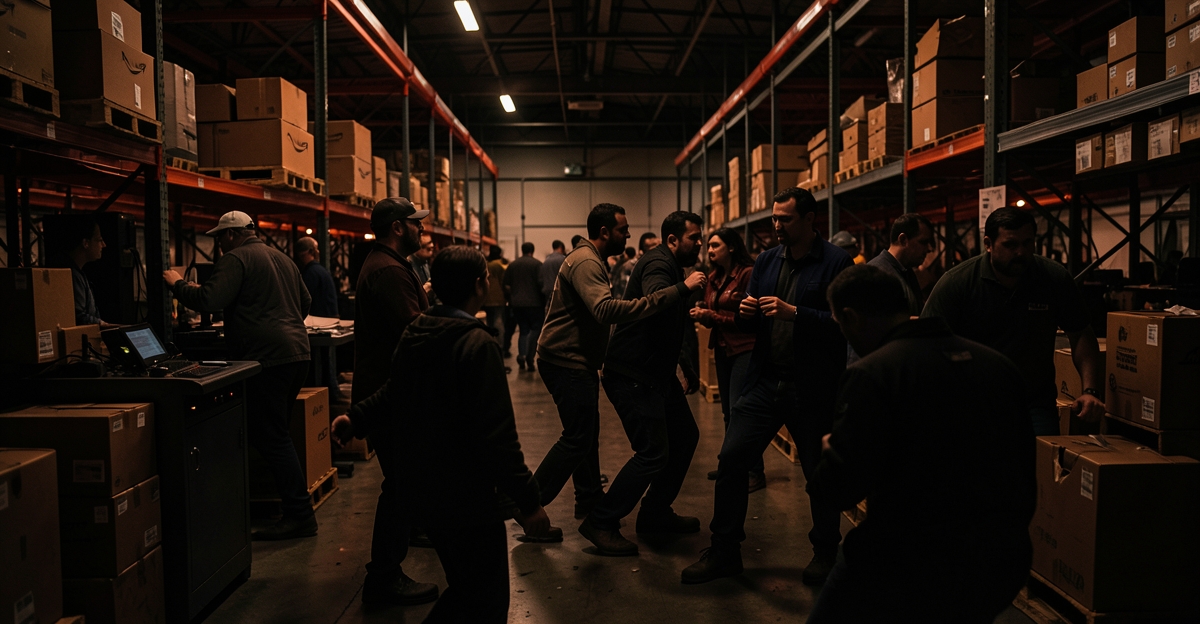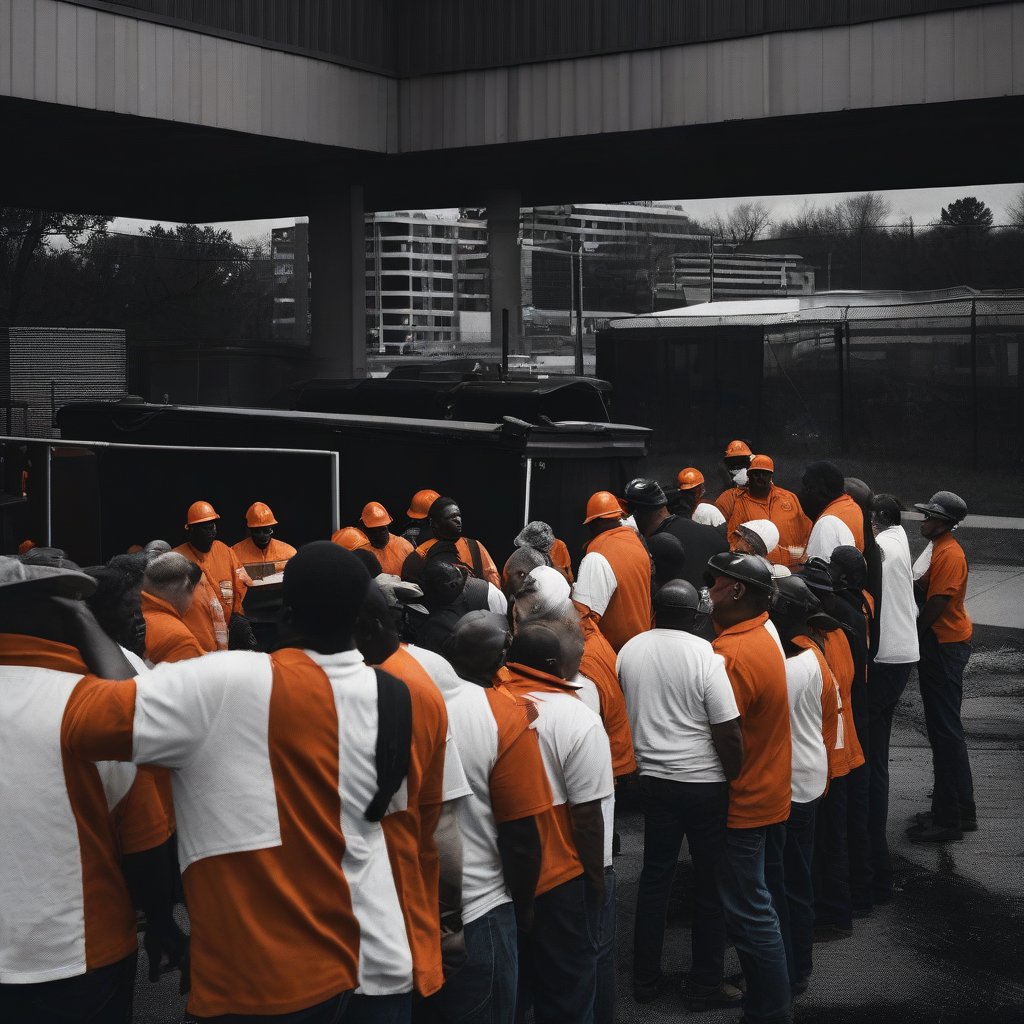
The countdown clock hit zero. On September 15, 2023, at 11:59 PM, workers at three strategic assembly plants — GM’s Wentzville, Ford’s Wayne, and Stellantis’s Toledo — laid down their tools and walked out. This wasn’t a random act of militancy. It was a meticulously planned offensive, the first time in the UAW’s 88-year history that it struck all three major automakers simultaneously. The “Stand-Up Strike” had begun.
Under the leadership of reformist president Shawn Fain, the UAW pioneered a weaponized uncertainty: instead of mass picket lines at every facility, the union struck rotating targets, keeping management paralyzed while conserving the strike fund. The strategy was class-struggle unionism in its purest form — treating the Big Three not as separate partners but as a unified capitalist class. The result? Historic contracts securing 25% wage increases, the abolition of discriminatory tiered wage systems, and the unprecedented right to strike over plant closures. The Stand-Up Strike represents a break from forty years of concessionary bargaining — but its true significance lies in how it approximates sectoral bargaining, a model that could reshape the working class’s relationship to capital.
From Business Unionism to Class-Struggle Unionism
The UAW’s shift cannot be understood without grasping the rot it replaced. For decades, the union operated under business unionism: a service model where union leadership functioned as a junior partner to management, trading wage concessions for job “security” guarantees that never materialized. From 2007 onward, the UAW accepted two-tier wage systems that divided workers into haves (legacy employees at $32/hour) and have-nots (new hires starting at $17/hour). Tiered contracts, alongside the elimination of cost-of-living adjustments and the creation of a union-run health care trust fund, represented what Marxist economist Richard Wolff calls the financialization of class compromise — a system by which workers’ militancy was subcontracted to financial managers.
Shawn Fain’s reform caucus, Unite All Workers for Democracy (UAWD), understood that this approach was structurally designed to fail. As Fain stated: “The billionaire class has been treating workers like a commodity for too long.” The Stand-Up Strike rejected the idea that labor’s role is to politely request concessions. Instead, the union targeted the supply chain’s weakest links: parts distribution centers and assembly plants that would inflict maximum damage on production schedules across all three companies. This wasn’t collective bargaining. It was class struggle by other means.
Sectoral Bargaining: The Strategic Core
The simultaneous strike against GM, Ford, and Stellantis approximated what labor scholars call sectoral bargaining — a system where unions bargain across an entire industry rather than firm-by-firm, preventing companies from using the threat of relocation or bankruptcy to undermine wages. Historically, this has been central to European labor models (Germany’s IG Metall, for example, bargains across the auto sector). In the United States, sectoral bargaining remains exceptional due to America’s unique legal framework, which prefers firm-level “enterprise bargaining.”
The Stand-Up Strike’s genius was to achieve sectoral effects within enterprise constraints. By targeting all three companies simultaneously, the UAW prevented the classic “whipsaw” tactic — pitting union locals against each other, where the union that strikes first exhausts its strike fund while non-striking plants continue production. Instead, the Big Three had to bargain together because the union had coordinated disruption across the entire sector. The result: contracts that included wage increases, the elimination of tiers, and — crucially — the right to strike over plant closures. This last victory effectively hands workers veto power over capital’s ability to shift production to non-union sites or Mexico, a concession that cost the companies but affirms labor’s stake in production decisions.
The Failure of Capital-Labor “Partnership”
Critics from the business press — and from the conservative wing of the labor movement — will argue that the Stand-Up Strike was unnecessarily confrontational. “Unions should cooperate with management for mutual benefit,” the argument goes. “Companies are struggling with electrification transition costs; adversarial tactics destroy the trust needed for a just transition. The 2023 deal only inflates costs, making U.S. automakers less competitive against non-union Tesla and Asian imports.”
This is the class collaborationist framework re-heated, and it is historically bankrupt. “Mutual benefit” under capitalism is a mirage; management’s “struggles” are demands that workers bear the cost of capital accumulation. The last forty years of “cooperation” — tiered wages, outsourcing, plant closures, the erosion of medical benefits — gave workers nothing but the privilege of being exploited at lower rates than their global competitors. As the recent teacher strikes in Chicago and Oakland demonstrate, concessions to management do not build trust; they invite further demands. The 2022-2023 teacher strikes in Chicago — which defied the mayor and won class-size reductions and increased staffing — prove that class-struggle unionism, not partnership, wins gains. The Stand-Up Strike is this principle applied to industrial production: the only “trust” workers need is in their own organized power on the picket line.
Victory and Its Contradictions
The Stand-Up Strike’s victory is real but not total. The contracts still allow for temporary workers, limit strike pay increases to inflation adjustments, and do not guarantee job security for plants undergoing electrification. The broader risk is that the union’s newfound militancy becomes institutionalized into a new form of “responsible unionism” — where workers’ power is directed toward extracting concessions within capitalism’s logic rather than abolishing the wage relation itself.
Yet the Stand-Up Strike demonstrates a crucial strategic insight. The strike didn’t just win a contract; it demonstrated that the working class can flexibly project power. The rotating structure forced management to guess which plant would walk out next, requiring global supply chains to maintain redundant buffer stocks or face shutdown. This is a military lesson applied to economics: by refusing to commit all forces at once, the union maintained initiative and forced the adversary to respond to its rhythm. It shifted the balance of force from the company’s balance sheet to the union’s strategic decision-making.
The deeper lesson is that sectoral bargaining — even in its incomplete form — transforms the union from a service provider (buying contracts through dues) into an organ of class power. The Stand-Up Strike reveals what post-2020 labor militancy, from the Schedule F civil service workers’ fight against Trump’s right-wing purge to the Chicago teachers’ rebellion, teaches: the class struggle is not something unions can avoid; it is the terrain on which all gains are won or lost.
In his speeches during the strike, Fain paraphrased the Wobblies: “They say ‘Be reasonable.’ But reasonableness means accepting that Somebody should profit off your sweat while you struggle to pay rent.” The Stand-Up Strike replaced reasonableness with power. It trained a generation of workers in the grammar of class struggle. Whether that consciousness matures into a broader movement for sectoral bargaining across the entire economy — or is absorbed back into business unionism’s tired rituals — depends on the class struggle yet to come.
The Stand-Up Strike’s legacy is not the contract. It is the strategic lesson: act as a class, or don’t act at all.
Further reading on surplus-value extraction in the modern economy: Absolute and Relative Surplus Value in the Gig Economy.