
The Kochtopus: Climate Denial as Capitalist Class Project
The Koch network’s climate denial infrastructure is not a fringe conspiracy but an organised, class-based ideological apparatus of fossil capital. It exists to manufacture doubt, protect accumulation, and disable democratic regulation. This is a sober, dialectical-materialist analysis.
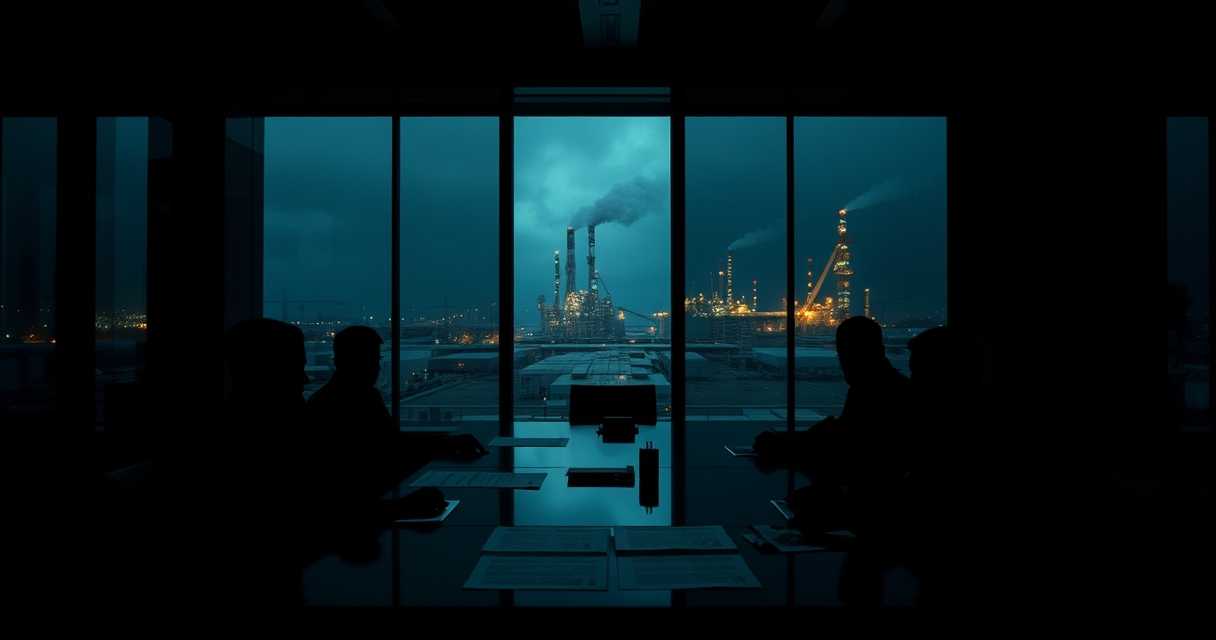
1. The Koch Network as Class Organisation
The Koch network—a sprawling, donor-funded infrastructure of think tanks, activist training programmes, media outlets, and political action committees—is routinely caricatured as a fringe conspiracy of a few billionaire eccentrics. This framing is not merely inaccurate; it is ideologically convenient. It obscures the network’s actual function: an organised, self-conscious expression of fossil capital’s class interest. Charles and David Koch did not assemble this apparatus out of eccentric vanity. They built it because the material interests of their vast petrochemical empire—Koch Industries, the second-largest privately held company in the United States—demanded it.
In dialectical-materialist terms, the Koch network is a class organisation. It operates at the political and ideological level to defend the accumulation strategies of a specific fraction of capital: the carbon-intensive, fossil-fuel fraction. Its emergence in the 1970s and 1980s was not accidental. It coincided with the crisis of profitability that shook global capitalism and with the rise of environmental regulation as a legitimated function of the liberal state. The network’s founders recognised that climate science, if left uncontested, would trigger regulatory measures—carbon pricing, emissions caps, international treaties—that would directly threaten the asset base and future revenue streams of the fossil fuel industry. The denial infrastructure was therefore not a reaction to climate science; it was a prophylactic strategy, built in advance of mass climate consciousness.
By framing the network as a "class project," we move beyond liberal outrage. We ask: whose material interests are served? The answer is unequivocal. The Koch network serves the long-term accumulation needs of a capitalist class fraction that cannot survive the transition to a decarbonised economy without writing off trillions in stranded assets. The denial apparatus is the political expression of that existential threat.
2. Manufacturing Doubt as Production Process
The phrase "manufacturing doubt" has become a journalistic cliché, but its materialist content is precise. Doubt, in the Koch network’s hands, is not a passive state of uncertainty. It is a produced commodity. It requires inputs: funding, personnel, institutional infrastructure, and above all, a disciplined division of ideological labour. The network’s production process begins with the extraction of scientific legitimacy—often through the strategic funding of contrarian researchers or the cherry-picking of data—and moves through a pipeline of refinement: the drafting of policy briefs, the placement of op-eds, the coaching of talking points for politicians, and the saturation of media ecosystems with false balance.
Each stage of this pipeline is staffed by a cadre of organic intellectuals of the capitalist class—people who genuinely believe they are defending freedom and free markets, but whose social position is entirely dependent on the continued dominance of fossil capital. They are not "deniers" in the simple sense; they are doubt-producers. The product they manufacture is not ignorance but agnogenesis: the deliberate creation of epistemic confusion. This confusion serves a clear material function. So long as the public and policymakers can be kept in a state of uncertainty about the reality, severity, or human causation of climate change, the political system cannot generate the democratic mandate necessary for aggressive regulatory intervention.
The production of doubt is therefore a form of accumulation by confusion. It buys time for the fossil fuel industry to continue extracting, continue lobbying, and continue externalising its ecological costs onto the global majority. The longer the confusion persists, the more carbon can be burned, and the more profits can be realised. Doubt, in this sense, is not a failure of the public understanding of science; it is a successful output of a hyper-efficient ideological production line.
3. Think Tanks as Ideological State Apparatuses
Louis Althusser’s concept of the Ideological State Apparatus (ISA) provides a powerful framework for understanding the role of think tanks in the Koch network. Althusser distinguished between the Repressive State Apparatus (government, police, military) and the ISAs (family, church, media, education, culture). The latter function not primarily by force but by the inculcation of ideology—by making the ruling class’s worldview appear as common sense. Koch-funded think tanks—the Cato Institute, the Heritage Foundation, the American Enterprise Institute, the Mercatus Center, and a host of smaller regional outposts—operate precisely as ISAs for the capitalist class.
These institutions do not merely "produce policy ideas." They produce a hegemonic climate ideology: the idea that markets can solve everything, that regulation is tyranny, that individual consumer choice is the only legitimate response to ecological crisis, and that any attempt at collective, democratic planning is a step toward totalitarianism. This ideology does not originate spontaneously. It is carefully developed, tested, and disseminated through the think tank ISA network. The network's funding flows are meticulously directed to ensure ideological discipline: no think tank that strays from the free-market, anti-regulatory line can expect continued Koch support.
The state itself is also a terrain of struggle. Koch-funded ISAs work to colonise the actual state apparatus: they place alumni in regulatory agencies, write legislation for friendly politicians, and create the intellectual atmosphere in which climate action becomes politically "impossible." The think tanks function as a shadow state for capital, ensuring that even when the democratic will shifts toward ecological sanity, the actual machinery of government remains captured by fossil interests. For a parallel analysis of how similar class-based ideological apparatuses operate in the culture war, see our article "The 'Anti-Woke' Crusade as Class War Ideology".
4. Climate Denial and Working-Class False Consciousness
One of the most pernicious achievements of the Koch network’s ideological apparatus has been the cultivation of climate denial and climate scepticism among significant sections of the working class—particularly white, rural, and deindustrialised communities in the United States. This presents a puzzle for crude economism: why would workers who will bear the brunt of climate catastrophe—through job loss in climate-vulnerable sectors, through displacement, through health impacts—adopt an ideology that serves the interests of their exploiters?
The answer lies in the concept of false consciousness, not as a moral failing but as a structural effect of ideological struggle. The Koch network has spent decades building an alternative common sense in which "Big Government" and "environmental elites" are the enemy, not the fossil fuel executives who bankroll the denial machine. This is achieved through a sophisticated strategy of articulation: climate action is tied, in the ideological imaginary, to job loss, cultural condescension, and the erosion of "freedom." The working-class subject is interpellated not as a worker but as a taxpayer, a consumer, a property owner—categories that align with bourgeois interests.
This is not simply a top-down imposition. The think tanks and media outlets funded by the network produce content that resonates with lived experiences of economic precarity and cultural displacement. They offer a coherent narrative in which the climate movement is an elite project that will destroy livelihoods. The tragedy is that this narrative is materially grounded—not in the reality of climate science, but in the real experience of capitalist restructuring. The green transition, if led by the same capitalist class that organised the fossil economy, will indeed displace workers and enrich executives. The Koch network exploits this legitimate fear to channel working-class anger against climate action rather than against capital. A deeper examination of how such ideological cover operates in corporate diversity programmes can be found in our piece "DEI as Ideological Cover: Diversity Programs and the Reproduction of Capital".
5. The Material Basis of Anti-Science
Finally, we must confront the material basis of anti-science ideology. The Koch network’s climate denial is not an irrational deviation from enlightened bourgeois reason. It is the rational expression of the interests of a capitalist class fraction whose very existence depends on the continued combustion of fossil fuels. Climate science, in its essence, is a regulatory science: it describes physical realities that, once accepted, demand political and economic responses that are incompatible with the unregulated accumulation of fossil capital.
The denial of science is therefore not a mistake or a cognitive failing. It is a class strategy. For fossil capital, the adoption of climate science as a basis for policy would mean the devaluation of their primary assets. It would mean accepting that the externalisation of ecological costs onto the biosphere and onto future generations must stop. That is an existential threat to accumulation. The response—to attack the science, to manufacture doubt, to defund research, to capture the state—is not merely rational; it is the only rational strategy available to capital within the logic of competition.
Anti-science, in this context, is not a pathology of the working class or of conservative culture. It is the necessary ideological product of a mode of production that requires the systematic denial of its own ecological conditions of existence. The Koch network has simply built the most efficient infrastructure for producing that denial. To fight climate change effectively, the left must recognise that we are not fighting ignorance. We are fighting a class project. And class projects must be met with class organisation, not with better PowerPoint slides or more earnest appeals to scientific consensus. The material basis of anti-science will only be abolished when the material basis of fossil capital is abolished.