1. The Ecological Case for Degrowth
The planetary boundaries framework has established, with increasing precision, that human economic activity has pushed Earth systems beyond safe operating limits. Climate breakdown, biodiversity collapse, nitrogen and phosphorus cycle disruption, and ocean acidification are not externalities in the traditional sense — they are direct consequences of the scale of material throughput that capitalist production requires. The Intergovernmental Panel on Climate Change and the Intergovernmental Science-Policy Platform on Biodiversity and Ecosystem Services both indicate that continued growth in material extraction and energy use is incompatible with a stable Holocene-like state.
Degrowth theorists — from André Gorz to Giorgos Kallis — argue that the only coherent response is a planned reduction of production and consumption in the Global North, especially in the most energy-intensive and ecologically destructive sectors: aviation, industrial animal agriculture, fossil fuel extraction, fast fashion, and extractive mining. The empirical case is solid: absolute decoupling of economic growth from resource use has not occurred at the global scale, and efficiency gains under capitalism are consistently swallowed by the rebound effect — more output, not less impact. Degrowth calls for a contraction of the metabolic throughput of the economy, not merely a greening of the same trajectory.
But the ecological case, however compelling, runs into a structural obstacle that degrowth theory has not adequately theorised: the value form itself.
2. Why Capital Cannot Degrow
Capital is not a thing but a process of self-expanding value. Marx’s analysis in Capital Volume 1 demonstrates that the circulation M—C—M′ (money—commodity—more money) is the general formula of capital. The increment — surplus value — must be constantly realised and reinvested. Without expansion, capital ceases to be capital; it becomes a hoard, a simple sum of money. The competitive dynamic between individual capitals compels each to accumulate or perish. Market share is not a trophy but a condition of survival: the capitalist who does not expand loses ground to those who do, and is eventually driven from the field.
This imperative is not a matter of greedy individuals or bad policy. It is a structural requirement of the value form. Value is not a neutral measure but a social relation that imposes equivalence and hierarchy. Every commodity must be valorised — that is, its value must be realised in exchange. If the total mass of commodities shrinks for ecological reasons, the average rate of profit tends to fall, capitals are devalued, and crisis ensues. Crises are capital’s way of violently restoring profitability through destruction of capital — the opposite of planned degrowth.
Thus, the demand that capital “degrow voluntarily” is a contradiction in terms. It asks a process defined by expansion to cease expanding without ceasing to be itself. As the Hungarian Marxist István Mészáros argued in Beyond Capital, capital’s destructive drive is not a malfunction but the system’s normal operation. The ecological crisis is not a bug; it is a feature of the value form’s metabolism.
3. The Value Form as Ecological Barrier
The value form imposes what Marx, in his early economic manuscripts, called a “metabolic interaction” between humanity and nature that is mediated by abstract labour and exchange value. Under capitalist production, concrete use-values — specific materials, ecosystems, bodies — are subordinated to the abstract logic of value equivalence. A forest becomes timber inventory; a river becomes a hydroelectric asset; the atmosphere becomes a carbon sink with a price tag. Nature is never encountered as nature but always as a resource for valorisation.
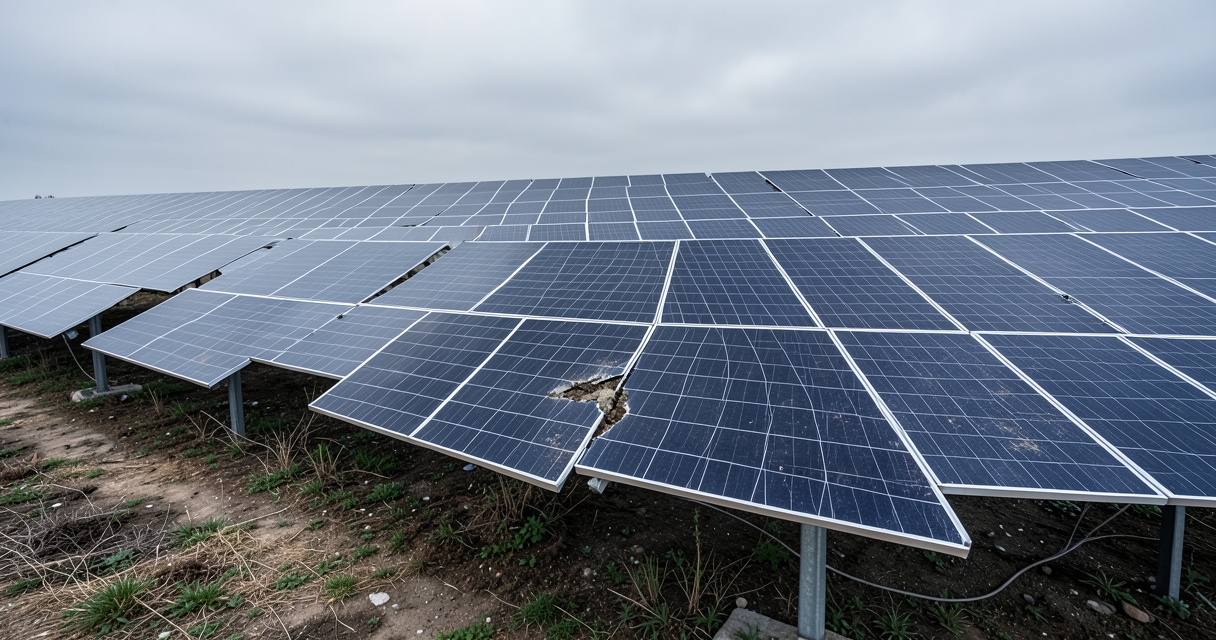
This is not merely ideological. The value form actively shapes the physical infrastructure of production. The drive to minimise socially necessary labour time leads to technological choices that favour energy density, throughput, and scale — precisely the features that generate ecological destruction. A solar panel is not inherently ecological under capitalism; it is a commodity whose production requires mining rare earths, transport, and capital-intensive manufacture. The same value relation that produces the iPhone also produces the foundation for degrowth advocacy: the contradiction is internal to the form.
To understand degrowth as a practical project, we must grasp that the barrier is not insufficient political will but the value relation itself. As long as production is organised through the value form, any attempt to reduce aggregate output will be met by crisis, devaluation, and the violent restoration of accumulation — or by capital exporting its ecological contradictions to the periphery, as it has done since colonialism. For a deeper exploration of how value distorts ecological consciousness, see our analysis of commodity fetishism as a structural feature and the critique of bourgeois economics as ideological defence of the value form.
4. Beyond Growth: Ecosocialist Planning as Alternative
If degrowth is impossible within the value form, the conclusion is not to abandon ecological realism but to radicalise it. The alternative is a planned economy that directly organises production according to use-values and ecological criteria — not mediated through exchange value and the price system. Ecosocialist planning means democratically deciding what to produce, how to produce it, and at what scale, based on human need and biophysical limits, rather than the imperative of valorisation.
This does not mean returning to the bureaucratic central planning of actually existing socialism, which replicated the productivist logic of capital under different property relations. Genuine ecosocialist planning must be participatory, decentralised, and ecologically informed — what the German Marxist Elmar Altvater called “a second contradiction of capitalism” requiring a different mode of social metabolism. The planning of energy descent, material circularity, and decommodified provisioning (public transport, housing, healthcare, education) can reduce throughput without the crises generated by market-driven contraction.
But planning alone is insufficient without the abolition of the value form itself. As long as labour remains abstract, measured by time, and mediated through exchange, the drive to accumulate will reassert itself. Ecosocialism therefore requires: (a) the decommodification of basic needs, (b) the political control of investment (not merely regulation), (c) the reduction of socially necessary labour time to free time, and (d) the explicit subordination of productivity to ecological limits. This is not a reform agenda; it is a programmatic break.
5. The Political Subject of Degrowth
Who will carry out this transformation? Degrowth theory has often been weak on class analysis, appealing to the same “consciousness-raising” and “behaviour change” that liberal environmentalism has relied upon for decades. But the working class — broadly defined as those who must sell their labour power to survive — has no material interest in growth under capitalism. They are subject to its compulsions (unemployment, precarity, wage stagnation) but not its beneficiaries. The class that produces the surplus is the class with the potential to reorganise production for need rather than profit.
This is not to romanticise the proletariat or to claim that workers are automatically ecological. The point is structural: the material interests of the working class are not aligned with accumulation. Workers need secure livelihoods, shorter hours, public goods, and a stable environment. Capital demands flexibility, long hours, low wages, and the destruction of the biosphere as a cost-externalisation zone. The ecological and class contradictions converge at the point of the value form.
The political subject of degrowth, then, is not the “conscious consumer” or the “local community” in isolation, but the collective working class in alliance with the social movements that articulate the ecological crisis — climate justice, food sovereignty, indigenous land defence, the care movement. Degrowth can only be a transitional demand if it is linked to the abolition of the value form. Otherwise, it remains a well-meaning moral appeal that capital can ignore or co-opt — as it has done with “green growth” and “circular economy” narratives that leave the accumulation imperative intact.
The choice is not between growth and degrowth as policy options within capitalism. The choice is between a planned ecosocialist economy that abolishes the value form and a descent into barbarism that capital will navigate by sacrificing the most vulnerable. Degrowth without anti-capitalism is a pastoral dream. Anti-capitalism without degrowth is a productivist illusion. The dialectical unity of the two is the only way forward.