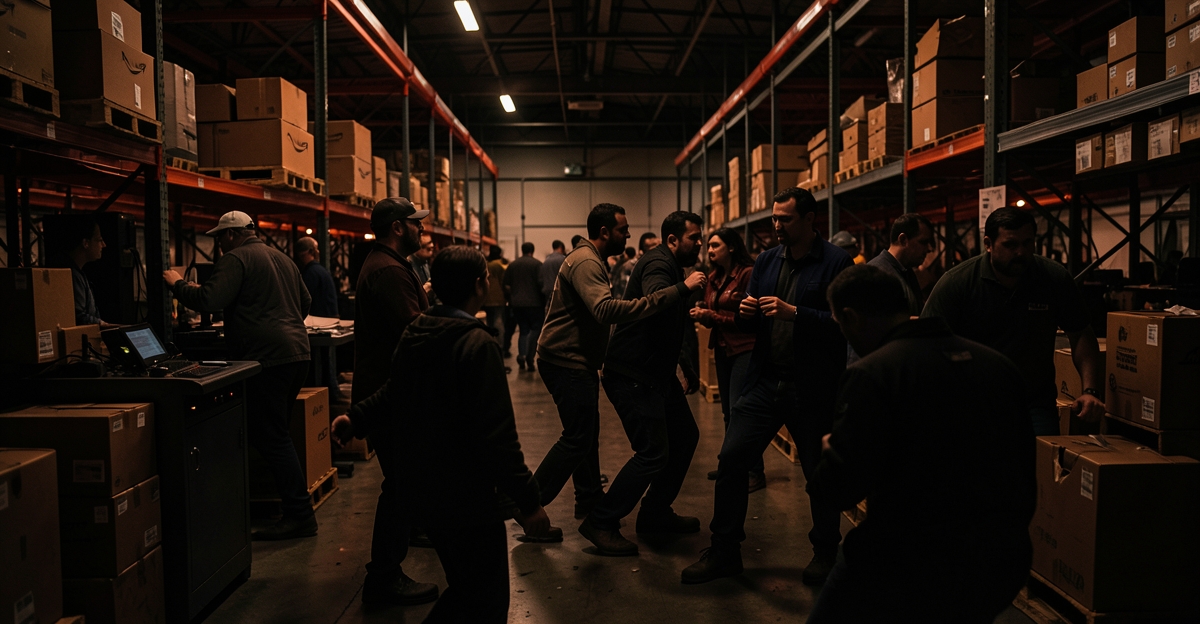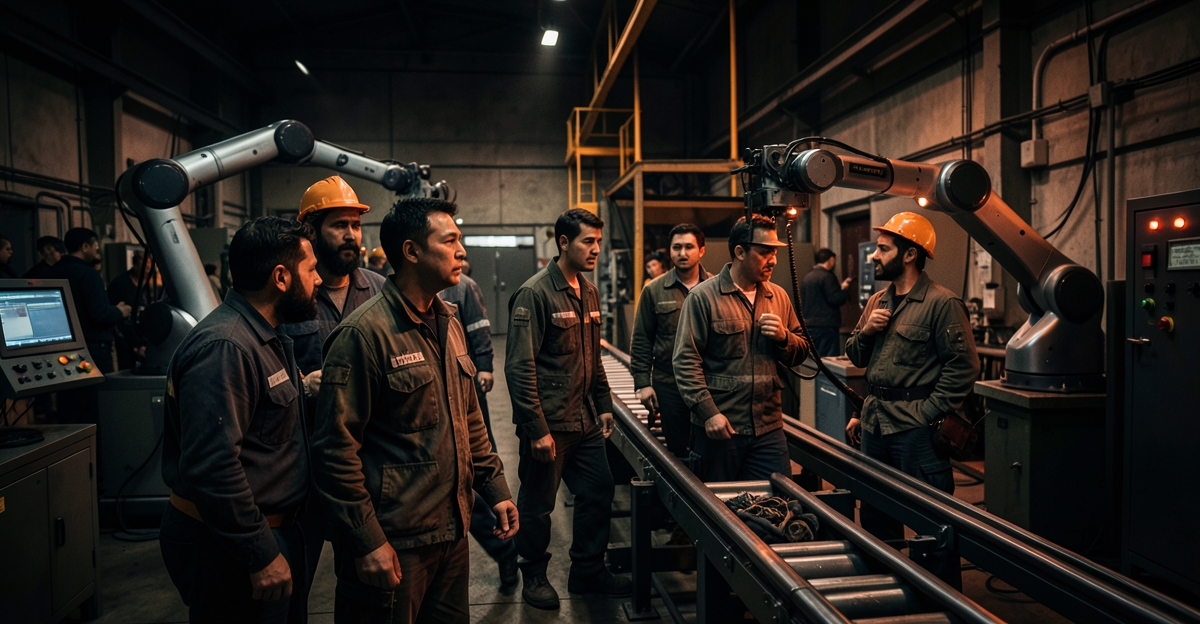
In 2019, the sprawling General Electric plant in Schenectady, New York—once a bastion of unionized manufacturing—completed its transformation into a "lights-out" factory. Robots now weld, assemble, and package components with minimal human intervention. The workforce, once 12,000 strong, now numbers 327. Those who remain earn $15.50 an hour, half the inflation-adjusted wage their parents commanded in 1980. The company celebrates "efficiency gains" of 40%. The workers—those not cast into the reserve army of the unemployed—describe a hell of machine-paced monotony, surveillance, and constant threat of replacement. This is not technological progress. This is class war by other means.
The Bourgeoisie's Automation Fantasy
The capitalist class and its apologists present automation as a neutral, even benevolent force—a rising tide that lifts all boats. Silicon Valley CEOs speak of "technological unemployment" as a temporary friction, a hiccup on the road to a leisure society. But the evidence tells a different story. When Amazon deploys its "Robo-Stow" systems in fulfillment centers, total labor hours do not decline. Instead, the remaining workers are subjected to an intensified regime: algorithms dictate every movement, productivity quotas rise by 20%, and the threat of the robotic replacement hangs over every break. The rate of exploitation skyrockets as capital extracts absolute surplus value through longer effective hours and relative surplus value by cheapening the cost of labor-power itself.
Marx identified this dynamic in the Grundrisse—the famous "Fragment on Machines." Under capitalism, machinery does not reduce labor time; it reduces necessary labor time while expanding surplus labor time. The robot does not liberate the worker; it disciplines them. The productivity gains flow not to shorter hours or higher wages, but to profit margins, executive bonuses, and share buybacks. In 2023, U.S. corporate profits hit a record 12% of GDP while real wages for production workers remained flat. Automation is not a technical problem; it is a class relation.
Deskilling and the Reserve Army of Labor
The second function of automation under capitalism is to degrade labor itself. As Harry Braverman documented in Labor and Monopoly Capital, the capitalist division of labor systematically separates conception from execution. When a factory automates, it does not simply replace workers with machines; it replaces skilled workers with less-skilled machine tenders. The machinist who once understood the entire production process becomes the button-pusher who monitors a screen. The use-value of labor-power is fragmented, its exchange value depressed.
This process serves a dual purpose for capital. First, it reduces wages: unskilled labor is abundant and cheap. Second, it expands the industrial reserve army—that mass of unemployed and under-employed workers who discipline the employed. When workers can see robots ready to take their jobs, they are less likely to strike, less likely to demand higher wages, less likely to organize. The threat of automation becomes a constant whip. In the auto industry, the United Auto Workers conceded tiered wage systems and health care cuts in the 2020s precisely because management threatened to "reshore" with fully automated plants. The robot is not just a machine; it is a political weapon.
The Counter-Argument: Creative Destruction Revisited
The orthodox response—articulated most forcefully by economists like David Autor—is that automation creates more jobs than it destroys. The Luddites were wrong, the argument goes; new industries emerge. The internet killed travel agents but created social media managers. AI will eliminate data entry but generate "prompt engineers." This is the "technological unemployment" thesis that Keynes himself once feared and later dismissed.
But this argument commits a category error. It confuses aggregate employment with class conditions. Yes, total employment may remain stable (or even grow) across decades. But whose jobs are they? What are the wages? What is the level of exploitation? The service economy that absorbed displaced manufacturing workers pays 30% less on average. The gig economy that replaced stable employment is characterized by insecurity, no benefits, and algorithmic control. Automation does not eliminate exploitation; it deepens and displaces it into new sectors. The rate of surplus value extraction—the ratio of unpaid to paid labor—has risen steadily since the 1970s, even as technology has advanced exponentially. Capital does not use machines to work less; it uses machines to work the living more intensely.
From Necessity to Freedom: What Automation Could Be
This is not a Luddite argument against technology. The productive forces unleashed by automation contain a genuinely liberatory potential. If robots can produce society's material needs with a fraction of human labor, then the material basis for a society of freedom exists. The working day could be reduced to four hours. Necessary labor could be socialized. The "realm of freedom" could begin not after work, but at work itself—as creative, self-directed activity.
But this requires smashing the capitalist relations of production that fetter the productive forces. Under capitalism, automation is class war. Under socialism, automation could be liberation. The difference is who controls the means of production and to what end the surplus is directed. The robot does not have a class position; the capitalist who owns it does.
Synthesis: The Class Character of Technological Change
Automation is never neutral. It is a social relation inscribed in steel, silicon, and code. When capital deploys robots, it does so to break the power of labor—to lower wages, deskill work, expand the reserve army, and increase the rate of exploitation. The productivity gains flow upward, not downward. The promise of leisure is deferred indefinitely, replaced by the reality of intensified exploitation.
The working class must not oppose technology as such—that is the trap of Luddism. But neither can it accept capitalist automation as "progress." The task is to build the organizational and political capacity to seize the means of production—robots included—and redirect them toward human need, not capital accumulation. The choice is not between robots and no robots. The choice is between robots that discipline and robots that liberate. That is the class question at the heart of every factory, every warehouse, every algorithm. And it will not be settled by technocrats or CEOs. It will be settled by struggle.