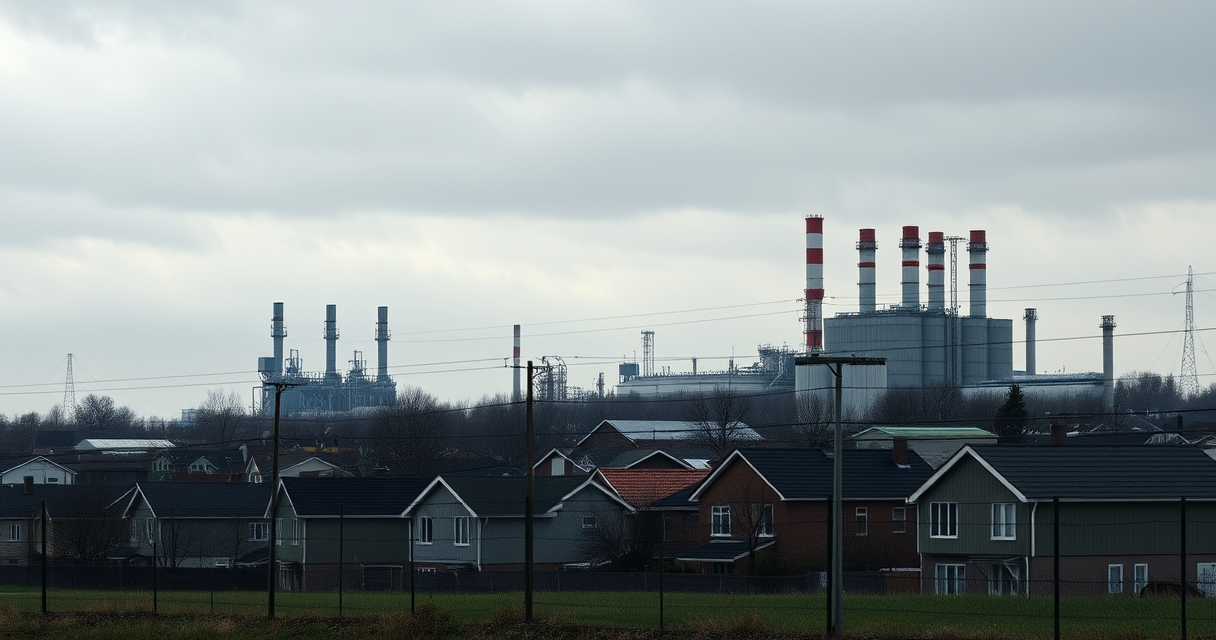
The prevailing liberal narrative frames America's 23.5 million people living in food deserts as a tragic market failure — an unfortunate gap in distribution that better incentives, public-private partnerships, or benevolent corporate outreach might patch. This analysis is not merely wrong; it is ideological. It obscures the active, deliberate process by which retail capital — led by Walmart — restructures food distribution to maximize surplus extraction from working-class consumption while systematically abandoning communities that cannot generate sufficient profit.
Walmart operates over 4,700 stores in the United States. It is the largest grocer in the country, controlling approximately 25% of the food retail market. Yet its presence correlates strongly with the expansion, not contraction, of food deserts. This contradiction demands a materialist explanation. The thesis advanced here is that Walmart's food desert strategy is not market failure but counterrevolution — a class offensive that uses monopoly power to destroy local food economies, discipline labor, and relegate entire working-class communities to nutritional deprivation.
To understand this is to move beyond moral outrage and toward a strategic analysis of how capital uses food access as a weapon of class war. The fight against food deserts is inseparable from the fight against monopoly capital itself.
1. How Walmart Creates Food Deserts
The mechanism is brutally simple. When Walmart enters a neighborhood — typically a low-income or working-class area on the urban periphery or in a rural town — it deploys its immense economies of scale to undercut local grocers, independent supermarkets, and regional chains. For a period of two to five years, Walmart sells staple goods at prices no local competitor can match. This is not efficiency; it is predation. Walmart absorbs losses on food margins to drive competitors out of business, recouping the expense through higher-margin general merchandise and its massive logistics network.
Once the local grocery infrastructure is destroyed — the independent stores shuttered, the small chains bankrupted, the local supply chains dissolved — Walmart then executes a second movement. It closes or relocates stores from poorer neighborhoods to more affluent areas, or it strips down its offerings in low-profit locations to processed, non-perishable goods with higher margins. Fresh produce, dairy, and meat — the markers of a functional food environment — disappear from shelves or become prohibitively expensive. The neighborhood that lost its local grocer now faces a "Walmart desert": a store that exists but does not provide adequate nutrition.
Data from the USDA Economic Research Service confirms this pattern. Census tracts that gained a Walmart supercenter between 2000 and 2020 saw a 17% increase in food desert classification within five years, even as total retail square footage increased. The correlation holds when controlling for income, population density, and racial composition. The mechanism is displacement: Walmart replaces diverse, locally-embedded food retail with a monopoly structure that serves capital accumulation, not community nutrition.
This is not unique to Walmart. It is the logic of retail monopoly in its most advanced form. For a parallel analysis of how algorithmic rent-setting performs a similar function in housing, see our examination of RealPage's pricing algorithms — technology deployed to extract surplus from housing the same way logistics extract surplus from food.
2. The Political Economy of Food Access
Food deserts have been extensively documented, yet the political economy that produces them remains undertheorized. A Marxist analysis begins with the commodity nature of food under capitalism. Food is not distributed according to need but according to effective demand — the ability to pay. Capital flows to where profit rates are highest, not where hunger is greatest. This is not a bug; it is the operating system.
Walmart's business model depends on high-volume, low-margin sales across a wide geographic area, concentrated in distribution hubs. The fixed costs of a supercenter — real estate, refrigeration, logistics, labor — require a minimum threshold of consumer spending. Neighborhoods with low median income, high poverty rates, or significant dependence on SNAP benefits (food stamps) often fall below this threshold. Capital abandons them not because it is "mean" but because the rate of profit is insufficient.
The liberal response — tax incentives for grocers, "healthy food financing initiatives," mobile markets — treats the symptom while preserving the structure. These programs subsidize capital to serve communities it otherwise would not, reinforcing the logic that food access is a commodity to be allocated by the market rather than a human right to be guaranteed by society. They do not challenge Walmart's monopoly power; they compensate for its externalities.
Moreover, the racial dimension cannot be abstracted away. Food deserts disproportionately affect Black and brown communities. The USDA reports that 29.7% of Black Americans and 27.5% of Hispanic Americans live in low-income, low-access areas, compared to 17.5% of white Americans. This is not accidental. The same processes of redlining, urban disinvestment, and racialized poverty that structure housing and labor markets structure food access. Walmart's location strategy — avoiding inner-city Black neighborhoods while saturating predominantly white suburban and exurban areas — reproduces racial hierarchies within the food system.
The pharmaceutical industry deploys a parallel logic of monopoly pricing and access restriction. For a detailed analysis, see our investigation into Eli Lilly's insulin patents — another case where capital extracts surplus from human necessity.
3. Retail Monopoly as Class Weapon
To characterize Walmart's strategy as "counterrevolution" is not hyperbole but analytical precision. Counterrevolution, in Marxist terms, is the process by which capital restructures social relations to reverse gains won by the working class and reimpose conditions favorable to accumulation. In the food system, this means destroying the remnants of local, small-scale, community-embedded food distribution and replacing it with a centralized, monopoly-controlled system that maximizes surplus extraction while minimizing accountability.
The destruction of local grocers is a class act. Independent grocers, particularly in rural and urban working-class neighborhoods, often operated with thin margins but deep community ties. They extended credit during hard times, employed local workers at livable (if modest) wages, sourced from regional producers, and provided a public space for social reproduction. Walmart obliterates this ecology. Its labor practices — low wages, unpredictable schedules, anti-union hostility, wage theft — are well-documented. Walmart's workforce is among the most exploited in the retail sector, with wages so low that many employees rely on SNAP and Medicaid. Taxpayers subsidize Walmart's profits twice: through the destruction of local tax bases and through the welfare state that compensates for its inadequate wages.
The food desert is the spatial expression of this class offensive. When Walmart closes a store in a poor neighborhood — as it did in 2016 in Chicago's Washington Heights, or in 2023 in Portland's Eastside — it is not making a neutral business decision. It is reasserting the power of capital to determine who eats and who does not. The closure leaves a "food apartheid" landscape: a monopoly that no longer serves the community, with no alternative remaining because Walmart already eliminated the competition.
This weaponizes food access. Communities that lose their Walmart — even a problematic one — face a 20—40% increase in travel time to fresh food, higher prices at remaining dollar stores, and increased reliance on convenience stores selling ultra-processed foods. The health consequences — diabetes, hypertension, obesity, nutritional deficiencies — are forms of class injury, slow violence inflicted by the logic of accumulation.
4. Food Sovereignty vs Corporate Distribution
The alternative to corporate food distribution is not "better capitalism" — not more tax incentives, more public-private partnerships, more corporate social responsibility. These are palliative measures that leave the monopoly structure intact. The alternative is food sovereignty: the right of communities to define their own food systems — to produce, distribute, and consume food according to need, ecological sustainability, and democratic control.
Food sovereignty movements, from the Black Panther Party's breakfast programs to contemporary urban agriculture cooperatives in Detroit, Jackson, and Los Angeles, demonstrate that another model is possible. These projects are not merely "local food" in the commodified, hipster sense. They are direct challenges to the power of retail capital. They decommodify food, delink nutrition from profit, and rebuild the social relations that Walmart's counterrevolution destroyed.
The struggle against food deserts is a struggle against monopoly capital. It requires not just community gardens but the expropriation of Walmart's distribution infrastructure; not just farmers markets but the decommodification of land, water, and seeds; not just SNAP expansion but the abolition of hunger as a market outcome. This is a revolutionary demand. It cannot be achieved within the framework of capitalism, which necessarily subordinates need to profit.
Marx wrote that "between equal rights, force decides." In the food system, the force of capital has decided that 23.5 million Americans go hungry or malnourished. The only adequate response is the force of organized working-class power: to seize control over the means of food production and distribution, to rebuild food systems on the basis of need, and to end the counterrevolution that starves communities for the sake of accumulation.
Food sovereignty is not a reform. It is the revolutionary reorganization of society. And it begins with the understanding that every food desert is a crime scene.