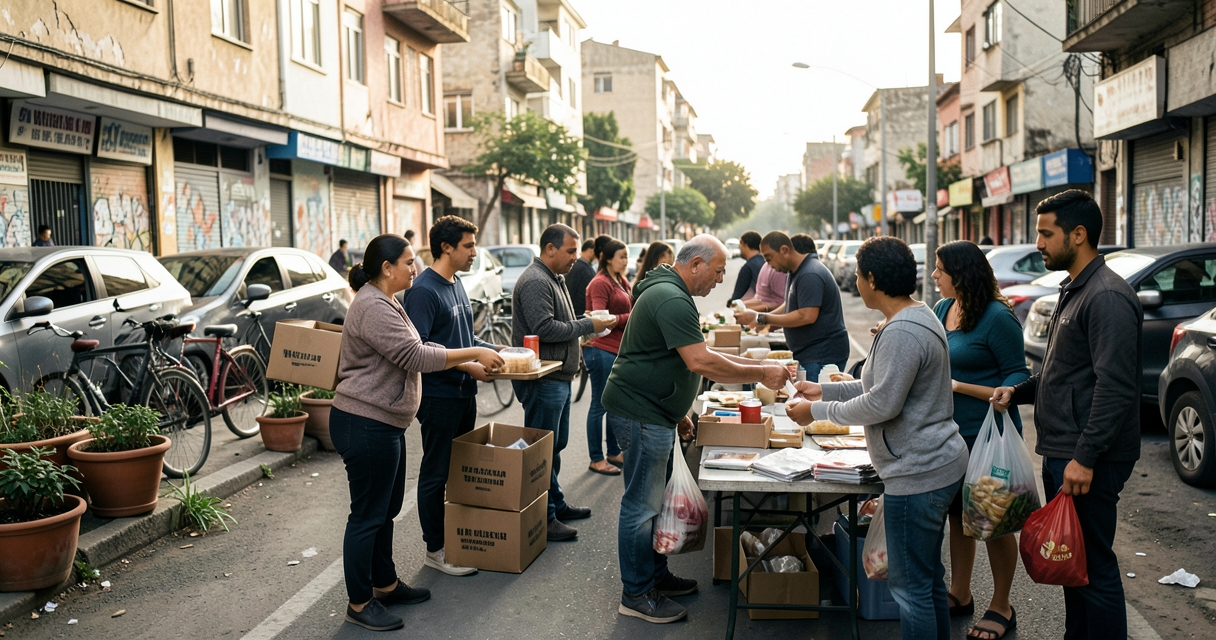
In the spring of 2020, as New York City became the epicenter of a global pandemic, a mutual aid network in Brooklyn was distributing 500 hot meals daily to neighbors who could not leave their apartments, had lost their jobs, or were too sick to cook. Volunteers coordinated through Signal chats, repurposed church basements into food distribution hubs, and built relationships of solidarity that cut across apartment buildings and block lines. Within three months, the same network was fraying. Organizers burned out from the relentless logistics of fundraising, grocery delivery, and medical supply runs. The city government resumed its normal functioning — which is to say, it continued to underfund public housing, evict tenants, and starve the health system. The mutual aid network had done what official institutions would not, but it could not replace them. This contradiction — that working-class self-organization is both necessary and insufficient for revolutionary transformation — is the central problem that any serious strategy must confront.
Mutual Aid Is Working-Class Self-Organization, Not Charity
To understand mutual aid, we must first distinguish it from charity. Charity is a vertical relationship: those with surplus resources condescend to give to those without, reinforcing the class hierarchy that produced the need in the first place. Mutual aid, by contrast, is a horizontal relationship among equals. When the anarchist geographer Peter Kropotkin wrote Mutual Aid: A Factor of Evolution in 1902, he was not advocating for benevolence but arguing that cooperation among members of the same species is a primary driver of evolutionary success. For Kropotkin, mutual aid was not a moral choice but a material fact of working-class existence — a survival strategy developed over centuries by peasants, artisans, and industrial workers who could depend on no one but each other.
This materialist understanding is critical. When the Black Panther Party launched its Free Breakfast for Children program in 1969, it fed thousands of hungry children across the country, but it also exposed a contradiction: the wealthiest nation on earth could not ensure its children had enough to eat. The Panthers called their survival programs "serving the people" and explicitly framed them as revolutionary rather than reformist. The free breakfast program was not a solution to child hunger — it was an indictment of the capitalism that produced it and a demonstration of what collective working-class power could achieve. The FBI understood this threat well enough to target the breakfast program for disruption, and by 1971, local police departments across the country had raided Panther offices and intimidated donors into withdrawing support.
During the COVID-19 pandemic, over 800 mutual aid networks sprung up across the United States within the first months of the lockdown. These networks were not centrally coordinated; they emerged from neighborhood-level connections, existing tenant unions, and labor organizing infrastructure. They distributed food, medication, and childcare, and they did so without the bureaucratic delays and means-testing that characterize state welfare programs. In doing so, they demonstrated that working people, when organized horizontally, can meet immediate material needs more efficiently and with more dignity than capitalist institutions or state agencies.
Prefigurative Politics Demonstrates the Future but Cannot Deliver It
The concept of prefigurative politics holds that the organizational forms we build in the present must anticipate the society we wish to create in the future. If the goal is a classless, stateless society of freely associating producers, then we must organize today in ways that prefigure that society — non-hierarchically, democratically, without coercion. This logic has deep roots in the anarchist tradition and has been taken up by contemporary social movements from Occupy Wall Street to the Zapatista autonomous municipalities. There is genuine power in prefiguration: when Occupy Sandy relief operations outperformed the Federal Emergency Management Agency in delivering supplies to affected neighborhoods in 2012, it was because horizontal networks of mutual aid moved faster than bureaucratic state apparatuses weighed down by contracting requirements and jurisdictional disputes.
But prefigurative politics contains a fundamental contradiction that its advocates rarely confront. If the state and capital are not dissolved by the creation of alternative institutions, then those institutions exist within a hostile environment that will eventually crush them or co-opt them. The Occupy Sandy networks were effective precisely because they were responding to a temporary breakdown in state capacity. As FEMA re-established its operations, the mutual aid networks were pushed to the margins. They had not built the kind of power that could compel the state to permanently reorganize disaster response along democratic lines. They had not seized any institution. They had not disrupted the profit logic that ensures disaster capitalism profits from catastrophe. They had built a beautiful temporary community that could not survive contact with the actually existing system.
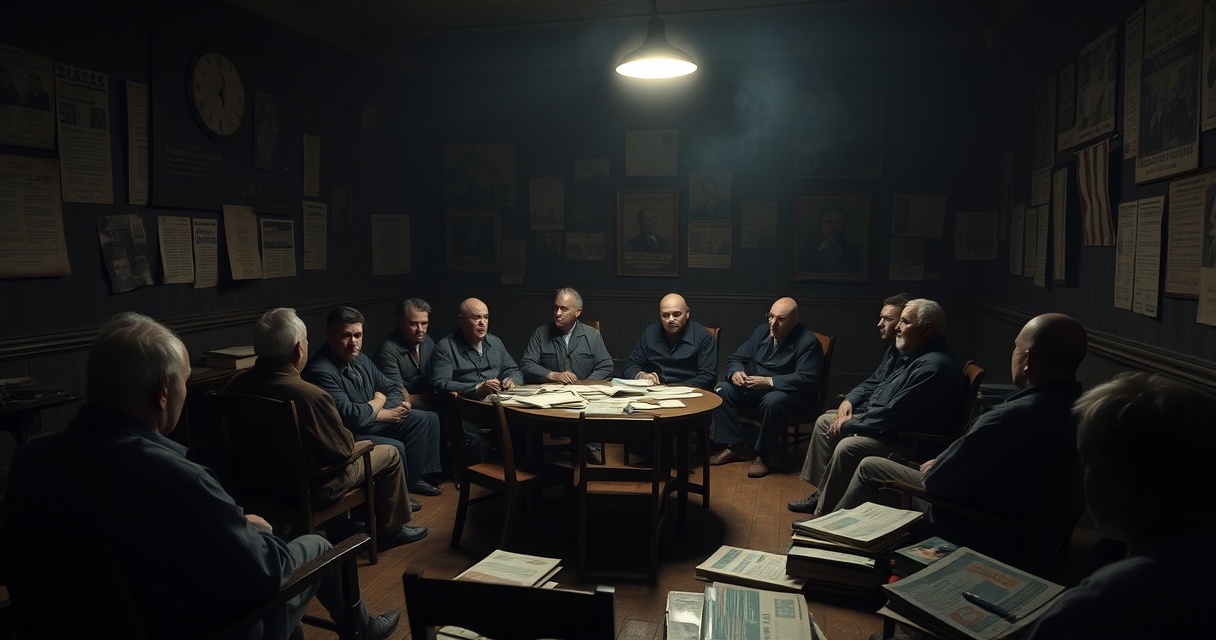
Prefiguration mistakes the demonstration of an alternative for the construction of power. It is one thing to show that people can organize themselves democratically to provide for their needs. It is another thing entirely to prevent the capitalist state from dismantling that organization when it threatens capital accumulation. The anarchist position — that any centralized organization inevitably reproduces domination — is a serious argument worthy of steel-manning. The historical record is littered with revolutionary parties that became bureaucratic machines, that substituted themselves for the working class, that reproduced the hierarchies they claimed to oppose. But the conclusion that organization itself is the problem confuses a specific organizational form — the vanguard party of the Stalinist era — with the general necessity of building strategic capacity to confront state power.
The State Will Not Dissolve Because We Built Better Communities
The state, in Marxist analysis, is not a neutral arbiter of social conflict but the organized power of the capitalist class. Its function is to maintain the conditions for capital accumulation: protecting private property, enforcing contracts, suppressing working-class resistance, and managing the contradictions that capitalism generates. The state will not cease to exist because a neighborhood mutual aid network has proven that food distribution can be organized non-hierarchically. The state will only cease to exist when the working class has developed the organizational capacity to dismantle it and replace it with a form of social organization that no longer requires a separate apparatus of coercion.
This is the central weakness of the prefigurative approach on its own. Building alternative institutions within the spaces that capital and the state have not yet fully colonized is valuable — it demonstrates the possibility of a different world, it meets immediate needs, and it develops the habits of solidarity that revolutionary struggle requires. But it does not, by itself, challenge capitalist power. The capitalist class does not care if there is a community garden in Brooklyn as long as the rent is still paid to the landlord, as long as the surplus value extracted from workers elsewhere continues to flow into financial markets, as long as the police remain available to break strikes and clear encampments.
The data from the COVID-19 mutual aid surge demonstrates this limitation clearly. Of the 800-plus networks that formed in 2020, most had either dissolved or dramatically scaled back their operations by 2022. The material conditions that made mutual aid necessary — precarious employment, inadequate housing, a fragmented healthcare system — did not improve when the pandemic emergency was declared over. They simply returned to their pre-pandemic levels of crisis, minus the infrastructure of solidarity that had emerged in the emergency. The state did not adopt the methods of mutual aid. It returned to its normal function of managing austerity while the working class absorbed the costs of the crisis. Meanwhile, the mutual aid networks had not built the kind of organized power — democratic decision-making structures, financial resources independent of liberal donors, strategic relationships with organized labor — that could survive the end of the emergency.
Revolutionary Organization Must Be Rooted in Mutual Aid, Not Opposed to It
The false choice between mutual aid and vanguardism collapses when examined from a dialectical perspective. The question is not whether to build horizontal networks of mutual aid or centralized revolutionary organizations. The question is how to build revolutionary organizations that are rooted in the daily struggles and material needs of the working class — organizations that can coordinate across neighborhoods and industries while maintaining democratic accountability to the class they serve. The Bolsheviks before 1917 did not choose between building workers' councils and building a party; they built the party inside the councils, learning from the spontaneous self-organization of the working class while developing the strategic capacity to lead a revolutionary insurrection. The lesson is not that we must replicate Bolshevik organizational forms in the twenty-first century — the conditions are dramatically different — but that the antagonism between horizontality and verticality is a false one.
What is needed is what the Marxist theorist Rosa Luxemburg called the "school of war" — organizational forms that combine the democratic participation of the masses with the strategic coordination necessary to confront concentrated capitalist power. Mutual aid networks teach the working class that we can organize our own lives without bosses, landlords, or state bureaucrats. Revolutionary organizations teach the working class that we must seize the means of production and dismantle the state apparatus — and they provide the strategic coordination and institutional memory to do so. Neither is sufficient alone. Mutual aid without revolutionary organization becomes a coping mechanism that helps the working class survive capitalism without overthrowing it. Revolutionary organization without roots in mutual aid becomes a sect that talks about revolution but cannot feed a hungry child.
The concrete task, then, is to build organizations that are simultaneously rooted in the immediate material struggles of working people and oriented toward the strategic goal of working-class power. This means tenant unions that not only fight evictions but build the capacity to seize housing from landlords. It means worker cooperatives that not only provide democratic workplaces but develop the organizational capacity to expropriate capitalist enterprises. It means mutual aid networks that not only distribute food but ask themselves: how do we build the power to demand that the state feed everyone, and if the state refuses, how do we take the warehouses and redistribute their contents ourselves? The first question is one of survival. The second is one of revolution. Both are necessary, and only an organization that asks both questions can build the power to answer them in practice.
In the spring of 2020, the Brooklyn mutual aid network served its last meal not because the need had disappeared but because the volunteers had nowhere to direct their energy except back into the endless cycle of crisis management. They had built something beautiful but fragile. The next iteration of that network, if it learns the lesson of its limits, will not simply distribute meals. It will organize the tenants, strike the landlords, occupy the empty apartments, and build the power to transform a neighborhood into a zone free from capitalist exploitation. That is the synthesis that revolutionary organization must achieve: mutual aid as the seed of working-class power, not its substitute.